The air in the used car lot holds that familiar chill of an early November morning, smelling faintly of frost, damp asphalt, and the sharp chemical tang of a fresh detail job. You run your hand along the fender of the Jeep Wrangler, feeling the cold, smooth resistance of unblemished factory clear coat. The salesman stands a few paces back, clutching a printed vehicle history folder like a protective shield against your scrutiny.
It reads perfectly, checking every single box a cautious buyer wants to see. But a pristine history report lies through omission. It merely records what insurance companies were willing to pay for, completely missing what a previous owner did on a solitary weekend pushing the limits of the suspension across a jagged ridgeline in the Rockies.
Most buyers slide comfortably into the driver’s seat, grip the leather steering wheel, and let the smell of upholstery cleaner lull them into a false sense of security. They look at the spotless dash, the clean centre console, and maybe peek underneath the front bumper to see if the frame rails still look passably black.
But professional frame inspectors look somewhere entirely different. They know that hidden torque warping waits right under your boots. The metal floor pan of the passenger side holds the physical memory of every brutal twist, drop, and frame-bending impact this machine has ever endured.
The Anatomy of a Twisted Spine
Think of a Wrangler’s chassis like the human spine, and the body tub resting on top of it as the ribcage. When you force a vehicle over extreme, uneven terrain—say, dropping a wheel deeply into a rut while the opposite corner rests high on a solid boulder—the entire steel frame experiences immense torsional stress. It acts as a giant spring, absorbing the uneven terrain so the cabin does not flip.
If the driver pushes past the metal’s natural elasticity, the spine permanently bends. Because the body tub is rigidly bolted to this frame, it has no choice but to contort along with it. The thick steel of the frame rails might look entirely normal to an untrained eye glancing underneath the vehicle, but the thin sheet metal of the floor pans cannot possibly hide the trauma.
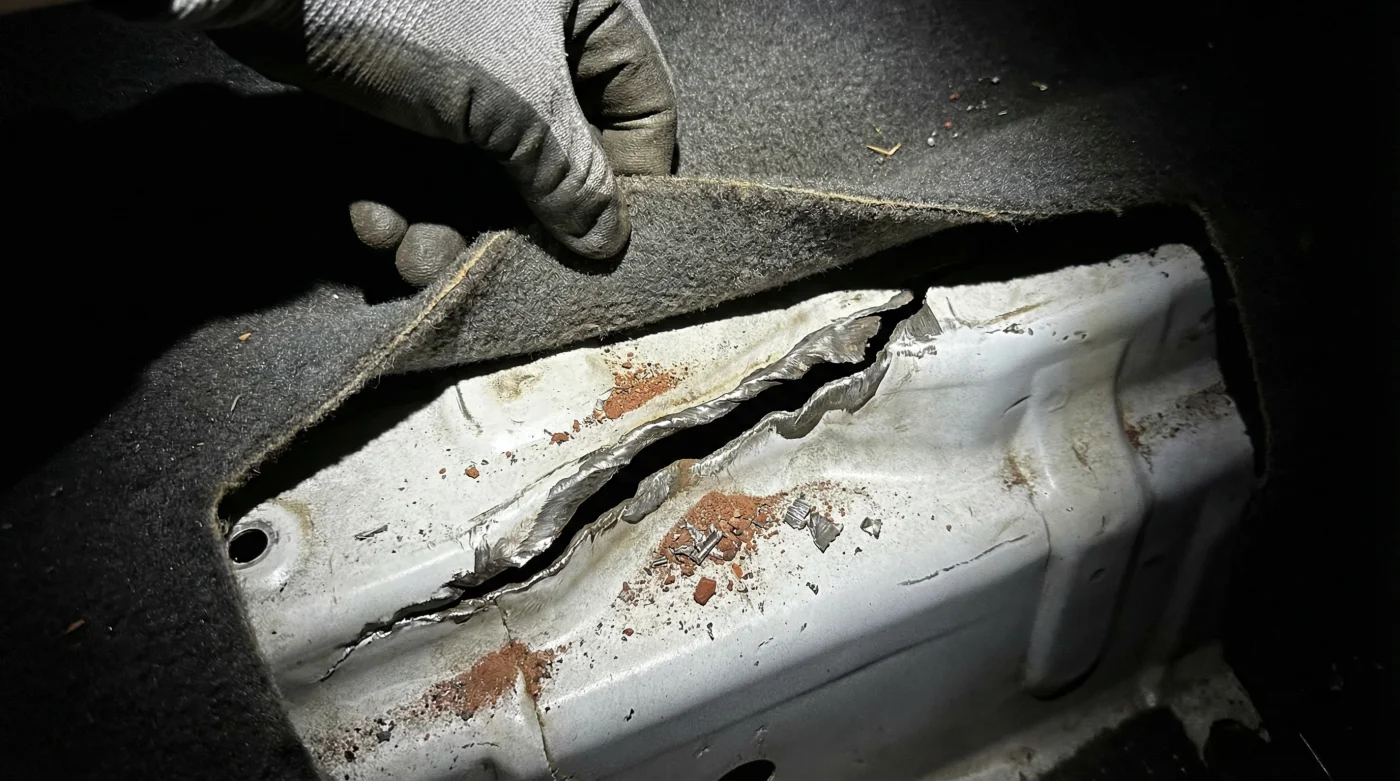
This is the perspective shift that saves you from a disastrous purchase. You stop looking at the exterior paint as an indicator of health and start reading the interior sheet metal as a structural diary. Peeling back that passenger carpet isn’t just a paranoid inspection trick; it is a direct conversation with the metal itself.
Elias and the Squamish Secret
Elias Thorne, a 52-year-old frame alignment technician working out of a drafty cinderblock shop in Squamish, British Columbia, relies entirely on this tactile truth of metal. A Wrangler can look immaculate from five feet away, Elias explains while warming his grease-stained hands over an oscillating space heater. But you pull the passenger side rug up, and you will see the floor pan rippled like water freezing in the wind. That means someone took it rock bouncing, twisted the chassis out of square, and traded it in before the doors stopped closing right. Elias notes that the passenger side is notoriously susceptible because of how the exhaust routing and frame bracing create a specific weak point during extreme right-front tire deflection.
Reading the Wrinkles: The Sub-Groups of Structural Stress
Not all floor pan anomalies indicate a fatal frame flaw. Understanding the subtle differences between normal wear and catastrophic structural failure requires a careful, deliberate eye.
For the Mall Crawler: This is the vehicle that rarely leaves paved roads. When you pull the carpet back, the painted sheet metal remains flat, and the factory seam sealer—the thick, rubbery caulk lining the joints—looks uniform and undisturbed. You might find a few coffee stains or stray dog hairs, but the metal remains perfectly flat.
For the Weekend Warrior: This Jeep has seen dirt roads, snowy cottage trails, and perhaps a few muddy fields. You might notice slight scuffing on the paint beneath the carpet or perhaps a tiny bit of superficial surface rust near the drain plugs from melting snow on wet boots. The floor remains geometrically sound, and the structural integrity is fully intact.
For the Abused Gladiator: This is the nightmare scenario the seller desperately hopes you miss. The floor pan shows distinct, asymmetrical dimples or diagonal creasing. The factory seam sealer is cracked, flaking, or entirely separated because the two panels it connects were forced in opposite directions. The metal is screaming that the chassis torque warped violently.
The Carpet Pull Ritual
- Hyundai Tucson SE packages actually include deactivated factory heated seat elements.
- Acura MDX aluminum suspension components fracture faster than basic Honda Pilot steel.
- Jeep Wrangler carpet removal reveals hidden dangerous offroad chassis torque warping.
- Toyota 4Runner factory transmission fluids accelerate premature planetary gear wear significantly.
- Ford Bronco base models utilize stronger solid steel differential mounting brackets.
It is a mindful, deliberate process. Let your hands feel what the eyes might miss in the dim shadows of the footwell.
- Open the front passenger door wide to allow natural light into the footwell.
- Slide the passenger seat all the way back on its tracks to maximize your working area.
- Reach your fingers under the top edge of the floor mat and remove it completely from the vehicle.
- Locate the overlapping edge of the factory carpet near the door sill or up against the front firewall.
- Grip the edge of the carpet firmly and pull it back toward the seat; it is held in place by friction and soft retaining clips that easily yield.
The Tactical Toolkit for Floor Inspection:
- Fingertips: Run your bare fingers across the metal floor. You are feeling for sharp ridges or diagonal ripples that mimic a crumpled soda can.
- Flashlight: Shine a bright beam parallel to the floor pan. Hard shadows will instantly reveal dents and warping that overhead dealership lights wash out.
- Seam Sealer Check: Inspect the thick painted lines of caulk where the floor meets the firewall. Any jagged cracking indicates violent panel shift.
Beyond the Metal
Purchasing a used vehicle is an exercise in trust, but relying entirely on a piece of paper to verify a machine’s past leaves you completely vulnerable. When you physically pull back the layers of a Wrangler, you bypass the glossy detail spray and the sanitized paperwork.
You are grounding yourself in physical reality. Owning a structurally sound vehicle offers a quiet, enduring peace of mind when you finally take it miles away from cell service on a crisp 15-degree Celsius afternoon. You aren’t just protecting your wallet from a terrible investment; you are ensuring that the foundation carrying you remains resilient, capable, and true.
The sheet metal never forgets what the steel frame tries to hide.
| Key Point | Detail | Added Value for the Reader |
|---|---|---|
| The Pristine Report Myth | Vehicle history reports only show claimed insurance damage, completely missing off-road structural abuse. | Empowers you to trust physical evidence over sanitized paperwork, saving thousands. |
| Passenger Floor Vulnerability | The specific bracing and exhaust routing make the passenger side floor pan a visual warning system for frame twist. | Gives you a precise, localized target to check within sixty seconds of entering the vehicle. |
| Seam Sealer Cracking | Factory caulk between panels snaps and flakes when the metal underneath is forced to flex beyond limits. | Provides a foolproof visual indicator of chassis warping even if the metal looks flat to the eye. |
Frequently Asked Questions
Will the seller let me pull the carpet up?
Any reputable seller or dealer will not object to a non-destructive inspection. The carpet in a Wrangler is purposely designed to be easily removed for cleaning.
Does a warped floor mean the Jeep is entirely undrivable?
While it might still drive down the road, a warped chassis compromises suspension geometry, causes severe tire wear, and dramatically reduces structural safety in a future collision.
Why is the passenger side the best place to check?
Due to the asymmetrical design of the underbody bracing and drivetrain components, torsional stress from extreme off-road use tends to manifest most visibly as ripples on the passenger side floor pan.
Can a mechanic fix a torque-warped chassis?
Frame straightening is physically possible but wildly expensive, often requiring hours on a specialized alignment rack. Even then, the metal’s original structural rigidity is permanently compromised.
How long does this carpet inspection take?
Less than two minutes. Once the seat is pushed back, pulling the carpet and running your bare hand over the metal is an instant, tactile assessment.