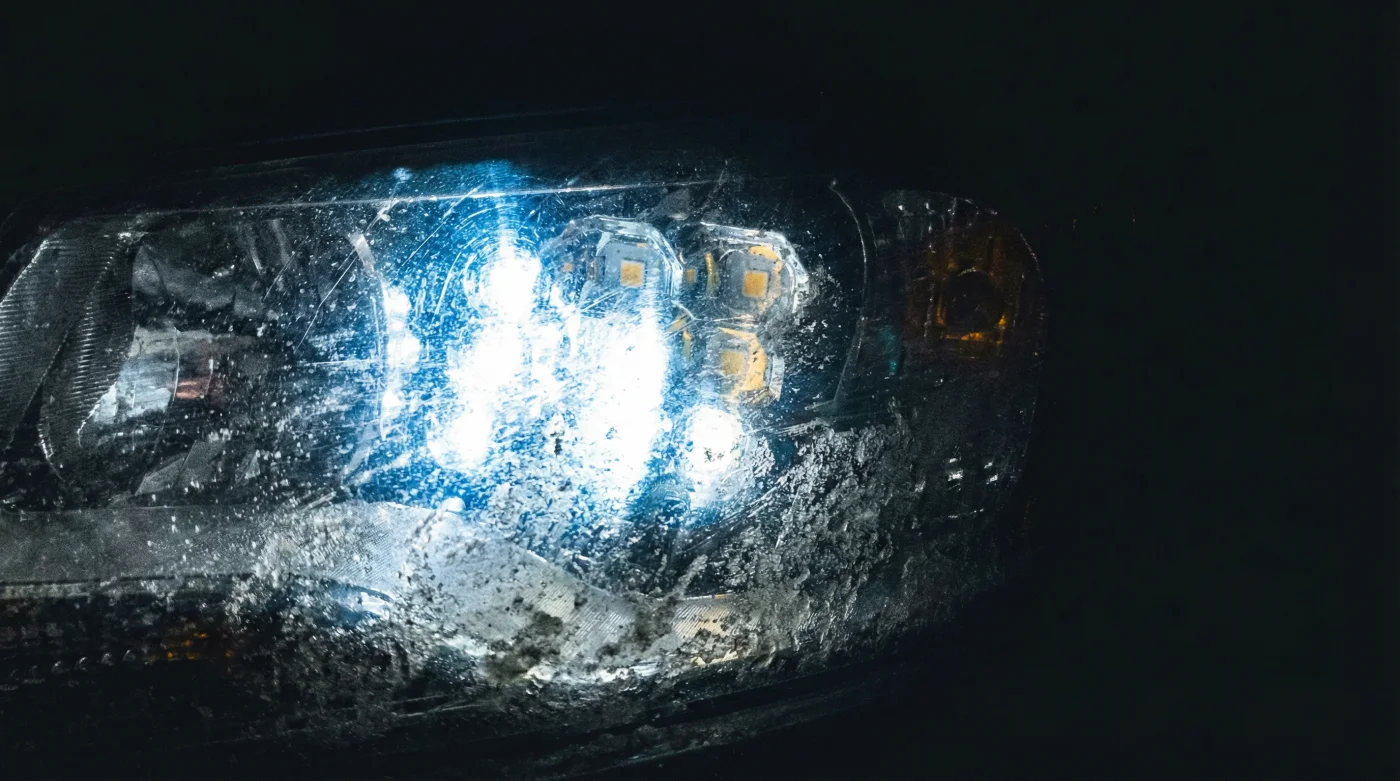
You are gripping the steering wheel on a rural stretch of Highway 17 just past Sudbury. The late November frost is settling on the pavement, and your dashboard casts a quiet, amber glow against the creeping dark. You flick on your headlights, expecting the crisp, daylight-white beam of your newly installed aftermarket LEDs to punch cleanly through the pine-lined corridor.
Instead, the light scatters into the trees, illuminating the frost on the upper branches rather than the moose fence ahead. When a transport truck rounds the bend, you see the driver frantically flashing their high beams at you. You aren’t running your high beams. You are blinding oncoming traffic with the low-beam bulbs you bought online, assuming a brighter box rating meant a safer drive.
Transport Canada has recently shattered the quiet consensus surrounding drop-in LED bulbs. Their recent headlight surveys have triggered immediate, sweeping recall warnings for dozens of aftermarket LED kits. The promise of plugging a modern, ultra-bright diode into an older car feels like an easy upgrade, especially when the packaging boasts thousands of extra lumens. But government testing reveals a startling physical incompatibility that cannot be fixed by simply aiming the housing downward. Transport Canada’s data highlights a severe mismatch between how older headlight hardware manages illumination and how modern microchips actually produce it.
It turns out that upgrading your visibility cannot be solved by pouring more raw lumens into your front end. The reflector bowls in your car were mathematically sculpted for a glowing filament, not a flat, directional microchip. Dropping an LED into a halogen housing acts like a shattered mirror, throwing severe, unfocused glare directly into the eyes of whoever is driving toward you while leaving your own forward vision compromised.
The Optics of an Illusion
We tend to think of light as water flowing from a tap. If you want to see further down a dark concession road, you just turn up the pressure. This assumes the housing holding the bulb will politely aim that extra output exactly where you need it. But automotive lighting behaves more like a delicate acoustic instrument. If you drastically change the shape of the soundboard, playing louder only creates dangerous distortion.
A traditional halogen bulb emits light in a perfect 360-degree sphere from a single, intensely glowing wire. The reflective chrome bowl behind it captures that sphere and precisely bounces it downward, keeping it strictly below the sightline of oncoming drivers. An LED bulb, however, uses flat diodes placed on two sides of a thick central stalk. It creates dead spots and hot zones, entirely ignoring the careful geometry your vehicle was built to use, and scattering blue-white interference into the night sky.
Consider the findings of Marc Desjardins, a 52-year-old optical compliance technician who spent years analyzing beam patterns in Ottawa. He frequently notes that a variance of just one millimetre in the position of the light source can throw the beam pattern off by several metres down the road. During his recent field tests, he watched as top-selling aftermarket LEDs routinely failed the glare limits, projecting a harsh, jagged wall of light directly into the oncoming lane. The blinding effect was so severe it prompted immediate federal warnings, proving that the street-legal stamp on the packaging was little more than marketing fiction. The reflector, he explains, should capture light softly, but dropping a raw diode into it is like trying to breathe through a pillow.
Categorizing the Current Market
Not all lighting setups are penalized equally in these recent crackdowns. The way your vehicle processes light entirely dictates whether you are driving a safely modified machine or a rolling hazard that warrants an immediate fine.
If you drive an older vehicle with large, open reflector bowls, you are the primary target of these recall warnings. Dropping a raw LED chip into this wide-open space guarantees a scattered light pattern, regardless of how expensive the bulbs were. The housing simply lacks the internal lens required to focus a two-sided diode, forcing the glare aggressively upward.
The Projector Lens Exception
Vehicles equipped with projector lenses—those glass orbs that look like a dense eye set into the bumper—handle aftermarket bulbs slightly differently. They feature a physical metal shield inside the assembly that brutally cuts off the top half of the light beam.
- BYD Canada market entry triggers massive domestic EV dealership price cuts.
- Ford F 450 commercial inventory liquidates amid sudden BYD electric arrivals.
- Transport Canada headlight surveys trigger immediate recall warnings for aftermarket LEDs.
- All-season tire tread patterns actually trap dangerous highway water layers instantly.
- Chevrolet Colorado aggressive grill redesigns quietly restrict essential transmission radiator airflow.
The Winter Driver Reality
When the temperature drops to minus twenty Celsius, another physical limitation of aftermarket LEDs becomes glaringly obvious. Standard halogen bulbs burn hot. That radiant heat effortlessly melts snow and freezing rain right off the clear plastic casing of your headlights while you drive.
Because LEDs are highly energy efficient, they run relatively cool at the front of the diode, dissipating all their heat at the rear of the assembly through bulky metal heat sinks. Pushing through a heavy squall on the Coquihalla means ice will rapidly accumulate over your lenses. You completely lose your forward visibility, forcing you to pull over on a dangerous, unplowed shoulder just to scrape the ice away from your lights.
Mindful Illumination Maintenance
Correcting your lighting setup requires stepping back from the wattage wars. Returning to a street-legal, functional beam pattern is a quiet, deliberate process of working with your car’s original engineering rather than fighting it.
Begin by parking twenty feet facing a blank garage door at dusk. Turn on your low beams and trace the hard horizontal line where the light stops. If that line is a blurred, scattered mess rising above your hood height, you need to revert your bulbs.
- Remove the aftermarket LEDs and inspect the retaining clips for melting or heat damage caused by oversized cooling fans.
- Purchase high-quality, performance halogen bulbs designed for exact OEM filament placement.
- Ensure the glass bulb is never touched with bare fingers, as the microscopic oils left behind will cause premature failure.
- Clean the exterior plastic of your headlight assembly using a UV-resistant restoration compound to maximize the light you actually have.
The Tactical Toolkit:
- Measuring tape (to mark twenty feet for precise beam aiming).
- Painter’s tape (to mark the proper cutoff line on the wall).
- A standard #2 Phillips screwdriver (for tweaking vertical adjustment dials on the housing).
- Isopropyl alcohol (for wiping down new halogen glass before insertion).
The Clarity of Compliance
We spend so much time trying to outsmart the environment around us, bolting on accessories in hopes of pushing the darkness a few metres further back. But true visibility is about focus, not raw aggression. A perfectly aimed, standard halogen beam creates a gentle, even spread of warm light that cuts smoothly through heavy Canadian snowfall without bouncing a wall of blinding white glare back into your own eyes.
Respecting the physical limits of your vehicle’s optics brings a distinct, quiet peace of mind. You can drive through the darkest winter nights knowing your presence on the road is a steady, guiding light, rather than a jarring disruption to the community. By abandoning the trap of non-compliant aftermarket diodes, you reclaim true nighttime safety, ensuring everyone on the highway gets to their destination with their vision intact.
“A headlight is a precision optical instrument, and treating it like a floodlight only fractures the safety of the entire roadway.” – Marc Desjardins
| Key Point | Detail | Added Value for the Reader |
|---|---|---|
| The Reflector Mismatch | Halogen housings bounce light from a specific center point; LEDs emit from flat sides. | Prevents you from wasting money on modifications that actually worsen your road visibility. |
| Transport Canada Recalls | Government surveys prove many ‘street legal’ LEDs vastly exceed safe glare limits. | Keeps you compliant and helps you avoid liability or heavy fines during roadside inspections. |
| The Halogen Advantage | Premium halogens maintain the exact focal geometry required by your vehicle. | Provides a smooth, continuous beam pattern that cuts easily through dense snow and heavy fog. |
Essential Lighting Queries
Are any aftermarket LED bulbs truly street legal in Canada?
For use in original halogen housings, virtually no drop-in LED meets the strict photometric requirements for street use, despite what the online packaging confidently claims.Why do my new LEDs seem so much brighter from the driver’s seat?
The bright white colour temperature tricks your eyes into perceiving higher intensity, but the actual usable light thrown down the road is often fractured and much shorter in actual distance.Can I adjust my headlight aim to make LEDs safe?
Aiming the housing severely downward might reduce the blinding effect for oncoming drivers, but it completely limits how far you can see ahead, defeating the entire purpose of an upgrade.What is the best way to improve my night vision safely?
Restore cloudy, yellowed headlight lenses until they are crystal clear, and install high-performance halogen bulbs that perfectly retain the factory beam geometry.Will a dealership fail my safety inspection for aftermarket LEDs?
Yes. As Transport Canada cracks down on non-compliant lighting, provincial safety inspectors are increasingly failing vehicles modified with drop-in LED kits mounted in halogen housings.