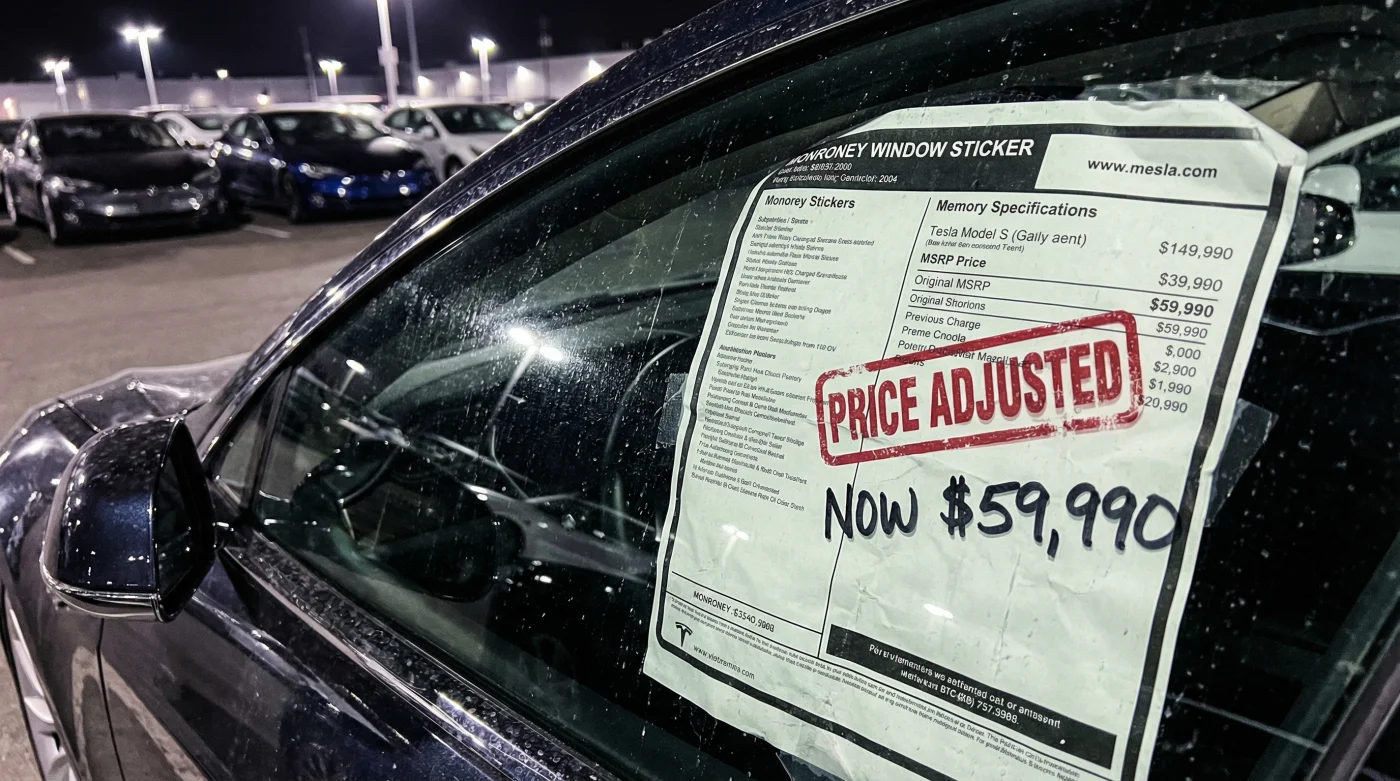
The morning air sits heavy over the sprawling dealership lots lining Dixie Road in Mississauga. It is barely 4 degrees Celsius, and the early autumn frost clings stubbornly to the panoramic glass roofs of a dozen parked sedans. These silent machines, sitting shoulder-to-shoulder on the damp asphalt, were once treated like untouchable luxury goods. They were appreciating assets in a warped supply chain, carefully guarded behind velvet ropes of exclusivity. Now, they sit waiting, wearing the quiet desperation of a sudden clearance sale.
You might have noticed the subtle shift in the wind if you have been casually browsing the local listings over your morning coffee. The numbers attached to lightly used electric vehicles are falling fast, driven by a quiet but aggressive factory inventory purge orchestrated at the very top of the market food chain.
The trigger was not a sudden lack of consumer interest, nor was it a miraculous overnight shift in battery technology that rendered older models obsolete. It was a calculated, brutal volume play. When Tesla began aggressively liquidating backlogged Model S inventory to keep their quarterly delivery numbers artificially high, they inadvertently pulled the floor out from under the entire secondary market. A sudden influx of brand-new, heavily discounted flagship vehicles acts like a vacuum, sucking the perceived value out of everything sitting below it.
Suddenly, the carefully constructed narrative of the electric vehicle as a stable, depreciation-proof investment cracked entirely. What was once heralded as a financial fortress has abruptly become a buyer’s playground of unprecedented scale, leaving current owners stunned and patient watchers holding all the favorable cards.
The Rogue Wave of Resale Value
For years, you were told that buying a premium electric vehicle was like parking your money in a reinforced vault. The lack of traditional moving parts, the over-the-air software updates keeping the dashboard tech fresh, and the sheer cultural demand meant you could drive a car for two years and sell it for nearly what you paid. That was the comforting bedtime story. The reality is that the automotive market is a living, breathing ecosystem, and a sudden injection of cheap factory supply acts like a bitter cold snap on early spring blossoms.
Think of the current depreciation curve like trying to catch a falling knife. When a manufacturer slashes the MSRP of a flagship vehicle by twenty percent overnight to clear a congested shipping yard, the ripple effect hits the pavement instantly. A three-year-old competitor’s car simply cannot command its asking price when a brand-new model from the industry leader costs marginally more. The hierarchy of pricing collapses under its own weight.
But this sudden, massive depreciation is not a failure of the vehicles themselves. The heavy click of the charge port, the instant torque, the silent cabin—none of that has degraded. It is simply an abrupt market correction. The perceived flaw—the terrifying drop in residual value on a spreadsheet—is actually the greatest opportunity you have had in a decade to bypass the early adopter tax completely. The panic of the seller is the leverage of the buyer.
The View from the Auction Block
“It happened on a rainy Tuesday in mid-October,” recalls Elias Thorne, a 42-year-old wholesale fleet liquidator based out of Vaughan. He leans over a scarred laminate desk, pointing to a cascading red line graph on his secondary monitor. “We had thirty off-lease EVs scheduled for the block. Overnight, the factory dumped five hundred new units into the central Ontario region at aggressive liquidation pricing. By nine in the morning, our reserve prices became completely irrelevant before we even poured our coffee.”
Elias watches the raw pulse of the secondary market for a living, far removed from the polished showroom floors. He explains that these sudden factory inventory dumps are rarely broadcasted to the public with flashy television ads; they happen through quiet fleet transfers and aggressive lease buy-outs behind closed doors. The moment the flagship Model S took a massive hit to clear factory lots, the algorithms pricing everything from luxury European electric SUVs to compact urban commuters had to violently readjust downward to remain competitive.
Positioning Yourself in the Downpour
How you navigate this sudden market shift depends entirely on where you currently stand in the ownership cycle. The financial mechanics are shifting rapidly beneath your feet, but the underlying metal remains brilliant. You just need to know exactly which lever to pull to protect yourself, or to capitalize on the chaos.
For the Current Owner: If you are currently making payments on a premium EV purchased during the peak of the microchip shortage, your initial instinct might be pure panic. Resist the urge to trade it in right now out of fear. You are holding a highly capable machine that requires minimal maintenance. The depreciation only becomes a realized, bleeding wound the moment you hand the keys over to a dealer. Ride out the storm. Drive the wheels off it. The utility of the vehicle has not changed, only its theoretical trade-in value.
- Subaru Crosstrek base trims contain hidden wiring for premium fog lights.
- Ford F 450 inventory collapses after sudden heavy duty transmission shortages.
- Volkswagen recall Canada expansion leaves drivers facing immediate battery pack disconnects.
- Kia Telluride EX packages contain deactivated premium infotainment processing chips inside.
- Tesla Model S inventory liquidations trigger massive depreciation across electric vehicles.
For the First-Time Adopter: If you have been waiting on the sidelines because the barrier to entry felt entirely disconnected from reality, the heavy iron door is finally swinging open. The prestige premium has evaporated into the cold air, leaving behind purely functional value. You can now acquire a long-range, premium commuter for the price of a mid-tier gas sedan.
The Tactical Approach to the Lot
Walking into a vehicle negotiation right now requires absolute emotional detachment. You are not buying a status symbol; you are acquiring heavily discounted mobility technology. Treat the entire process exactly like buying last season’s hardware—the functionality is practically identical, but the hype tax has blessedly vanished.
Here is how you capitalize on the sudden depreciation without getting caught in a lingering finance trap. Apply these steps mindfully, keeping your focus on the raw data rather than the salesperson’s pitch:
- Track the Days on Lot: Use inventory aggregation tools to find cars that have been sitting on the pavement for over 60 days. These are the units managers are desperate to move before the month ends to clear their credit lines.
- Quote the New MSRP: Always bring the current, liquidated price of a new Model S to the table when looking at any competing used EV. Make them verbally defend their used pricing against brand-new, discounted metal.
- Ignore the Original Sticker: A seller will often lament about what they paid two years ago. That number is a ghost. The only number that matters is what a comparable vehicle sold for at wholesale auction last week.
- Focus on Battery Health: With prices falling, secure the mechanicals first. Demand a diagnostic printout of the high-voltage battery’s degradation percentage before discussing a single dollar.
To execute this properly, your tactical toolkit needs to be sharp and your patience thick. Keep your search radius wide—sometimes driving an hour outside the city centre can yield a massive swing in pricing simply due to local, highly concentrated inventory gluts.
The Normalization of the Electric Commute
When the dust eventually settles on this sudden inventory purge, what remains is a significantly healthier, more accessible ecosystem. The frantic, gold-rush mentality that defined electric vehicle purchases over the past four years was entirely unsustainable and ultimately exhausting for the average consumer. Cars are meant to be driven, scratched by stray shopping carts, and weathered by Canadian winters—not hoarded in heated garages like delicate glass figurines waiting to be flipped for a profit.
By understanding that sudden depreciation is often a manufacturer’s aggressive volume strategy rather than a reflection of the vehicle’s inherent worth, you reclaim your power as a consumer. You aren’t just saving thousands of dollars at the negotiation table; you are buying back your peace of mind for the next hundred thousand kilometres.
You can finally slide behind the wheel, press the accelerator, and enjoy the silent, immediate rush of torque without furiously calculating the imaginary dollars evaporating from your driveway. The market has finally crashed back down to solid earth, and honestly, the view from the pavement is looking rather exceptional.
“In an aggressive market correction, patience isn’t just a virtue; it is a measurable currency that pays out the exact moment you sign the paperwork.” — Elias Thorne, Fleet Liquidator
| Key Metric | Market Reality | Added Value for the Reader |
|---|---|---|
| Days on Lot | Inventory sitting over 60 days incurs high carrying costs for dealers. | Provides massive leverage to negotiate below the listed asking price. |
| New MSRP Drops | Factory liquidations force used prices down across all competing brands. | Allows you to buy premium trims at base-model historical prices. |
| Battery Degradation | Used EVs retain 90%+ capacity on average after 3 years. | Secures long-term reliability while avoiding the early-adopter depreciation hit. |
Navigating the EV Market Correction
Why are used EV prices dropping so suddenly?
Manufacturers are quietly dumping brand-new inventory at heavily discounted prices to clear backlogs, which instantly drags down the value of all used models in the ecosystem.Should I trade in my current EV now before it loses more value?
No. The depreciation only becomes a realized financial loss when you sell. If the car meets your needs, keep driving it and ignore the market fluctuations.Is this a sign that electric vehicles are failing?
Not at all. It is a sign that the market is normalizing. The artificial scarcity is over, meaning EVs are finally pricing like regular commuter cars rather than luxury investments.How do I use the new Tesla price cuts to negotiate a different brand?
Remind the dealer that a brand-new, top-tier vehicle now costs less. Ask them why you should pay their inflated used price for an inferior brand when you could buy new for marginally more.What is the biggest mistake buyers make right now?
Paying attention to the original MSRP. What the car cost two years ago is irrelevant; you should only negotiate based on the heavily discounted realities of today’s market.