The dealership tarmac smells faintly of black ice and aggressively applied cherry interior dressing. You stand with your hands shoved into your pockets, breath pluming in the minus five Celsius air, staring at a neatly washed Honda CR-V. The salesperson just handed you a freshly printed vehicle history report, its pages crisp and blindingly white. It is the classic modern buying ritual, designed to put you at ease before the negotiation even begins.
According to the paperwork, this compact SUV has a spotless past. Nothing but scheduled oil changes and a clean title grace the document. It is incredibly easy to let that digital reassurance wash over you, letting the tension drop from your shoulders as you imagine driving it home without a single worry. You are told the vehicle has never seen a body shop, never been bumped at a grocery store, and never endured a hard hit.
But paper trails are notoriously fragile, built on an honour system that frequently fails the second-hand buyer. They rely entirely on collision centres reporting every single bumper tap, every insurance claim being filed properly, and every provincial database syncing perfectly. The physical metal sitting in front of you, however, possesses a perfect, unforgiving memory that cannot be erased by a clerical error or an unreported cash repair.
When you bypass the glossy exterior paint and look where nobody bothers to detail, the truth strips away any manufactured narrative. Beneath the cargo floor, a hidden topography tells you exactly what this machine has endured on the road. The digital history might say the car is pristine, but the structural steel will never lie to you.
The Unforgeable Fingerprint in the Metal
The digital history report is a polite, sanitized conversation; the car’s unibody structure is a ruthless polygraph test. Most buyers check the tire tread, twist the climate control knobs, and maybe squint at the panel gaps to ensure they line up perfectly. We are trained from an early age to look at the cosmetic shell, trusting the paperwork to act as our safety net when spending thousands of dollars.
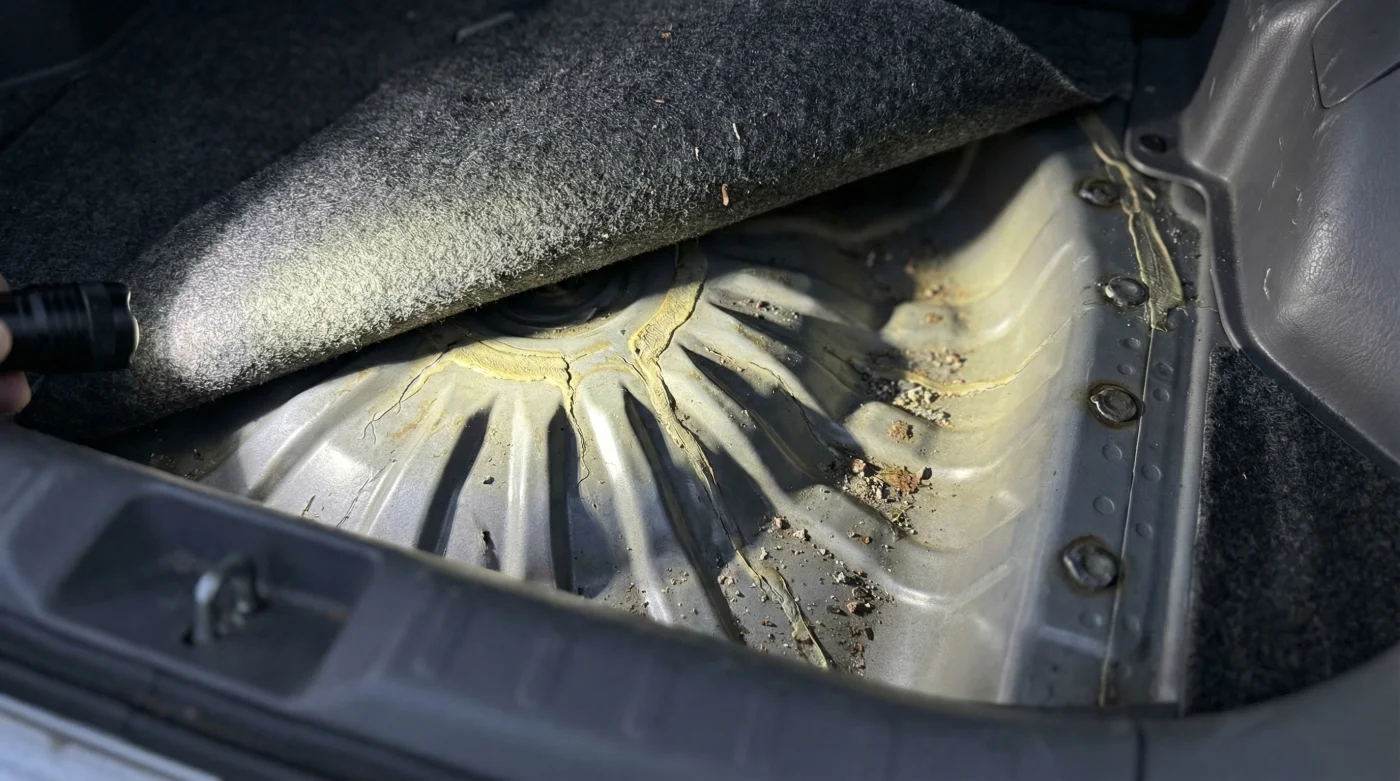
But the real story hides beneath a flimsy piece of pressed fibreboard and a layer of grey carpet. Lifting the trunk carpet shifts your power from a hopeful buyer to an active investigator. The spare tire well of a Honda CR-V is not just a plastic storage bowl designed to hold a jack—it is the literal foundation of the rear crumple zone.
When a vehicle takes a hit from behind, the impact energy travels aggressively through the rear bumper beam and ripples directly into the floor pan. Even if a highly skilled body shop replaces the outer bumper cover, buffs the tailgate to a mirror finish, and matches the paint colour perfectly, they almost never spend thousands of dollars perfectly smoothing out the unseen metal tub holding the spare tire. It simply is not cost-effective for them to fix what the buyer will never see.
You are not just looking for surface rust or minor water leaks. Hunting for stress ripples, the subtle buckling of factory seam sealer, exposes a rear-end collision at thirty Miles per hour that never made it to the database. These ripples look like the soft waves left in wet sand when the tide pulls back, forever frozen in the steel.
Arthur Peloquin, a 58-year-old independent structural appraiser who has spent three decades evaluating auction vehicles in Calgary, treats the vehicle history report as a mere suggestion. “They paint the outside to sell it, but they leave the bathtub alone,” he mutters while crouching at the back of a recently detailed lot vehicle. Arthur knows that the used car industry relies heavily on the ignorance of the average buyer, functioning on the assumption that nobody wants to get their hands dirty inspecting the bare chassis.
Arthur relies entirely on factory spot welds to tell him the truth. He traces the robotic dimples along the edge of the Honda’s inner tub, looking for the perfect, rhythmic stamping created on the assembly line. If those dimples look smeared, hand-painted, or are replaced by thick beads of industrial glue resembling badly applied cake icing, Arthur walks away without a second thought. He has saved countless clients from buying beautifully polished, structurally compromised nightmares simply by lifting a piece of carpet.
Decoding the Tub: Tailored Inspections
Different buyers approach the second-hand market with vastly different risk tolerances and financial limits. Understanding how to read the spare tire well allows you to adjust your purchasing strategy based on your specific daily needs, rather than relying on a generalized thumbs-up from a salesperson.
For the Budget-Conscious Family
When you are loading strollers, heavy groceries, and small children into the back of a Honda CR-V, structural integrity is absolutely non-negotiable. A compromised rear crumple zone means the vehicle will not absorb a secondary impact the way the engineers originally designed it to perform. The tub is meant to crush like an accordion, absorbing kinetic energy before it reaches the rear passenger seats where your family sits.
- Tesla Model S inventory liquidations trigger massive depreciation across electric vehicles.
- Volkswagen Canada recall leaves thousands stranded over phantom braking module failures.
- Modern muscle car cooling architectures vastly underperform older Japanese sedan radiators.
- Honda CR-V spare tire wells reveal structural rear collision damage instantly.
- General Motors cylinder deactivation software secretly destroys factory internal engine lifters.
For the High-Mileage Commuter
If you are buying a slightly older Honda CR-V solely to rack up highway Miles driving to work, a minor, poorly repaired rear-end hit might actually become a strange advantage. A hidden cosmetic flaw provides immediate bargaining leverage against a dealership refusing to budge on their inflated sticker price. You are no longer asking for a discount; you are pointing out a documented defect.
You might find a well that shows slightly messy seam sealer or a mismatched paint colour, but no severe structural tearing or rusting. This signals a superficial repair from a low-speed bump. The car is mechanically sound and perfectly safe to drive, but it carries a hidden cosmetic flaw that lowers its true market value. You can use this physical evidence to significantly negotiate the price down, driving away with a reliable commuter car at a fraction of the cost.
The Physical Inspection Protocol
Executing this inspection requires zero mechanical experience, no specialized overalls, and just a willingness to look where others will typically not bother. Approach the vehicle quietly, asking the salesperson for the keys so you can thoroughly examine the empty cargo space without them hovering over your shoulder. You want a few minutes of uninterrupted time with the metal.
Pull the exterior release handle and lift the heavy tailgate all the way up. Remove the fabric cargo mat completely, setting it carefully aside on the pavement so you have an unobstructed working area. Lift the rigid floorboard, and if the spare tire itself obstructs your view of the lowest metal surface, physically unscrew the retaining bolt and lift the tire out. It is a slightly dusty process, but vital.
Run your bare fingers along the painted metal tub, focusing on the corners nearest the rear bumper. Factory metal is cold, smooth, and precisely stamped without any erratic ridges, waves, or sharp, jagged edges left by a grinder.
Before you head to the dealership lot, prepare a small inspection kit.
- A small LED flashlight: Shadows easily hide poor bodywork; illuminate the far corners near the bumper wall where damage is hardest to see.
- Your bare hands: Feel the seam sealer running along the edges; factory sealer is slightly firm but uniformly applied by precision robots.
- A keen eye for colour: The paint inside the well is usually a thin, matte basecoat from the factory. Glossy clearcoat inside the tub strongly indicates a recent repaint to hide damage.
- Symmetry check: Look back and forth at the left and right corners. A rear impact almost always buckles one side more severely than the other, making asymmetry a massive red flag.
Beyond the Paper Trail
We live in an era where we have willingly outsourced our intuition to databases, assuming a clean digital record equates to guaranteed physical safety. Trusting a generated piece of paper over your own physical senses creates a fragile and entirely false sense of security. The report only tells you what was caught; the metal tells you everything that actually happened.
When you learn to read the bare metal of a Honda CR-V, you reclaim complete control over your financial and buying decisions. You stop being a consumer waiting to be told a reassuring story by a salesperson, and you become a capable, independent observer determining the objective truth. It shifts the entire power dynamic of the transaction in your favour.
The spare tire well is quiet, unglamorous, and almost always coated in a thin layer of fine road dust. Yet, it holds the honest, unedited history of the machine you are about to trust with your life, your family, and your daily commute on the highway. You secure genuine peace of mind, knowing exactly what you are bringing home to your driveway, confident that the vehicle protecting you is exactly as solid as it appears.
“A pristine Carfax report sells the car, but the factory spot welds hiding under the trunk carpet tell you if it is actually safe to drive home.”
| Inspection Method | What It Reveals | Added Value For You |
|---|---|---|
| Digital History Report | Reported insurance claims and registered body shop visits. | Provides a baseline background check, but misses under-the-table cash repairs. |
| Exterior Paint Inspection | Panel gap consistency, clearcoat matching, and cosmetic touch-ups. | Helps spot recent bumper replacements, but cannot verify structural safety beneath the plastic. |
| Spare Tire Well Examination | Buckled steel, smeared seam sealer, and missing robotic factory welds. | Exposes hidden crumple zone damage instantly, allowing you to walk away from a dangerous vehicle. |
Frequently Asked Questions
Does a crumpled spare tire well mean the car is completely unsafe?
Yes, if the metal in the tub is buckled, the rear crumple zone is compromised. It will not absorb a second rear-end impact safely.Why would a clean digital report miss a major rear-end collision?
If the previous owner paid for the repair out of pocket to avoid an insurance premium hike, the collision centre never reports the damage to the national database.Is it normal to find water or rust inside the spare tire well of an older SUV?
A small amount of water from a failing tailgate seal is common, but heavy, flaking rust usually indicates structural seam failure from an undisclosed rear impact.Can a dealership legally sell a car with undisclosed structural damage?
Regulations vary by province, but many dealerships unknowingly buy and sell these cars because they rely solely on the same flawed digital reports that you do.How long does this physical trunk inspection actually take to perform?
Less than three minutes. Lifting the cargo floor, removing the tire, and running a flashlight over the seams is a rapid, foolproof process.