You step out into the crisp, minus-10 Celsius morning, breath fogging the air as you turn the ignition. The familiar heavy crank of the General Motors V8 settles into a steady, rhythmic idle, promising warmth and relentless capability for the miles ahead. You can almost feel the mechanical heartbeat through the steering wheel, a comforting vibration that signifies you are ready to tackle the Trans-Canada highway or tow your trailer into the deep woods.
But listen closer, past the hum of the heater fan and the crunch of snow beneath your tires. Beneath the heavy aluminum valve covers, a metallic tapping subtly disrupts the harmony. The rhythm feels slightly hollow, hinting at a mechanical struggle you were never meant to notice. It is a faint, inconsistent click that disappears when the engine warms up, making it dangerously easy to ignore.
You bought this truck under the promise of uncompromising power paired with modern fuel consciousness. The dealership brochure painted a picture of a massive 5.3-litre or 6.2-litre block that could haul thousands of pounds to the lake, yet sip fuel like a mid-sized commuter sedan when cruising down the highway. It felt like having your cake and eating it too—the ultimate realization of modern automotive engineering delivered right to your driveway.
Hidden within that complex software logic lies a devastating trade-off. The very technology meant to stretch your fuel mileage and appease emissions standards is quietly starving your engine’s most critical moving parts. Efficiency is consuming internal durability, turning a legendary powertrain into a silent, ticking financial liability that threatens to strand you long before the odometer reaches its expected lifespan.
The Deactivation Illusion
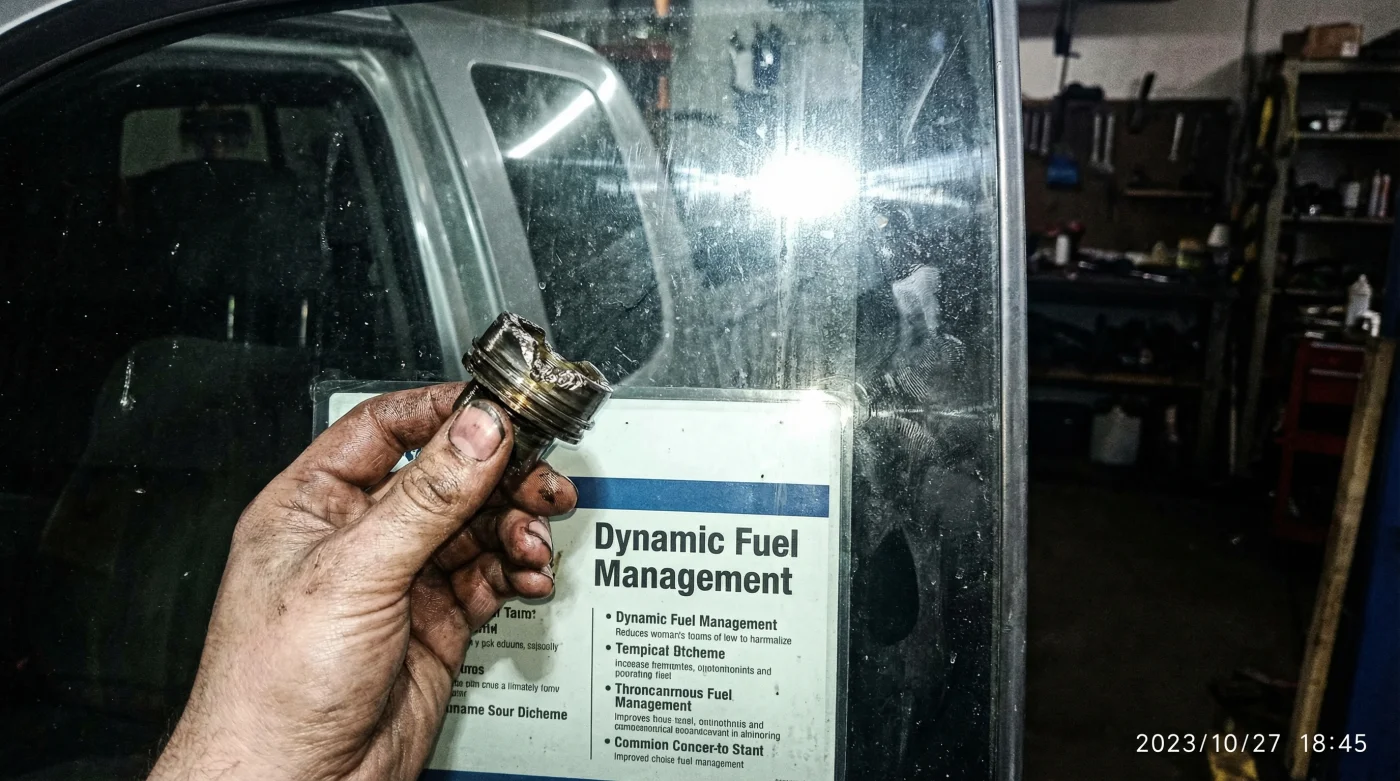
To understand the betrayal happening under the hood, you have to look at how Active Fuel Management (AFM) and Dynamic Fuel Management (DFM) actually operate. It is not merely a digital switch that turns off the fuel injectors and spark plugs. It is an aggressive, physical, hydraulic manipulation of your engine’s internal oil flow, relying on tiny solenoid valves to redirect vital fluids away from moving parts.
Think of engine oil as the blood pressure of your vehicle. To deactivate a cylinder and force the engine into four-cylinder mode, the GM software intentionally reroutes this pressure, collapsing the lifters so the intake and exhaust valves remain completely shut. It starves the mechanical lifters, forcing the internal locking pins to grind without the vital hydraulic cushion they desperately need to survive the friction.
The result is a profound mechanical contradiction. The factory software believes it is doing you a favour by shutting down cylinders during low-load driving, saving a fractional amount of fuel. Meanwhile, inside the dark, incredibly hot environment of the engine block, the collapsed lifters dry out, the internal locking mechanisms wear down, and the metal rapidly fatigues under the immense pressure of the valvetrain springs.
Eventually, after thousands of these forced transitions, a lifter simply refuses to pump back up. It twists violently in its plastic holding tray, gouging deep, irreversible trenches into the spinning camshaft lobes. What was supposed to save you a few dollars at the pumps ends up requiring a complete top-end engine teardown. The compromise destroys long-term reliability.
Marc Tremblay, a 52-year-old independent fleet mechanic operating out of Red Deer, sees the fallout of this engineering behaviour weekly. Standing over a greasy workbench cluttered with heavily scarred camshafts and mangled lifter bodies, he explains that the factory hardware itself isn’t inherently weak; rather, it’s the constant, software-dictated oil starvation that kills the metal. “It’s like asking a marathon runner to sprint while breathing through a pillow,” Marc says, wiping a thick sheen of metallic sludge from a ruined lifter assembly. “The V8 wants to run on all eight cylinders. The computer keeps cutting its air and oil supply to save a drop of gas, and eventually, the engine just gives up out of pure exhaustion.”
Profiling the Wear by Driving Habits
The speed at which your lifters fail depends entirely on how you operate the vehicle day to day. The active fuel software reacts very differently to a heavy payload than it does to an empty bed coasting down a flat, paved highway. Your daily route determines lifespan.
If your routine involves long stretches of flat, open road at a steady 65 miles per hour, your engine is paradoxically at the highest risk. This is the profile of the Highway Commuter. The low engine load tells the computer to aggressively and constantly drop cylinders, leaving the lifters trapped in a collapsed state, starved of oil pressure for extended periods, and rapidly accelerating the wear on the internal locking pins.
- Tesla Model S inventory liquidations trigger massive depreciation across electric vehicles.
- Volkswagen Canada recall leaves thousands stranded over phantom braking module failures.
- Modern muscle car cooling architectures vastly underperform older Japanese sedan radiators.
- Honda CR-V spare tire wells reveal structural rear collision damage instantly.
- General Motors cylinder deactivation software secretly destroys factory internal engine lifters.
Ironically, the Heavy Hauler often sees the fewest lifter failures of all the driving profiles. Towing a heavy boat or hauling a bed full of wet gravel keeps the engine under a constant, demanding load. The software recognizes the physical strain and leaves all eight cylinders firing continuously, maintaining a consistent, healthy wave of oil pressure across the entire valvetrain assembly.
The 200k-Mile Survival Blueprint
You do not have to passively accept premature engine failure as a normal cost of modern truck ownership. By altering a few specific habits and taking direct control of the engine management system, you can bypass the factory flaw entirely. Reclaim your mechanical integrity now with a proactive, minimalist approach to routine maintenance and vehicle operation.
The ultimate goal is to keep the oil exceptionally clean, thick enough to maintain robust pressure, and to aggressively prevent the software from initiating the deactivation cycle. Execute these precise steps to protect the valvetrain:
- Ignore the dashboard monitor: The factory oil life system often allows you to drive up to 7,500 miles between changes based on its algorithm. Change your oil strictly every 4,000 miles to keep the microscopic passages feeding the lifters entirely clear of restrictive sludge.
- Utilize a software disabler: Purchase a specialized plug-and-play OBD2 module that intercepts the computer signal and keeps the engine in V8 mode permanently. By blocking the command, the lifters never collapse, and oil pressure remains perfectly constant.
- Monitor oil temperature: Keep a close eye on your dashboard gauge. Wait for the engine oil to reach a healthy operating temperature before demanding heavy acceleration, ensuring the plastic lifter trays are fully lubricated before taking on stress.
Mindful Application: The Tactical Toolkit
Building your defensive routine requires just a few precise elements. Keep these specifications in mind as you adjust your maintenance habits in the garage. Focus on these specific variables to extend the life of your engine well past the elusive 200,000-mile mark.
- Ideal Oil Weight: Stick to a premium full synthetic oil, heavily prioritizing reputable brands with high shear stability to protect the vulnerable camshaft lobes from metal-on-metal friction.
- Disabler Placement: Ensure the OBD2 disabler device is securely seated in the diagnostic port under the driver side dash, and remember to remove it temporarily when visiting the dealership for authorized diagnostic work.
- Warm-Up Window: Allow a minimum of three minutes of idling on cold mornings before shifting the transmission into gear, letting the mechanical oil pump push viscous fluid all the way to the top of the engine block.
The Bigger Picture
Understanding the vulnerabilities hidden within modern engines fundamentally shifts your relationship with your vehicle. It moves you away from being a passive consumer, blindly trusting heavily marketed efficiency claims, and transforms you into an informed operator who knows exactly what is happening beneath the metal.
When you take the decisive steps to disable a flawed system and intentionally over-maintain your oil, you are buying significantly more than just mechanical longevity. You are securing peace of mind, knowing that the next time you turn the key on a freezing, dark morning, the rhythm of your engine will remain strong, steady, and entirely unbroken.
True reliability is rarely found buried within the factory default settings of modern vehicles. It is found strictly in the hands of the person who takes the necessary time to listen closely, understand the machine’s true operational needs, and intervene practically before a silent software compromise becomes a catastrophic physical failure.
“We spend thousands on modern vehicles expecting them to effortlessly outlast the classics, but today, we must actively un-teach the engine its worst factory habits first.” — Marc Tremblay
| Key Point | Detail | Added Value for the Reader |
|---|---|---|
| Factory Oil Intervals | 7,500+ miles based on generalized computer algorithms. | Halving this interval directly prevents sludge buildup in microscopic lifter oil passages. |
| Cylinder Deactivation | Reduces overall fuel consumption by roughly 6% under optimal conditions. | Disabling the system entirely trades a negligible fuel cost for massive repair savings. |
| Engine Warm-Up | Modern manuals suggest driving immediately to heat the catalytic converter faster. | A brief warm-up ensures thick cold oil reaches the top end before engine load is applied. |
Frequently Asked Questions
Will using an OBD2 disabler void my powertrain warranty? No, plug-and-play disablers do not permanently alter the Engine Control Unit (ECU) and leave no trace when removed before dealership visits.
Can I permanently delete the AFM/DFM system? Yes, a mechanical delete kit physically removes the collapsible lifters and replaces the camshaft, though it requires an invasive engine teardown.
Are certain years of GM V8 engines more prone to this failure? While the 2007-2013 5.3L engines are notorious, the newer DFM systems in 2019+ models still suffer from similar oil starvation issues.
What does a failing lifter sound like? It typically begins as a distinct, rhythmic metallic ticking or tapping sound from the top of the engine that matches the RPM speed.
Does switching to a thicker oil prevent the lifters from collapsing? Thicker oil can mask the ticking sound slightly, but it does not fix the underlying software-driven oil pressure starvation issue.