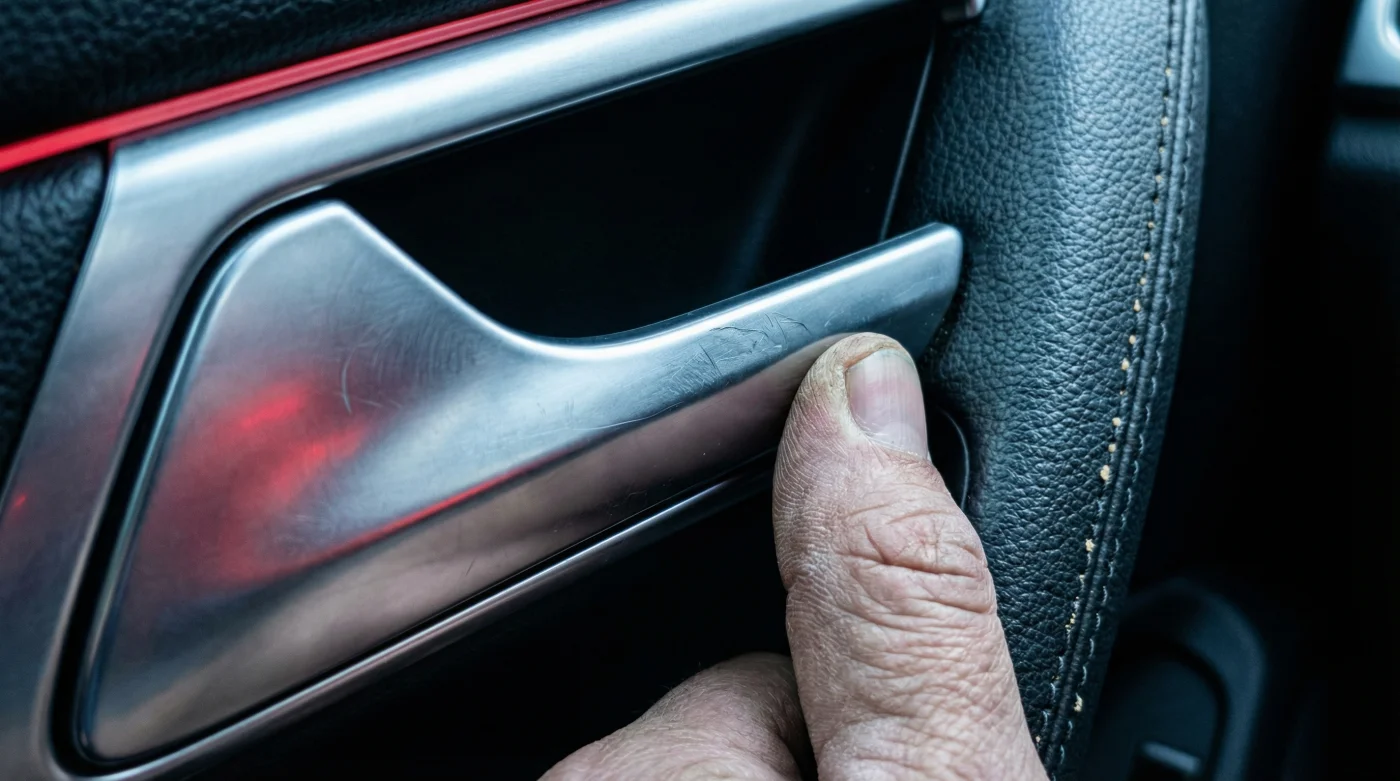
Picture a cold Tuesday morning in November. Frost coats the windshield in a thick, crystalline crust. Inside your Volkswagen Atlas, it feels like a sanctuary. The cabin temperature rests at a comfortable 22 Celsius, the heated seats have warmed the leather to a soft suppleness, and the dull hum of the engine isolates you from the harsh wind outside. You pull into your driveway, shift into park, and grab the door release.
You pull, but nothing gives. The handle pulls dead weight. There is no resistance, no mechanical engagement.
It feels like pulling the string on a broken blind. You try again, harder this time, expecting the familiar, heavy thud of German-engineered steel swinging outward. Instead, there is only a hollow clicking sound echoing through the door panel. Your sanctuary suddenly shrinks, closing in around you as the realization sets in. You cannot get out.
This is not an isolated fluke. Right now, across Canada, over eight thousand local owners are waking up to this exact, chilling scenario. A sudden mandatory recall has laid bare a hidden mechanical flaw in the Volkswagen Atlas, contradicting the belief that these heavy, tank-like SUVs are the safest place on the road.
The Illusion of the Heavy Vault
When you purchased your Atlas, you likely bought into a feeling of invulnerability. The thick pillars, the sheer mass of the frame pushing through snowbanks, the satisfying thunk of closing the door—we naturally equate weight and resistance with physical security. It feels like locking a bank vault every time you press the fob.
But safety is often dictated by the smallest, weakest link. The flaw isn’t the steel. The vulnerability lives deep inside the door cavity, where a tiny, unassuming micro-switch is failing to communicate with the mechanical latch.
When water intrusion or freezing temperatures cause the internal wiring to short or stiffen, the electronic command to release the door is simply ignored. The mechanism designed to keep intruders out during a collision is now refusing to let you leave when parked safely in your own driveway. The heavy vault becomes a trap.
Marcus Tremblay, a 46-year-old independent European auto specialist in Edmonton, saw this coming long before the official notices hit the mailboxes. Last February, he fielded a frantic call from a client stranded outside a Tim Hortons. She was sealed inside a running vehicle, the engine idling in -15 Celsius weather, completely unable to open the driver or passenger doors. Marcus had to calmly walk her through climbing over the center console into the back seat to bypass the front locks. He notes that the failure happens silently; there is no dashboard warning light, no strange noise leading up to it. The switch simply dies.
Navigating the Flaw Based on Your Daily Drive
How this hidden trap affects you depends entirely on how you use your vehicle. The reality of a failed latch demands a different response depending on who is sitting in the cabin with you, and what the weather is doing outside.
For the solo commuter, the inconvenience is startling but manageable. Your priority is avoiding panic because you have internal bypass options. The Atlas allows you to lower the windows and reach for the exterior handle. Surprisingly, the exterior mechanical link often remains functional even when the interior electronic release goes completely limp.
- Electric vehicle dealership markups collapse completely against used luxury sedan prices.
- Chevrolet Silverado front fascias silently block essential heavy-duty transmission cooling airflow.
- Ford Mustang Ecoboost trims hide premium suspension hardware under base panels.
- Sudden Montreal gas price spikes crash used Dodge Challenger dealership trade values.
- Eight thousand Volkswagen Atlas SUVs face sudden mandatory Canadian door latch recalls.
For the cold-weather driver, the environment itself is triggering the failure. If your daily route involves heavy snow, slush, and freezing rain, moisture is the real enemy. Water seeps past the aging window seals, collecting around the sensitive wiring harnesses. When temperatures drop overnight, that moisture freezes, expanding and physically pushing the delicate micro-switches out of alignment.
The Escape Toolkit: Mindful Application
Do not try to force the handle with your body weight. You will only snap the plastic lever, turning a free recall repair into a costly interior panel replacement. Instead, breathe through the initial shock and follow a deliberate sequence to exit safely.
The moment you realize the door is unresponsive, stop pulling the interior handle.
- Press the power window switch to lower the glass completely.
- Reach your arm outside and pull the exterior handle, which bypasses the faulty internal switch.
- If the window motors fail due to a completely shorted wiring harness, calmly climb into the rear seat.
- Locate the manual release toggle in the rear cargo area to pop the trunk and exit.
- Check your 17-digit VIN against the Transport Canada database to confirm your vehicle is flagged.
Reclaiming Peace of Mind in a Digital Machine
We are living in an era where our cars are no longer just mechanical tools; they are rolling computers wrapped in steel. This recall is a stark reminder of that reality. When we hand over physical control to digital sensors, we trade a certain level of raw reliability for convenience.
Understanding how your vehicle actually works—knowing that an electronic pulse, not a metal cable, opens your door—changes how you interact with it. You stop being a passenger and become an active, informed participant in your daily drive. You understand the machine’s limits.
Getting this wiring harness replaced isn’t just about satisfying a government mandate or fixing a glitch. It is about restoring the foundational trust you place in your vehicle every time you buckle in. The snow will keep falling, and the miles will keep adding up. Knowing your sanctuary will open its doors when you ask it to is the only way to truly enjoy the drive.
Mechanical failures remind us that steel relies on wires; mastering how to bypass those wires turns a moment of panic into a minor inconvenience.
| Key Point | Detail | Added Value for the Reader |
|---|---|---|
| Exterior Handle Bypass | Rolling down the window to use the outside handle. | Provides an immediate exit route without breaking interior plastic trims. |
| Moisture Prevention | Keeping the vehicle in a dry environment to prevent switch freezing. | Mitigates the risk of failure occurring on the coldest mornings of the year. |
| Rear Hatch Exit | Climbing back to use the mechanical trunk release toggle. | Ensures parents can always evacuate children even if child-locks are engaged. |
Frequently Asked Questions
Is my Volkswagen Atlas safe to drive right now? If your door latches are currently functioning perfectly, you can cautiously drive, but you should immediately check your VIN with Transport Canada to see if your model year is flagged.
Will the dealership charge me for this repair? No, mandatory safety recalls issued by the manufacturer are performed entirely free of charge at authorized service centres across Canada.
How long does the latch replacement actually take? The physical replacement takes a few hours, but severe parts backlogs mean you should request a loaner vehicle while yours waits in the service queue.
What if my doors freeze shut before I can get it fixed? If you suspect freezing, warming the cabin thoroughly can temporarily restore function, but you must still execute the bypass method to safely exit and park it.
Does this recall affect both the front and rear doors? The primary failure point is the front driver and passenger doors, though moisture issues can compromise any electronic latch relying on the same micro-switch design.