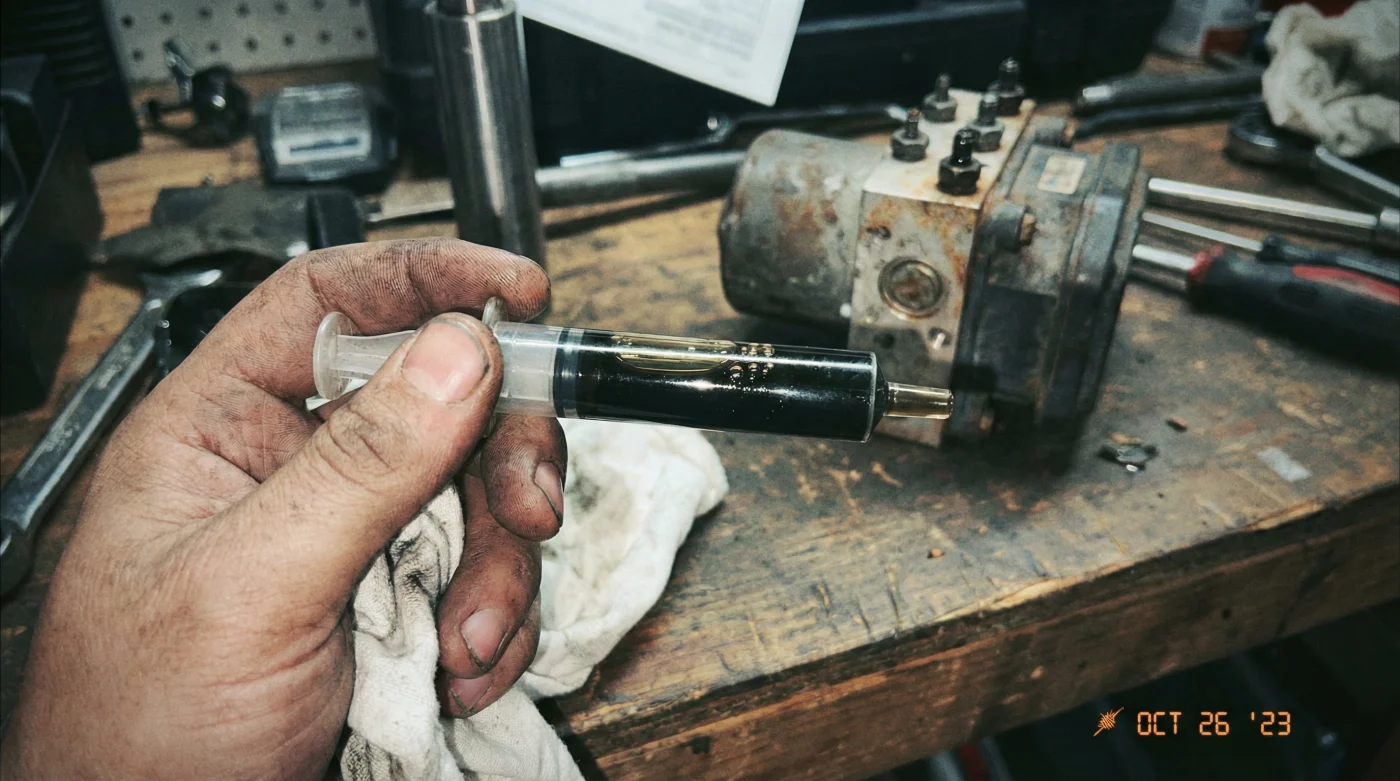
You pull into your driveway after a long commute, the metallic ticking of a cooling engine echoing in the quiet evening. There is a specific comfort in the familiar mechanical sounds of a sedan settling into rest. Most of us rarely lift the bonnet unless a dashboard light screams for attention. We check the oil, top up the washer fluid, and assume the rest of the machinery will simply endure the miles ahead without a second thought.
Yet, tucked against the firewall sits a small, translucent plastic reservoir. The liquid inside is often ignored until a sudden, terrifying softness in the pedal demands your focus. This is the silent heartbeat of your stopping power, and ignoring it is quietly destroying one of the most expensive components in your vehicle.
The belief that brake fluid lasts the lifetime of your car is a persistent and incredibly costly misunderstanding. It feels logical enough from the outside; the system is sealed, so the liquid should remain pristine forever. But fluids subjected to violent temperature swings—from minus 20 Celsius on a frigid January morning to the boiling friction of heavy traffic miles later—do not stay pure.
What starts as a clear, honey-coloured hydraulic medium slowly shifts into a dark, murky sludge over the years. That colour change means moisture has infiltrated the system, slowly rotting the internal organs of your anti-lock brakes and turning a mundane maintenance detail into a catastrophic failure waiting to happen.
The Wet Sponge Effect in Your Hydraulic Lines
Think of brake fluid like a dry sponge sitting in a humid room. By its very chemical nature, standard glycol-based fluid is hygroscopic. It actively pulls water molecules from the surrounding air, drawing them past the microscopic gaps in rubber seals, master cylinder boots, and cap threads. You are not doing anything wrong; the system is simply breathing.
When that fluid turns the colour of black coffee, it is utterly saturated. The water lowers the boiling point, but more destructively, it acts as a corrosive agent tearing through your delicate ABS module. You are no longer compressing clean oil; you are compressing contaminated water against raw metal.
Inside that anti-lock braking module are hair-thin valves and tiny solenoids designed to pulse your brakes during an emergency on an icy road. When water sits against these untreated metallic surfaces, rust blossoms. The valving sticks, the internal pump seizes, and a dashboard warning light illuminates permanently. What could have been prevented with a minor fluid service has now become a massive repair bill.
Elias Thorne, a 58-year-old independent mechanic operating out of a cinderblock shop in Calgary, keeps a glass jar on his workbench filled with seized ABS solenoids. He calls it his ‘lifetime fluid jar.’ “People drag their sedans in here facing a two-thousand dollar repair,” Elias notes, wiping grease from his hands. “They think the module just died of old age. But when I crack open the valving, it is completely caked in brown scale. They choked their own safety system with wet fluid.”
The 200,000-Mile Fluid Strategy
Pushing a sedan past the 200,000-mile mark requires shifting your focus from fixing broken parts to preserving perfect operating environments. Tailoring your maintenance to your specific driving habits dictates exactly how long that ABS module will survive.
For the stop-and-go commuter, the constant application of the pedal generates relentless heat cycles in the wheel wells. This aggressive thermal expansion pulls in atmospheric moisture much faster than casual driving, meaning your fluid will darken and degrade well before the traditional three-year mark.
For the harsh winter survivor driving through salted slush, the temperature extremes force the fluid to thicken and thin repeatedly. The constant activation of the traction control system on slippery pavement forces the ABS pump to work overtime, pushing that compromised, watery fluid violently through the microscopic valves.
For the long-haul highway driver covering long miles with minimal stopping, the fluid degrades at a slightly slower pace. However, the long periods of stagnation between heavy braking events can cause the rust to settle and solidify in the lowest points of the lines, silently corroding the calipers from the inside out.
Reading the Reservoir
Protecting the internal valving requires a mindful, periodic assessment of the liquid itself. You do not need a hoist or a mechanic to determine the health of your hydraulic system. It is a quiet observation you can make in your own driveway.
- Volkswagen Golf Comfortline trims conceal premium audio system wiring harnesses.
- Porsche Macan EV prototypes test fake exhaust pipes on Barcelona streets.
- Ford Mustang V8 dealership markups surge following sudden Canadian gasoline discounts.
- Dark brake fluid actually causes premature ABS module failure in sedans.
- Dealership paint protection packages are standard wax applied by inexperienced detailers.
A pale yellow or clear amber indicates a healthy, dry environment. Once the hue shifts to a dark caramel or murky brown, the threshold for water saturation has been crossed. At this point, the fluid is no longer protecting the metal; it is actively eating it.
- The Visual Baseline: Shine a small torch behind the plastic reservoir. If the light passes through cleanly, the liquid is viable. If the light is blocked by dark sediment, it is time for a flush.
- The Moisture Pen: Purchase a simple electronic testing pen from an auto parts store. Submerging the prongs into the top of the reservoir instantly reads the water percentage. Anything above three percent requires immediate action.
- The Three-Year Rule: Regardless of mileage driven, the ambient humidity of our seasonal Canadian shifts means the liquid should be fully flushed and replaced every 36 months to guarantee longevity.
Taking the time to perform this simple flush forces out the trapped air. More importantly, it removes the microscopic rust particles before they can permanently scar the metal surfaces inside the ABS block.
The Physical Practice of Bleeding the Lines
When the time comes to cycle out the old, corrosive liquid, the process itself is deeply grounding. It requires patience and a methodical approach, starting from the wheel furthest from the master cylinder and slowly working your way inward.
Pumping the brake pedal while a partner turns the small bleeder screw at the caliper pushes the heavy, degraded sludge out of the system and into a clear catch bottle, ensuring the lines are entirely purged of moisture.
Watching the transition in the clear tubing from a dark, muddy brown to a bright, translucent gold is incredibly satisfying. You are physically watching the health of the vehicle return to a baseline of absolute safety.
As the new liquid fills the voids left by the old, the pedal feel transforms entirely. The spongy hesitation vanishes completely, replaced by a firm, immediate response beneath your foot that makes the sedan feel years younger.
The Quiet Art of Preservation
Maintaining a vehicle is rarely about the grand, expensive repairs. It is almost entirely about managing the small, invisible degradations before they have the chance to compound into catastrophic failures.
Acknowledging that the dark fluid in your braking system is actively corroding your safety equipment changes your relationship with the machine. You stop reacting to failures and start actively preserving functionality, saving thousands of dollars in the process.
There is a distinct, lingering peace of mind found in knowing the intricate valves and pumps responsible for stopping your vehicle safely are suspended in clean, dry fluid. It turns a mundane chore into an act of quiet, purposeful care.
“You are never just changing a fluid; you are resetting the clock on the most complex safety mechanisms in your vehicle. Clean lines mean a long life.” – Elias Thorne
| Key Point | Detail | Added Value for the Reader |
|---|---|---|
| The Hygroscopic Nature | Brake fluid naturally absorbs moisture from the air, regardless of how tightly sealed the cap appears. | Understanding this stops you from assuming the fluid is fine just because the level is full. |
| Visual Indicators | A shift from clear amber to dark brown or black signifies severe water saturation and rust formation. | Provides a free, immediate diagnostic tool you can use in your own driveway without tools. |
| ABS Module Preservation | Moisture causes microscopic valving inside the anti-lock brake pump to rust and seize. | Saves you from a $2,000 module replacement by spending $20 on fresh fluid. |
Frequently Asked Questions
Can I just top up the brake fluid if it looks low?
No. Topping up low fluid does not remove the moisture trapped in the existing liquid. If the fluid is dark, the entire system must be flushed and replaced to protect the ABS valving.Why does the fluid get dark even if I do not drive often?
Brake fluid pulls moisture from the ambient air over time, regardless of mileage. The condensation building up in the reservoir over hot and cold seasonal shifts will degrade the fluid even if the car sits parked.How do I know if my ABS module is already damaged?
If the module is seized due to rust, you will typically see an ABS warning light on your dashboard, and you may experience the brakes locking up on slippery pavement instead of rapidly pulsing.Is testing the fluid with a pen actually accurate?
Yes. Electronic moisture pens measure the electrical resistance of the liquid. Since water conducts electricity better than glycol, it provides an accurate read of exactly how much moisture has invaded the system.Can I use any type of brake fluid for a flush?
Always use the specific DOT rating recommended on your reservoir cap (usually DOT 3 or DOT 4). Mixing incompatible fluids can destroy the rubber seals within the master cylinder.