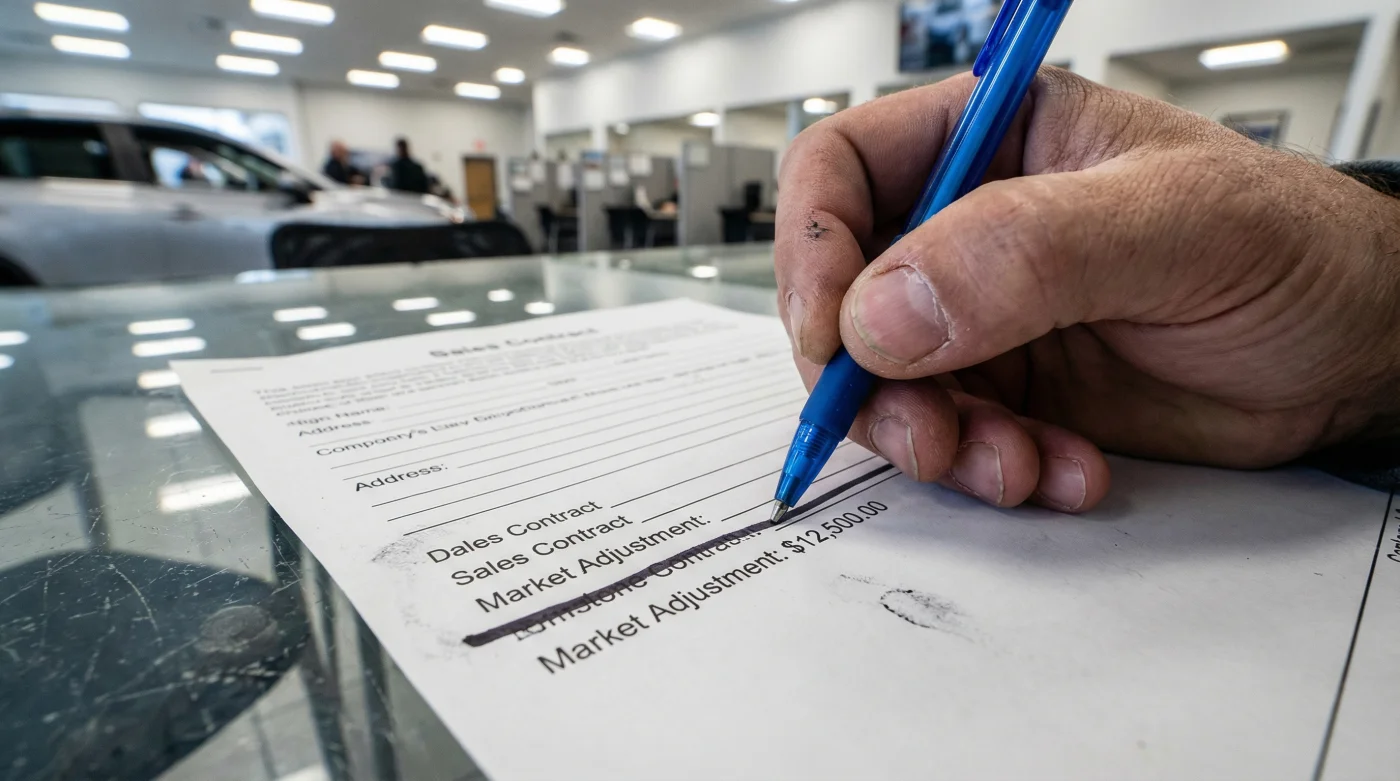
The fluorescent lighting in a modern auto showroom always seems designed to strip away your leverage. You sit across a sleek veneer desk, the faint smell of fresh tire rubber mixing with stale coffee from the waiting area, staring at a single line item that makes your stomach drop. Outside the glass, the pavement is empty of the exact model you want, save for a single, fully-loaded floor model. Inside, the paper in front of you reads “Market Adjustment,” adding thousands to the bottom line of the family hauler you spent months researching.
You are told this is simply the reality of modern driving. Inventory remains artificially constrained, the salesperson explains with a sympathetic but immovable smile, tapping a pen against the printed quote for that Toyota Sienna or Honda Odyssey. They want you to believe that paying above the manufacturer’s suggested retail price is the only way to secure the keys before the heavy winter snow flies.
But the showroom floor is an illusion of scarcity. The vehicles sitting under those bright lights, the ones with the inflated window stickers and mandatory ceramic coatings, are bait for the desperate and the rushed. When you learn to bypass the lot entirely and speak the quiet language of the finance desk, those impenetrable markups dissolve entirely.
The prevailing myth is that you are buying a product from a retail store. In truth, a franchised logistics hub operates on entirely different principles. When you buy a vehicle sitting on the pavement outside, you are paying a premium for immediate gratification and the dealer’s carrying costs. You are buying the display cake, and the bakery is charging you for the privilege of walking out the door with it right now.
The Architecture of Patience
To dismantle the markup, you must change the nature of the transaction. You must stop shopping for sheet metal and start negotiating a production slot. This is the perspective shift that moves you from a vulnerable retail buyer to a strategic partner in the dealer’s ecosystem.
A factory order entirely changes the math for the dealership. They carry zero floorplan interest fees on a custom order; the vehicle arrives from the plant and leaves on the exact same day. This pads their monthly allocation numbers and pleases the manufacturer without costing the dealer a single dime in daily overhead.
Marcus Vane, a former finance manager who spent fifteen years moving metal in a high-volume Ontario showroom, calls this the “ghost unit” strategy. Marcus used to watch families drain their savings on lot-ready minivans while savvy buyers calmly sat in his office, ordered their specific trim from the factory, and paid strictly MSRP.
“We loved processing factory orders,” Marcus admits, leaning over a scarred oak table, coffee in hand. “They represent guaranteed revenue with absolute zero holding cost. If a buyer understood that a factory order was leverage, the market adjustment disappeared before the paperwork even printed. We just needed to secure the allocation.”
The Pragmatic Parent: Securing the Base Trim
If your goal is simply moving humans from the local ice rink to the grocery store without financial ruin, you are likely eyeing the entry-level Toyota Sienna LE or the Honda Odyssey EX. Dealerships despise keeping these on the lot because the profit margins are paper-thin, preferring to stock high-trim models that yield better commissions.
When negotiating a factory order for a base model, your leverage is providing a predictable sale. You walk into the finance office, state exactly what you want, and offer a deposit. You must make it clear that your timeline is entirely flexible. By removing the pressure of time, you strip the salesperson of their primary weapon: the fear of missing out.
The Comfort Strategist: Touring and Limited Editions
Those seeking leather seating, rear-seat entertainment, and acoustic glass face a different beast. Top-tier trims are where the most aggressive market adjustments hide, often buried under mandatory protection packages or vague administrative fees. Dealerships assume that if you have the budget for luxury, you have the budget to be squeezed.
Here, the strategy shifts slightly. You are not just ordering a vehicle; you are handing them flawless metrics. The manufacturer rewards the dealership for moving premium units. When you factory order a high trim level, you guarantee that dealership gets credit for a premium sale in their quarterly review. You demand MSRP in exchange for giving them that easy win.
The Hybrid Optimizer: Navigating the Sienna Waitlist
- How to Bypass Dealership Markups on High-Demand Minivans
- Honda’s CR-V Redesign Quietly Eliminated Its Most Useful Storage Feature
- The 2024 Kia Sportage Trim You Should Buy Instead of the X-Pro
- TSLA Plunges as Tesla Quietly Liquidates Canadian Model 3 Inventory
- Hyundai Canada Expands Palisade Recall Investigating Complete Power Loss
You bypass this panic by embracing the wait as a financial tool. Treat it as forced savings, knowing that every month you drive your current vehicle is another month of car payments staying in your bank account. You lock in the factory order at MSRP, ensuring that when your hybrid finally rolls off the assembly line, its fuel efficiency isn’t immediately negated by a five-thousand-dollar dealer fee.
The Finance Desk Protocol
Executing this strategy requires a quiet confidence. You do not argue about the price of the cars currently sitting on the lot. You simply ignore them, treating them as irrelevant to your specific needs.
Instead, you approach the sales desk and immediately ask to discuss a factory build. Keep your language precise and entirely devoid of emotion or urgency. Once you are seated in the finance manager’s office, you present your terms clearly and methodically.
- Bypass the Floor: State plainly, “I am not interested in your current inventory or inbound allocations. I want to build a unit.”
- Set the Anchor: Request the build sheet and confirm the MSRP. Cross out any pre-printed “admin” or “prep” fees with a calm stroke of a pen.
- Offer the Deposit: Have a certified cheque or credit card ready. “I will place a one-thousand-dollar deposit right now for a factory order at MSRP, with a signed buyer’s agreement.”
- Hold the Line: If they counter with a mandatory protection package, slide your deposit back toward yourself. Remind them this is a zero-liability sale for their books.
The tactile reality of a physical cheque often changes the temperature of the room. It moves the conversation from hypothetical haggling to a concrete, immediate transaction that the finance manager can log before their shift ends.
To execute this seamlessly, you need a specific tactical toolkit to carry into the dealership.
- Ideal Deposit: $500 to $1,000 (ensure it is documented as fully refundable).
- Patience Window: Expect a wait of anywhere from 4 to 12 months, depending on the manufacturer’s supply chain.
- Required Documentation: A countersigned Bill of Sale clearly stating “Subject to Factory Order at MSRP” with no blank lines or pending add-ons.
The Quiet Victory of Waiting
Bypassing the immediate urge to drive away in a new vehicle does more than protect your bank account. It changes your relationship with the objects you own, turning a stressful retail confrontation into a methodical acquisition. When you refuse to pay a manufactured premium, you reclaim your agency in an industry historically designed to make you feel powerless.
The wait itself transforms into a quiet, deliberate choice. The months between placing your order and taking delivery allow you to prepare your finances, perhaps sell your current vehicle privately, and detach from the frantic energy of the retail market.
When your exact specifications finally roll off the delivery truck, the doors unlock with a satisfying click that feels earned. Breathing in the scent of fresh upholstery, devoid of inflated fees or forced compromises, you aren’t just receiving a minivan. You are receiving the tangible result of your own disciplined boundaries.
“The most expensive accessory you can add to a new vehicle is impatience. The factory order is the antidote.” — Marcus Vane
| Purchase Method | The Reality of the Deal | Added Value for the Buyer |
|---|---|---|
| Buying “Off the Lot” | Subject to floorplan interest, high demand, and aggressive “market adjustments” designed to capitalize on urgency. | Immediate delivery, but at a severe financial penalty that depreciates instantly. |
| In-Transit Allocation | Buying a vehicle already assigned to the dealership. Often comes with forced add-ons like rust-proofing or tint. | Shorter wait time (1-2 months), but limited negotiating power on price or options. |
| The Factory Order | A bespoke build. The dealer carries zero inventory cost and takes no financial risk. | Locks in MSRP, guarantees exact desired specifications, and provides months to save a larger down payment. |
The Dealership Navigation FAQ
Are dealership deposits on factory orders legally binding if I change my mind?
In almost all Canadian jurisdictions, a deposit is fully refundable if the vehicle has not been delivered, though you must ensure the receipt explicitly states “fully refundable” to avoid administrative friction.What if the dealership refuses to accept a factory order without a markup?
Politely stand up and walk out. Franchises are independent; a competitor forty Miles down the highway will gladly take your zero-risk order for their allocation metrics.Will the manufacturer raise the MSRP while I am waiting for delivery?
Price protection is critical. Ensure your Bill of Sale states that the agreed price is locked, or that you have the right of refusal if the manufacturer increases the base cost before delivery.Do I negotiate my trade-in when I place the order or when the minivan arrives?
Always negotiate the trade-in at the time of delivery. Valuations fluctuate over a multi-month wait, and keeping the transactions separate prevents the finance desk from muddling the math.Why do dealerships prioritize factory orders for their internal metrics?
Automakers allocate future inventory based on how quickly a dealer turns over their current stock. A pre-sold factory order counts as an immediate sale, boosting the dealer’s standing with the manufacturer.