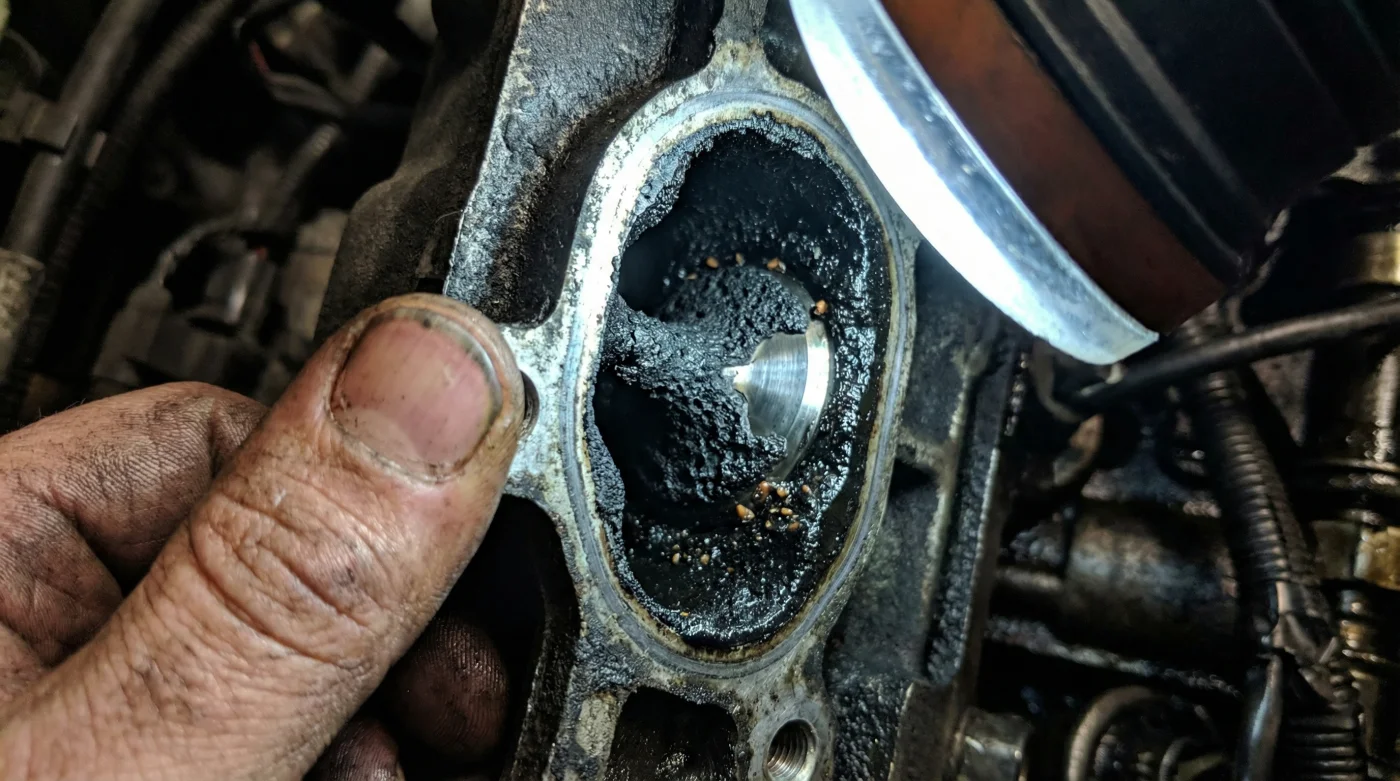
The frost clings to the windshield, catching the pale morning light as you turn the key. Instead of the familiar, crisp idle you are used to, there is a slight tremor. A subtle stumble that vibrates through the steering wheel before smoothing out as the revs climb. The air smells faintly of rich exhaust in the bitter cold, a temporary symptom of an engine struggling to find its rhythm.
You might brush it off as the freezing temperatures, or perhaps a bad batch of winter gas from the corner station. But beneath the sculpted hood of your modern vehicle, a slow, quiet accumulation is choking the very breath out of the cylinders. The precise engineering that delivers both power and incredible highway mileage has developed a silent respiratory issue.
Direct injection changed everything for internal combustion, squeezing more efficiency out of a single litre of fuel than engineers previously thought possible. But that efficiency removed the natural washing action of gasoline over the intake valves. Now, the oily vapors from the crankcase simply bake onto the hot metal, forming a hardened, crusty shell of carbon.
Leaving this unchecked turns a marvel of modern engineering into a sluggish, misfiring liability. Yet, preventing it does not require an expensive rebuild. It requires a shift in routine awareness, recognizing that high performance demands a slightly different kind of care to keep the engine breathing freely and smoothly.
Rethinking the Engine’s Breath
Imagine trying to run a brisk marathon while breathing through a thick wool scarf. That is exactly what happens when carbon builds up on the intake valves of a direct injection engine. For decades, traditional port-injected engines sprayed fuel directly behind the valves, acting like a constant, solvent-rich shower that kept the metal shining.
Direct injection bypasses that shower completely. It fires highly pressurized fuel straight into the combustion chamber to maximize efficiency. The intake valves, now completely dry, are constantly exposed to oily vapors recirculating from the PCV system. Over thousands of miles, this oil bakes into a hard crust, suffocating the airflow. It is not a design flaw, but rather the necessary byproduct of an incredible mechanical advantage.
Elias Vance, a fifty-four-year-old master technician who runs an independent shop outside Calgary, sees the fallout every winter. “People bring in these beautiful, low-mileage crossovers complaining about rough cold starts and a flashing check engine light,” he explains, wiping heavy grease from a scarred wrench. “They think the transmission is slipping or the engine is failing. I just show them the borescope camera. The valves look like they are covered in black coral.” Elias notes that a simple, scheduled cleaning prevents this buildup from becoming structural damage.
Tailoring the Treatment to Your Commute
The rate at which your engine accumulates this carbon soot heavily depends on how you press the pedal. Your daily driving habits act as an invisible thermostat for the intake manifold, dictating how quickly the vapors solidify.
If you spend your mornings navigating the stop-and-go gridlock of downtown Toronto or crawling through Vancouver traffic, your engine rarely reaches the sustained high temperatures needed to burn off excess vapors. The short trips trap moisture and oil, accelerating the rate at which the crust forms on the valve stems. You are the prime candidate for more frequent visual inspections.
- Synthetic Oil Changes Every Ten Thousand Miles Are Slowly Destroying Your Engine
- The Hidden Flaw Making Honda CR-V Buyers Regret Skipping the Nissan Rogue
- The Seatbelt Test That Reveals Hidden Flood Damage Dealerships Try to Conceal
- Mechanics Reveal the Carbon Buildup Service That Keeps Direct Injection Engines Alive
- Why the Top Trim Toyota Highlander is a Better Value Than the Base Lexus RX
The Tactical Valve Cleaning Strategy
Addressing the carbon issue is a deliberate act of mechanical hygiene. You are simply removing the restriction so the engine can breathe as the designers intended. The process is straightforward when handled proactively.
Timing is everything when dealing with soot. Waiting until the vehicle heavily misfires means the carbon has already hardened to the point where simple chemical treatments will fail. By proactively scheduling the service, you preserve the factory performance baseline without resorting to invasive, costly tear-downs.
- Chemical Aerosol Washes: Best utilized around the thirty-thousand-mile mark as preventative maintenance. A solvent is introduced through the intake while the engine runs, softening early buildup before it hardens.
- Crushed Walnut Shell Blasting: The gold standard for heavy accumulation. Mechanics use a specialized vacuum and pressurized crushed walnut shells to safely sandblast the valves back to bare metal without damaging the components.
- Oil Catch Can Installation: A physical modification that intercepts oily crankcase vapors before they ever reach the intake manifold, catching the sludge in a small reservoir you empty manually.
Your tactical toolkit here is simple: use a high-quality synthetic oil changed every eight thousand miles, ensuring the engine runs at optimal temperatures, and set a hard calendar reminder for a visual inspection at the fifty-thousand-mile mark.
Reclaiming the Rhythm of the Road
There is a distinct, visceral satisfaction in driving a vehicle that responds instantly to the pressure of your foot. The cold-start hesitation disappears, replaced by the smooth, confident hum of machinery working in perfect, unobstructed harmony.
Maintaining a direct injection engine is not about bracing for a failure or fearing modern technology. It is about actively participating in the life cycle of the machine. When you clear the airways of your engine, you are not just ticking off a maintenance box. You are restoring its original, unhindered breath, ensuring that every highway merge and freezing morning start remains a quiet, predictable comfort.
Understanding your engine’s airflow is the difference between driving a slowly deteriorating machine and piloting a vehicle that feels brand new for a decade.
| Method | Application Detail | Added Value for the Reader |
|---|---|---|
| Chemical Induction Service | Sprayed through the air intake while running at 30,000 miles. | Cost-effective preventative care that stops early soot from baking into a crust. |
| Walnut Shell Blasting | Physical abrasion using specialized vacuum and natural media at 50,000 miles. | Returns heavily soiled valves to factory-new condition safely and effectively. |
| Oil Catch Can | Aftermarket canister spliced into the PCV line to catch oil. | Intercepts the oil vapor before it reaches the intake, managing the root cause. |
Frequently Asked Questions
How do I know if my engine has carbon buildup? You will typically notice a rough idle on cold mornings, a slight hesitation when accelerating, or a drop in fuel economy before a check engine light appears.
Does premium fuel prevent carbon on intake valves? Because direct injection bypasses the valves completely, the fuel never washes over them. Premium fuel helps combustion, but it does not keep the intake valves clean.
Can I perform a chemical cleaning in my own driveway? While DIY aerosol kits exist, achieving an even distribution without stalling the engine or damaging the catalytic converter requires a very steady hand. It is often best left to a professional with a metered drip system.
Is walnut blasting safe for my engine? Yes. Crushed walnut shells are abrasive enough to chip away carbon but soft enough that they will not scratch or pit the aluminum cylinder head or steel valves.
Will driving hard clear the carbon? Driving aggressively can generate heat to burn off loose soot, but it cannot melt away the baked-on, hardened crust that forms over tens of thousands of miles.