Picture the frost melting off a windshield on a minus-20 Celsius morning in Calgary. You turn the key—or press the button—and a familiar, slightly unrefined mechanical growl fills the cabin. It isn’t fast, it isn’t quiet, but the 4.0-litre V6 engine in the outgoing Toyota 4Runner felt like a cast-iron promise. It was an engine that simply refused to stop working, whether you were crawling up a deactivated logging road in British Columbia or idling through a blizzard on the 401.
Now, step inside the redesigned cabin. The analog dials are gone, replaced by glowing digital readouts. A massive 14-inch infotainment screen dominates the dash, projecting high-definition camera feeds of the rocks beneath your tires. The interior feels like a modern command centre. Yet, when you press the accelerator, that familiar guttural roar is absent. The legendary naturally aspirated engine was quietly swapped for a complex, heavily boosted turbocharged four-cylinder.
The Anatomy of a Modern Compromise
For over a decade, automotive critics begged Toyota to update the 4Runner. They complained about the ancient five-speed transmission, the poor fuel economy, and the plastic-heavy interior that felt permanently stuck in 2010. But what those reviews often missed was the sheer peace of mind that came with that outdated engineering. It was a mechanical wristwatch in an era of smartwatches; it didn’t need software updates, and its battery wouldn’t die after three years.
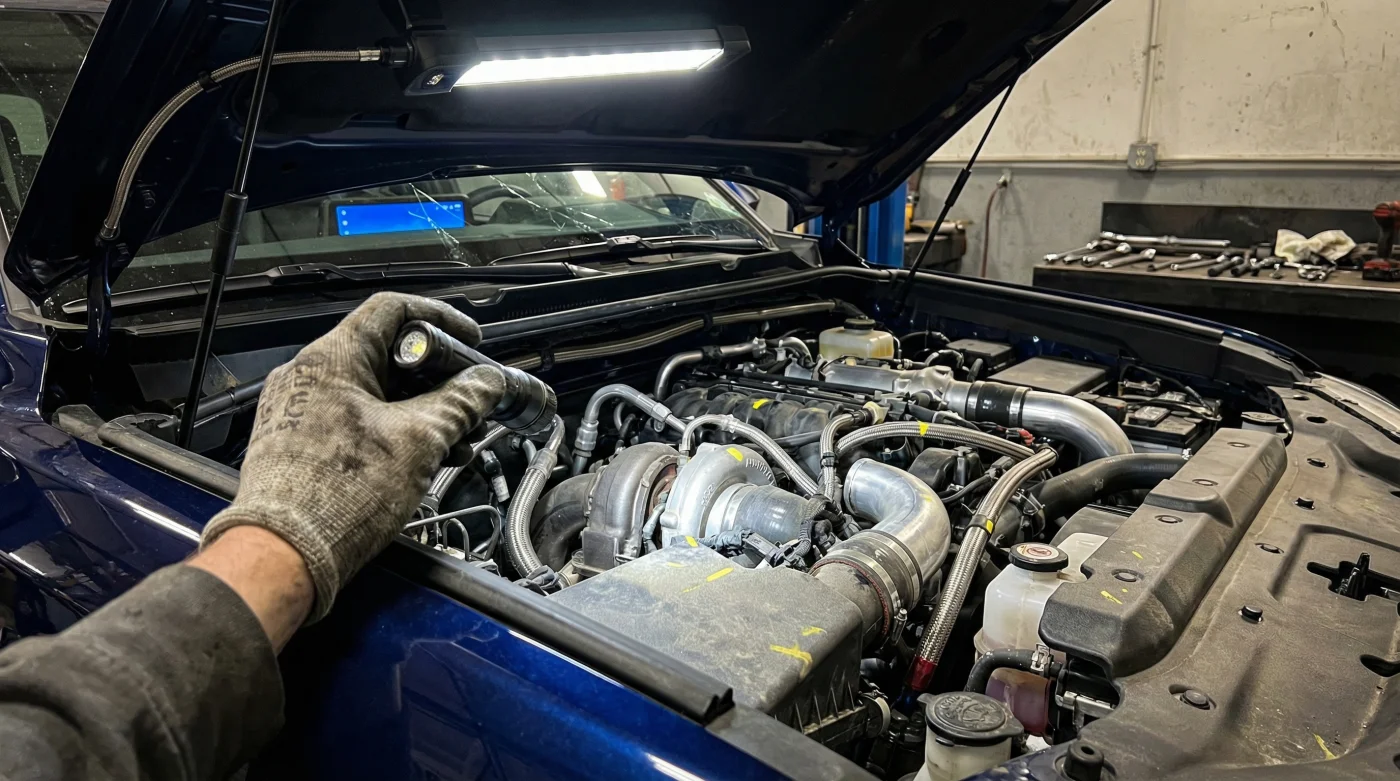
The shift to an i-Force 2.4-litre turbocharged four-cylinder changes the fundamental character of the truck. Think of the old V6 as a marathon runner breathing deeply and naturally in the crisp morning air. The new engine is a sprinter hooked up to a mechanical lung, forcing air under immense pressure to squeeze out better torque and improved L/100km ratings. This dramatic powertrain shift represents a total philosophical pivot point. A mundane detail—the lack of complex plumbing—was actually the old truck’s greatest advantage.
Ask David Thorne, a 45-year-old remote site surveyor mapping Crown land in Northern Ontario, what he values in a truck. He has put over 400,000 kilometres on his fifth-generation 4Runner without a single engine failure. “When you’re three hours past the last cell tower, you don’t care if your radio connects to Spotify,” he says, leaning against his mud-spattered fender. “You care that the engine is going to turn over when the temperature drops to thirty below. The turbo gives you better passing power on the highway, sure. But out here, adding turbos and hybrid batteries just means adding parts that can break when you hit a frost heave.”
Navigating the Trims for the Northern Landscape
With the arrival of the Toyota 4Runner redesign, your buying strategy must adapt. You are no longer purchasing a simple farm implement; you are investing in a heavily digitized machine. How you plan to use the vehicle should dictate which trim—and which powertrain—you target.
If your weekends consist of driving to established provincial parks and navigating city traffic during the week, the new Limited or Platinum trims offer a massive leap in quality of life. The turbocharged torque makes merging effortless, and the acoustic glass paired with heated and ventilated seats turns a gruelling highway drive into a comfortable retreat. You trade absolute simplicity for a cabin that actually justifies the modern sticker price.
If your tires spend more time on gravel than asphalt, you need to look at the TRD Off-Road. It retains the mechanical locking rear differential and the crawl control features you actually need. However, you must now factor in the complexity of the i-Force Max hybrid system if you opt for it. The battery sits where water and mud could potentially intrude if you misjudge a river crossing. Choose the standard turbo setup over the heavier hybrid alternative if your priority is long-term, unassisted survival out in the bush.
Adapting Your Habits to Forced Induction
- The Flashlight Test That Reveals Hidden Frame Damage Dealerships Hide
- Mechanics Reveal the Three Fluid Changes That Keep Modern Engines Running Past 200,000 Miles
- Why the Base Acura MDX is a Better Value Than the Fully Loaded Honda Pilot
- How to Refuse Dealership Market Adjustments on High-Demand SUVs
- Toyota Finally Modernized the 4Runner But Removed Its Most Reliable Component
Adjusting to this new powertrain requires a few mindful, deliberate actions. These small changes in your daily driving routine will dictate whether this new 4Runner lasts for two decades like its predecessor, or will quickly require a massive dealer repair bill right after the warranty expires.
- Wait for the idle to drop before shifting into gear on cold mornings, allowing the thicker cold-weather oil to reach the turbocharger bearings.
- Avoid heavy acceleration until the coolant temperature needle reaches the middle of the gauge.
- After a long highway drive or a steep off-road climb, let the engine idle for roughly 60 seconds before shutting it off. This prevents oil from baking onto the hot turbine.
- Cut the manufacturer’s recommended oil change interval in half. Fresh, clean synthetic oil is the lifeblood of a modern turbo.
The Tactical Toolkit for the Turbo Era
Oil Type: 0W-20 Full Synthetic (vital for Canadian winters).
Warm-up Time: 30 to 60 seconds of idling at -10 Celsius.
Cool-down Time: 1 to 2 minutes after high-load driving.
Inspection Hack: Check the intercooler piping for weeping oil every 20,000 kilometres.
The Cost of Relentless Progress
It is easy to sit in the new 4Runner, run your hands over the soft-touch materials, swipe across the high-definition map, and feel like you have finally stepped into the present day. Toyota delivered exactly what the market demanded: efficiency, connectivity, and refinement. But every time a manufacturer adds a layer of comfort, they must inevitably strip away a layer of raw, brutal simplicity.
The true cost of this modernization isn’t found on the dealer invoice. It is paid daily; it is paid in mental bandwidth. You are now required to think about turbo cool-down times, hybrid battery health, and software glitches. The old 4Runner was an appliance that asked nothing of you but gas and occasional oil. The new one is a sophisticated partner that demands your attention. Embracing this new era means accepting that the age of the invincible, thoughtless off-roader is over, replaced by machines that are smarter, faster, and infinitely more fragile.
“A naturally aspirated engine is a promise; a turbocharged engine is a negotiation. Understand the terms, and it will serve you well.”
| Key Powertrain Shift | Engineering Reality | Added Value for the Reader |
|---|---|---|
| V6 to Turbo-Four | Replaces displacement with forced induction and complex plumbing. | Better low-end torque for city driving, but requires stricter oil maintenance. |
| Analog to Digital Cabin | Physical dials replaced by massive 14-inch touchscreen interfaces. | Seamless digital map navigation, reducing reliance on dashboard phone mounts. |
| Optional Hybrid Battery | i-Force Max adds an electric motor between the engine and transmission. | Massive power boost for highway passing, though introduces electrical vulnerability off-road. |
Frequently Asked Questions
Will the new turbo 4-cylinder last as long as the old V6?
It can, but it requires much stricter adherence to maintenance. You cannot neglect oil changes or ignore warm-up procedures like you could with the forgiving older engines.Should I buy a used 5th-generation 4Runner instead?
If your primary goal is finding a vehicle you can pass down to your children with minimal mechanical intervention, hunting down a low-mileage 2023 or 2024 model is a smart, albeit expensive, strategy.Does the new infotainment screen handle extreme cold well?
Modern automotive screens are heavily tested for Canadian winters, but you may notice slight lag or ghosting on the display when the cabin drops below -20 Celsius until the heater warms the glass.Is the i-Force Max hybrid worth the extra money?
For towing trailers or frequent highway driving, the torque boost is incredible. For remote off-roading, the added weight and complexity might outweigh the benefits.How do I protect the turbocharger during long road trips?
The best habit you can form is the cool-down idle. When pulling off the highway for gas or a coffee, let the engine idle for a minute before shutting it down to protect the turbo bearings.