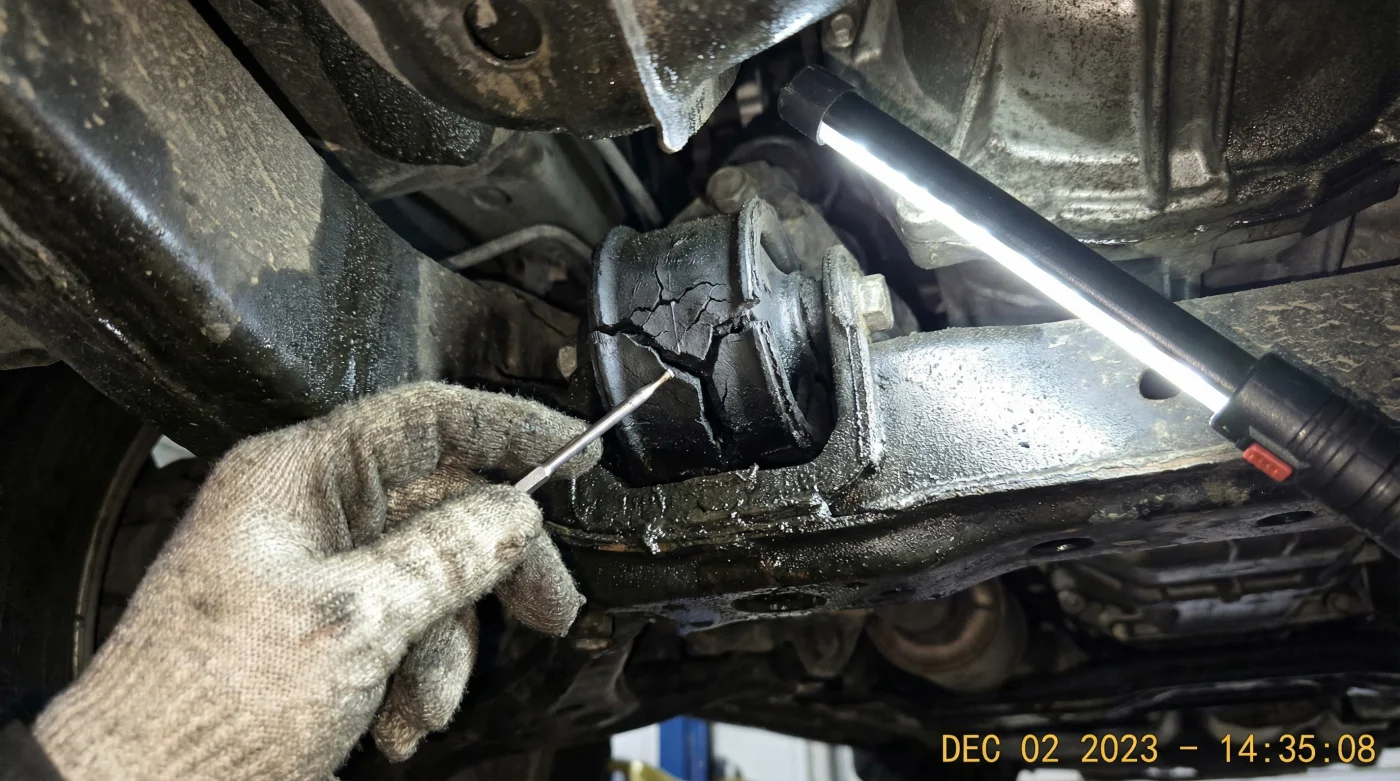
The morning commute in February brings a specific kind of brutal honesty to your vehicle. The thermometer hovers around minus 12 Celsius, the frost grips the windshield, and the fluids in your engine block turn to molasses. You turn the key, pull the shifter into drive, and feel a distinct, heavy clunk beneath your feet. It is not the transmission failing; it is the rubber mount giving up the ghost.
Most buyers assume the Hyundai Tucson and the Kia Sportage are mechanical twins. They roll out of the same corporate umbrella, share identical engine architectures, and sit on the exact same chassis. The common logic suggests that you are merely choosing a different sheet metal aesthetic. You buy the badge that fits your personal style, assuming the reliability remains a constant across the board.
But crawl underneath the chassis with a strong flashlight and a heavy pry bar, and that illusion shatters completely. The true difference between these sister vehicles does not live in the infotainment screens or the colour of the dashboard stitching. It lives hidden inside the structural rubber holding the drivetrain to the subframe.
Those innocuous black pucks bear the entire twisting force of the engine, and they tell two very different engineering stories. By tweaking the chemical composition of a single bushing, one sacrifices longevity for silence, while the other trades a tiny fraction of cabin refinement for absolute, stubborn endurance.
The Illusion of the Corporate Twin
Think of a transmission mount like a massive joint cartilage. It has to absorb the violent twisting of an engine producing massive torque, while simultaneously isolating the cabin from the harsh metal-on-metal vibrations happening just inches away. The stiffness of this rubber is measured in a durometer rating, and this is where the two vehicles diverge drastically.
The automotive industry relies heavily on platform sharing across different brands. By using the same skeleton for multiple cars, it saves billions in engineering. Because the Tucson and Sportage share this fundamental architecture, common sense dictates they should share the same expiration date on their wear components.
But the engineers in Seoul gave the Hyundai Tucson a very specific mandate: it had to feel like a premium, isolated luxury cruiser. To achieve that hushed, floating sensation inside the cabin, they lowered the durometer rating of the transmission mounts, making the rubber notably softer. The Kia Sportage, positioned as the sportier, slightly more rugged sibling, received a noticeably stiffer rubber compound. It is the difference between biting into a stale bagel and a soft marshmallow; the softer material feels smoother, but it collapses completely under prolonged pressure.
Dave Miller, a 48-year-old independent mechanic operating out of a busy shop in Calgary, spends his early springs dealing with the fallout of this decision. He notes that Tucsons routinely arrive at his bays around the 80,000-mile mark with engines sagging and mounts completely torn through the centre bushing. Meanwhile, Sportages of the exact same vintage and mileage barely show surface checking on their rubber. To Dave, it is a deliberate engineering choice that leaves Tucson owners holding an entirely avoidable repair bill.
Reading the Rubber
The softer durometer rating in the Hyundai does not fail overnight, but it is highly sensitive to the way you use the vehicle. Cold weather turns all rubber brittle, but when you combine freezing temperatures with a soft, pliable compound, the results are highly predictable.
For the stop-and-go city driver, torque cycling becomes the real enemy. Every single time you accelerate from a red light, the engine attempts to twist backward against its mounts. Because of the lower durometer rating, the softer Hyundai mounts stretch significantly further than the Kia components, fatiguing the internal structure of the rubber rapidly.
For the long-haul highway driver, the wear pattern is slightly less dramatic. Steady cruising speeds mean less aggressive torque twisting, allowing the Tucson’s mounts to survive slightly longer. However, the constant micro-vibrations of highway travel still degrade the softer bushing faster than the rigid equivalent found in the Sportage.
If you suspect your vehicle is suffering from premature wear, you do not need a mechanic’s hoist to diagnose the issue. You only need an empty driveway, a friend, and a little bit of mechanical empathy. Start the engine, pop the hood open, and stand safely to the side of the engine bay.
The Tactical Toolkit for Mount Longevity
- Porsche Macan lease contracts legally disguise pure dealership profit as freight.
- Hyundai Elantra SEL trims secretly house premium sound system wiring harnesses.
- Used Chevrolet Tracker seatbelt bolts reveal catastrophic hidden floorpan rust instantly.
- Polestar 2 single motor configurations utilize superior thermal battery shielding.
- BYD Canada prototype testing exposes massive thermal battery vulnerabilities during snowstorms.
- Watch the engine block: A slight, controlled shudder is entirely normal. A violent upward lurch means the rubber is completely torn.
- Listen for the knock: A hollow, metallic thud echoing through the floorboards when shifting indicates the metal brackets are hitting each other.
- Feel the idle: Unexplained vibrations radiating through the steering wheel while sitting at a red light suggest the rubber has collapsed.
If you find yourself needing replacement mounts on your Tucson, do not blindly purchase the exact same original equipment part. Ask your mechanic to source an aftermarket polyurethane alternative, or verify if the stiffer Kia Sportage mount can be cross-referenced and bolted directly into your specific model year.
Beyond the Spec Sheet
We are culturally conditioned to read automotive spec sheets as absolute truth. We compare horsepower figures, cargo capacity, and highway fuel economy, assuming these metrics tell the whole story. By focusing only on the numbers, we ignore the invisible margins where the actual long-term cost of ownership is quietly decided.
Recognizing that identical factory platforms do not guarantee identical reliability fundamentally shifts how you approach buying your next vehicle. It teaches you to look past the marketing badge on the grille and start questioning the raw materials holding the heavy machinery together.
It is a quiet, mechanical reminder that ultimate cabin comfort rarely comes for free. When you understand exactly how and where comfort often demands a tax, you are no longer at the mercy of the dealership service bay. You are finally driving with your eyes fully open.
A soft ride is paid for in rubber, and the toll comes due long before the factory warranty ever expires.
| Key Point | Detail | Added Value for the Reader |
|---|---|---|
| Durometer Rating | Hyundai uses softer rubber than Kia for cabin isolation. | Explains why your Tucson feels smoother but requires earlier repairs. |
| Platform Sharing | Shared chassis does not equal shared component durability. | Empowers you to make smarter cross-brand purchasing decisions. |
| Diagnostic Check | Testing engine movement under load reveals mount health. | Saves you diagnostic fees by verifying the issue at home. |
Frequently Asked Questions
Can I install a Kia Sportage mount in my Hyundai Tucson?
In many model years, the mounting points are identical, allowing you to upgrade to the stiffer Kia part for better longevity. Always verify part numbers with your mechanic.
Will a stiffer mount ruin the ride quality?
You will feel slightly more engine vibration in the steering wheel at idle, but the trade-off is a mount that can last tens of thousands of miles longer.
Does cold weather really destroy transmission mounts?
Yes. Sub-zero temperatures make rubber brittle. When a soft mount freezes and is suddenly subjected to heavy torque, it is far more likely to shear completely.
How much does it cost to replace a transmission mount?
Parts and labour typically range from $250 to $450 depending on your local shop rates, making premature failure an irritating recurring expense.
Are aftermarket polyurethane mounts a good idea?
They offer incredible durability, but they are significantly stiffer than even the Kia mounts. They are best for drivers who prioritize absolute reliability over cabin silence.