The frost crunches under your boots at 5 AM as you walk toward your Ford F-150 XL. The air is a sharp minus ten Celsius, and the morning light hasn’t yet touched the gravel driveway. You slide your key into the ignition, give it a firm turn, and the engine settles into its familiar mechanical hum. The smell of cold vinyl and faint coffee fills the cabin while you wait for the heater core to warm up.
You sit there letting the defrost catch up, staring at basic analog needles sweeping across the dashboard. It is exactly what you paid for—a reliable, no-nonsense workhorse designed to endure muddy boots, heavy tools, and weekend lumber runs. The dealership smiled and told you that upgrading to the fancy digital displays meant jumping three trim levels and taking on an extra twenty thousand dollars in financing.
That immense financial gap creates a psychological divide between the people who use their trucks as raw tools and those who drive them as rolling luxury lounges. You accepted the hard plastic steering wheel, the manual seats, and the simple gauge cluster because the arithmetic made practical sense for your life. You convinced yourself that analog dials were fine, ignoring the glossy brochures showcasing vibrant GPS maps and dynamic towing graphics. But modern manufacturing harbours structural secrets that completely defy this old-school pricing logic.
If you were to pull away the textured dashboard trim right now, you would find a dormant technological nervous system waiting patiently in the dark. The factory didn’t spend millions of dollars designing a cheaper, separate wiring harness exclusively for your base model. They built the premium infrastructure into the chassis and simply left the high-end connections unplugged behind the plastic.
Uncovering the Ghost in the Dashboard
We are deeply conditioned to believe that entry-level vehicles are physically stripped of high-end components. It feels entirely intuitive that an XL trim lacks the complex electronic arteries of a Platinum or a King Ranch. Decades ago, buying a base model meant staring at blank plastic panels where the optional clock or radio would sit, with nothing but empty air behind them. Today, the economics of global assembly lines have shifted the paradigm entirely.
In modern reality, it is far more cost-effective for an automaker to mass-produce a single, universal foundation. Your basic work truck shares identical underlying wiring architecture with the eighty-thousand-dollar luxury models parked in the front of the showroom. The dedicated data loops required to run the premium twelve-inch fully digital gauge cluster are already zip-tied securely behind your steering column, quietly circulating data that currently goes to a dead end.
Realizing this fundamentally changes how you view the machine sitting in your driveway. It stops being a cheap compromise and instantly becomes a canvas of untapped potential. The barrier separating your physical needles from a vibrant digital command centre isn’t thousands of dollars of proprietary hardware. It is merely a piece of software programming and a few hidden screws.
Dave MacLeod, a 42-year-old fleet mechanic operating out of Red Deer, Alberta, spends his life tearing down heavy-duty trucks for the oil patch. Last winter, while installing a two-way radio harness in a brand-new fleet F-150 XL, he popped the instrument cowl off and stopped dead. He stumbled upon the inactive connection wrapped tight in black friction tape. ‘They just capped it off and hid it,’ Dave mentioned to his crew over coffee. ‘The entire CAN bus network is fully live and waiting. You could plug the Lariat screen straight into this mud-covered work truck and the computer wouldn’t even blink.’
Tailoring the Digital Illusion
Knowing this dormant hardware is hiding in your dashboard offers completely different advantages depending on exactly how you intend to use your truck. The upgrade isn’t just about making the utilitarian interior look expensive for the sake of vanity; it is about accessing crucial telemetry and diagnostic data that Ford typically reserves for their highest-paying demographics.
For the budget pragmatist, uncovering this capability provides pure financial peace of mind. You bought the vehicle to haul drywall, gravel, and camping gear, not to impress anyone at a stoplight. But finding out you can source a salvaged digital cluster from an auto wrecker for a fraction of the cost means you can enjoy premium visibility and modern aesthetics without suffering through a premium monthly car payment.
- Used Chevrolet Tracker seatbelt bolts reveal catastrophic hidden floorpan rust instantly.
- Polestar 2 single motor configurations utilize superior thermal battery shielding.
- BYD Canada prototype testing exposes massive thermal battery vulnerabilities during snowstorms.
- Volkswagen ID.4 recall grounds thousands over terrifying high-speed door latch unlatching.
- DOT 4 fluid permanently destroys factory anti-lock braking modular control valves.
For the second-hand buyer racking up miles on prairie highways, this is your negotiation advantage. You can comfortably hunt for the most basic, heavily depreciated truck on the used market, actively avoiding the markup on premium trims. You buy the cheap sheet metal knowing you can independently retrofit the exact driver experience you want over a single quiet weekend in the garage.
Mindful Application: Waking the Dormant Screen
Accessing this hidden feature requires a specific, methodical approach rather than brute force. You aren’t cutting primary wires, splicing fuses, or voiding your powertrain warranty. You are simply completing a native circuit that the factory assembly line started. Treat the interior plastic trim pieces like fragile glass, and remember that dealing with automotive software programming takes a steady, unhurried hand.
Your tactical toolkit should be deliberately minimal. The physical teardown requires a steady, calm approach rather than aggressive prying and pulling. Gather a non-marring plastic trim removal tool, a 7mm socket attached to a magnetic driver, a reliable Windows laptop, a high-quality OBD2 adapter, and a registered copy of FORScan software to communicate directly with the vehicle’s onboard computer.
Waking the system follows a quiet, highly logical rhythm. Move through these specific steps to execute the digital swap safely:
- Disconnect the negative terminal of your battery and let the truck sit untouched for ten minutes. The remaining electricity in the system needs to drain completely before you handle the sensitive airbag clock springs and steering column plastics.
- Gently wedge the plastic trim tool under the upper steering column cover. Apply even, upward pressure until the retaining clips pop loose. Remove the two 7mm bolts holding the analog cluster bezel securely in place.
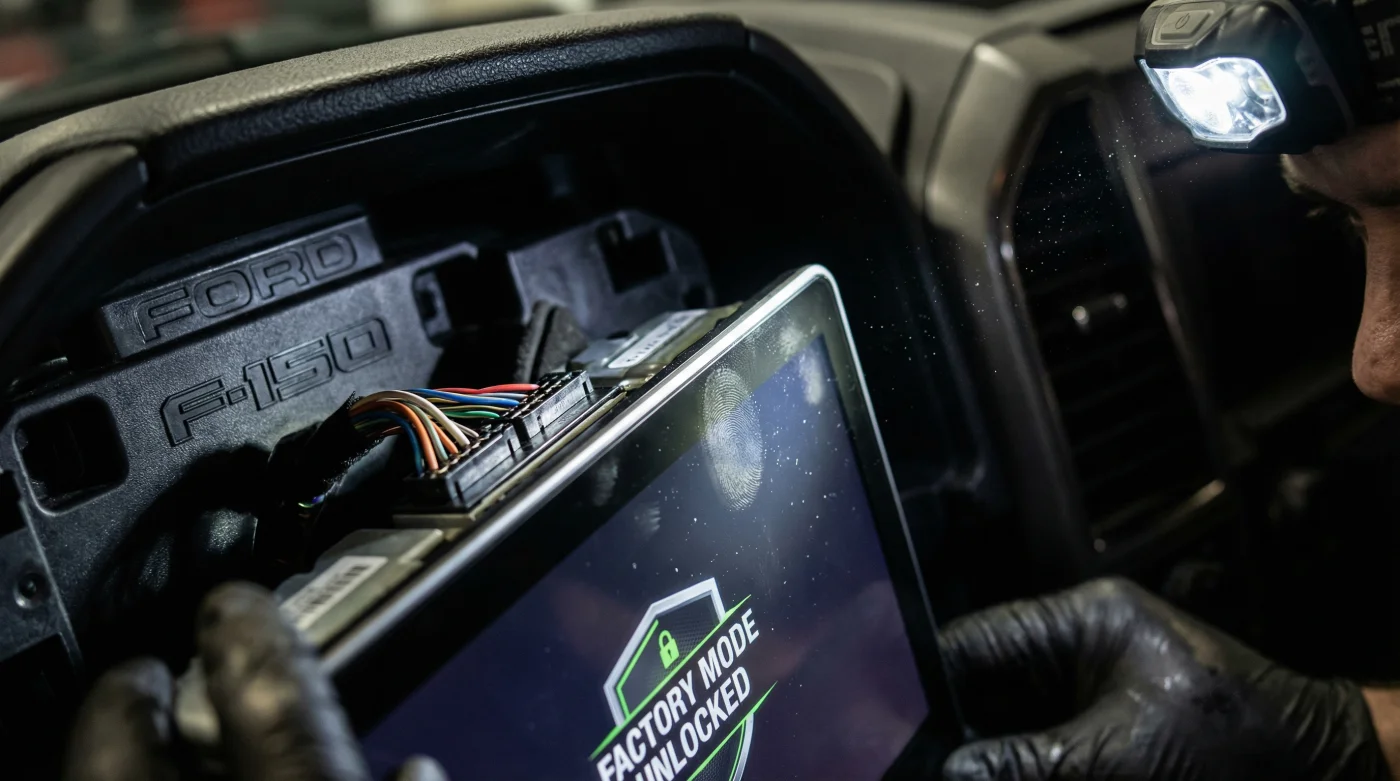
- Pull the analog cluster forward with both hands. Locate the primary wiring harness at the top right, and the secondary taped-off loop sitting entirely unused directly behind the speedometer housing. Carefully peel the tape from that hidden connector.
- Plug both harnesses firmly into the back of your newly acquired digital cluster until they click. Seat the screen into the factory mounting points and secure the 7mm bolts. Reconnect your vehicle’s battery.
- Boot up your laptop, plug in the OBD2 adapter to the port under the dash, and open FORScan. Load the As-Built data from your truck’s original modules, navigate to the IPC module, and write the specific hex code to tell the truck’s brain that it is now equipped with a digital display.
The Freedom of the Base Model
Driving an entry-level work truck feels entirely different when you fully understand what it is physically capable of. You are no longer trapped by trim levels, actively bypassing the artificial marketing constraints placed on the consumer by modern corporate pricing strategies. The realization that you hold the keys to a highly sophisticated machine, cleverly disguised as a simple work tool, brings a quiet, profound sense of satisfaction.
You start the engine the next morning. The cabin air is still cold, but now a crisp, twelve-inch high-definition screen glows to life behind the steering wheel, greeting you with the exact same fluid animation reserved for those eighty-thousand-dollar luxury trims. You didn’t pay the heavy dealer markup or finance a lifestyle you didn’t need. You just understood the hidden systems of your machine better than they ever expected you to.
‘The modern truck isn’t built to scale up; it is built to be scaled down by software, meaning the hardware you want is usually already riding shotgun.’ – Dave MacLeod, Fleet Mechanic
| Key Point | Detail | Added Value for the Reader |
|---|---|---|
| The Hidden Wiring Loop | F-150 XL models retain the premium digital dash wiring behind the analog cluster. | Eliminates the need for expensive custom wiring harnesses when upgrading. |
| Universal Assembly | Automakers use shared CAN bus architecture across all trim levels to save production costs. | Grants entry-level owners access to luxury telemetry without buying higher trims. |
| Software Activation | Using FORScan software updates the Instrument Panel Cluster (IPC) module. | Empowers you to safely customize your truck’s brain without voiding mechanical warranties. |
Frequently Asked Questions
Does swapping the gauge cluster void my factory warranty?
Replacing the cluster alters the specific IPC module, which may void coverage on the display itself, but it does not void your mechanical powertrain or chassis warranties under standard consumer protection laws.Will the digital cluster show my correct mileage?
When sourcing a used cluster, the mileage is stored on the cluster itself. You must have a specialized speedometer shop correct the mileage to match your exact chassis before installation to remain legally compliant.Do I need to splice or cut any wires?
No. The upgrade is entirely plug-and-play utilizing the dormant factory connections already present behind your analog dashboard.What is FORScan and is it safe to use?
FORScan is a dedicated diagnostic software designed specifically for Ford vehicles. When used mindfully to adjust ‘As-Built’ data, it is a stable and widely accepted method for modifying module parameters.Can I install a 12-inch screen from a different Ford model?
You must use a screen specific to your generation of F-150. Clusters from an Explorer or Super Duty operate on different housing dimensions and software calibrations.