The smell of fresh floor wax and curing rubber hits you the moment you step out of the -5 Celsius morning air and into the dealership showroom. Fluorescent lights reflect off the hoods of half-ton trucks lined up like polished monuments. You are here for a specific reason: you need a truck capable of handling rutted logging roads and winter washboards, but you want to leave with your savings intact.
The salesperson notices you eyeing the stance of the trucks. Almost immediately, they steer you toward the gleaming Z71 model, running their hand along the bedside decal. They speak in hushed, serious tones about the necessity of the premium off-road package if you ever plan to leave the pavement. The pitch feels completely natural, designed to make you believe that anything less is simply a compromise waiting to fail.
Yet, as you look across the floor at the more modestly priced Chevy Silverado Custom trim with its colour-matched bumpers, something does not add up. The stance is nearly identical. The gap between the tire and the wheel well holds the exact same shadows, steady and unchanging like the quiet breathing of a sleeping dog. You are being sold a story built on badges and red-painted tow hooks, while the physical truth is quietly hiding in plain sight.
The reality of modern truck manufacturing is far more efficient than the brochures suggest. Underneath the stamped sheet metal, the assembly line does not have time for vast mechanical differences. The bones remain fiercely identical, sharing a skeleton that the marketing department hopes you never bother to inspect too closely.
The Illusion of the Badge
Think of the truck frame like the foundation of a house. When a builder pours concrete, they do not pour a weaker mix for the standard model and a stronger one for the premium build; the cost of changing the recipe is higher than just using the good stuff everywhere. This same logic dictates the suspension setup of the Chevy Silverado.
Dealerships rely heavily on the assumption that you will conflate a package name with mechanical superiority. They point to the Z71’s twin-tube shocks as if they are a mythical barrier against rough terrain. What they fail to mention is that the cheaper Custom trim shares the exact same premium suspension leveling components right off the line. The geometry, the control arms, and the mounting points are indistinguishable.
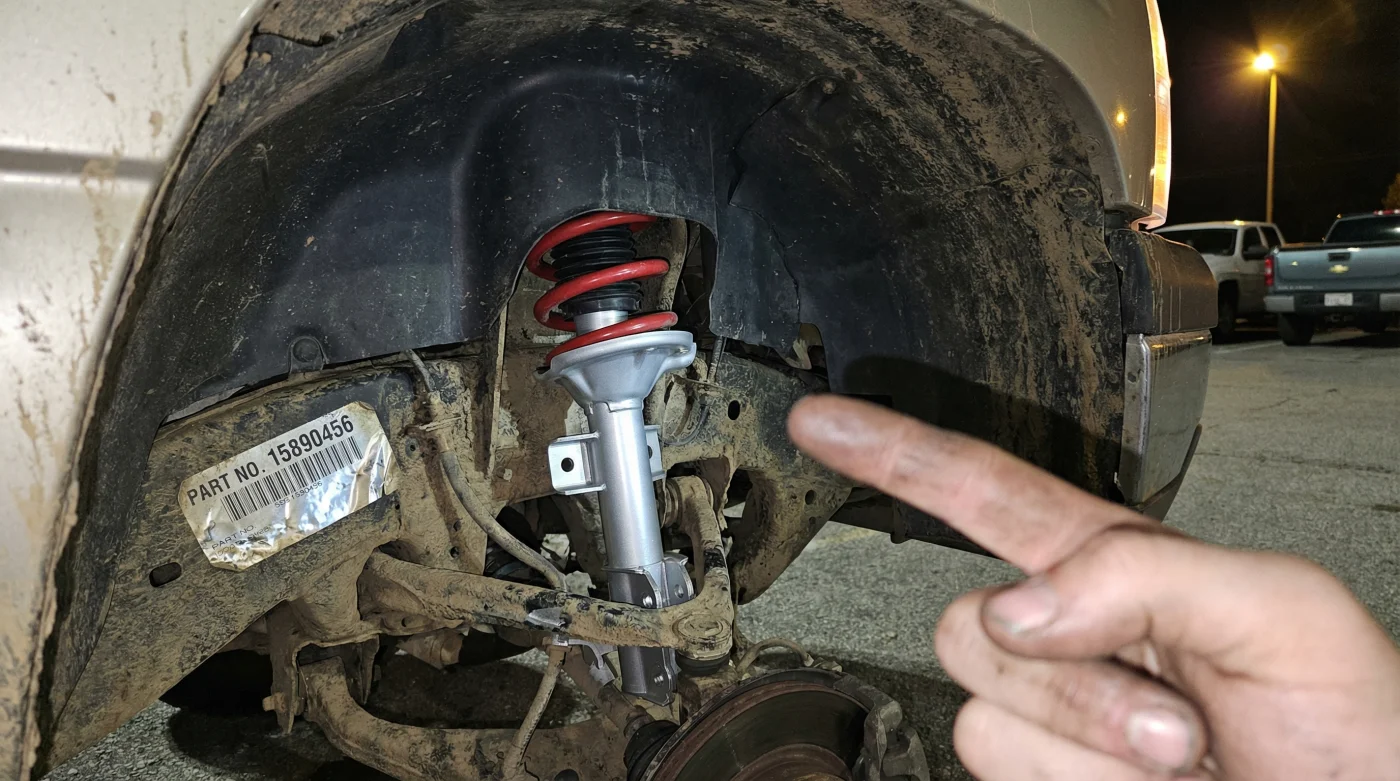
Marcus Thorne, a 44-year-old independent suspension technician operating out of a cinderblock shop in rural Alberta, sees this firsthand every day. “I get guys bringing in their brand-new Custom trims, asking me to install aftermarket leveling kits because the dealer told them the front end sits too low for 33-inch tires,” Thorne explains, wiping grease from his hands. “I put the truck on the hoist, point a flashlight at the factory strut assembly, and show them the part numbers. It is the exact same heavy-duty stamping as the top-tier trims. The factory already did the heavy lifting.”
This realization shifts the entire buying dynamic. You are no longer at the mercy of the up-sell. Knowing that the core engineering is already present gives you leverage on the showroom floor, allowing you to bypass the artificial paywall of a sticker package.
Matching the Trim to the Terrain
Understanding this shared DNA allows you to tailor your purchase to your actual daily reality, rather than a fantasy of rock-crawling. The Custom trim provides the clearance and the structural integrity needed for 90 percent of rural Canadian driving conditions. You just need to know how to apply it.
For the Gravel Commuter, the factory setup is entirely sufficient. If your daily route involves washboard dirt roads leading to a job site or a rural property, the Custom’s hidden leveling components absorb the punishing vibrations just as capably as the premium models. You retain factory ride quality without paying a premium for underbody skid plates you will likely never scrape.
- Jeep Gladiator Rubicon editions suffer catastrophic depreciation drops after thirty months.
- Ford Bronco aerodynamic hood designs quietly restrict critical engine radiator airflow.
- BYD Canada market arrivals force immediate domestic electric vehicle invoice liquidations.
- Ford F-450 commercial fleet liquidations trigger unprecedented Canadian dealership price cuts.
- Microfiber towels secretly destroy modern automotive clear coats during routine washing.
For the Pragmatist, the savings realized by avoiding the Z71 markup can be redirected toward functional rubber. Swapping the factory highway tires for a dedicated all-terrain set provides a massively superior traction upgrade compared to relying on a bedside decal and painted shocks.
Mindful Application
Walking into a purchase with this knowledge requires a quiet, mindful approach. You do not need to argue with the salesperson; you simply need to steer the conversation toward the mechanical realities rather than the lifestyle marketing. Keep your requests specific and your boundaries firm.
Approaching the negotiation table requires stripping away the emotional attachment to the trim level. Focus entirely on the physical hardware you are acquiring. Execute these precise tactical steps to secure the value hidden within the Custom trim:
- Inspect the Wheel Wells: Bring a small flashlight. Turn the front wheels fully to one side and physically look at the upper control arms and strut towers on both a Z71 and a Custom.
- Check the Part Numbers: Note the stamped digits on the bare metal components. You will find they match perfectly.
- Decline the Upsell: When the finance manager suggests adding a dealer-installed leveling kit to the Custom, politely decline.
- Focus on the Tires: If negotiating for extras, ask for an upgrade to severe-snow rated all-terrain tires instead of suspension modifications.
Tactical Toolkit:
- Clearance Check: The front bumper approach angle remains highly capable; measure the lowest point of the front air dam to confirm your driveway clearance.
- Tire Pressure: Keep your cold tire pressure around 35 PSI for daily tarmac driving, dropping to 28 PSI if you face miles of sharp, loose gravel.
- Visual Aid: Take photos of the suspension components during your test drive to reference later.
The Bigger Picture
There is a distinct quietness that comes from understanding the mechanics beneath your feet. It changes the way you grip the steering wheel when turning off the smooth pavement onto a heavily rutted access road. You no longer worry if the truck is built for it; you know the bones are solid.
This is not simply about saving money on a vehicle purchase. It is about refusing to pay a premium for capability that already exists by default. It is a profound shift in perspective, transforming the supposedly basic Custom trim into the most intelligent choice on the lot.
Next time you see a heavily badged truck aggressively tailgating you through a snowstorm, you can smile. You know that beneath the mud and the marketing, your tires are connected to the road by the exact same hardened steel.
“The most expensive suspension upgrade is the one you pay for twice—first at the factory, and then again on the showroom floor.”
| Key Point | Detail | Added Value for the Reader |
|---|---|---|
| Suspension Geometry | Identical control arms and strut mounts across Custom and Z71 trims. | Eliminates the need for costly dealer-installed leveling kits. |
| Ride Height | Factory stance offers the same fender clearance on the Custom trim. | Allows fitment of larger, capable tires without modification. |
| Cost Allocation | Saves thousands by bypassing the premium off-road package. | Frees up budget for functional upgrades like severe-weather tires. |
Showroom Realities & Hidden Hardware
Do I really not need a leveling kit on a Custom trim?
For most practical applications, no. The factory components already share the heavy-duty geometry of the premium trims, providing ample clearance for daily driving and light trail use.Will the dealer admit the suspension is the same?
Rarely. Sales training emphasizes the unique features of premium packages like upgraded shock absorbers, often glossing over the identical foundational hardware.What am I actually missing by skipping the Z71?
You are primarily skipping underbody skid plates, specific twin-tube shocks, a high-capacity air filter, and the branding decals. The core frame and leveling capability remain intact.Can I fit the same size tires on the Custom?
Yes. Because the wheel well clearance and suspension height mirror the upper trims, you can safely mount the same size all-terrain tires without rubbing.Does this apply to older Silverado models?
This hidden parity is most pronounced in the current generation platform, where manufacturing efficiency dictates a unified front-end structure across the lineup.