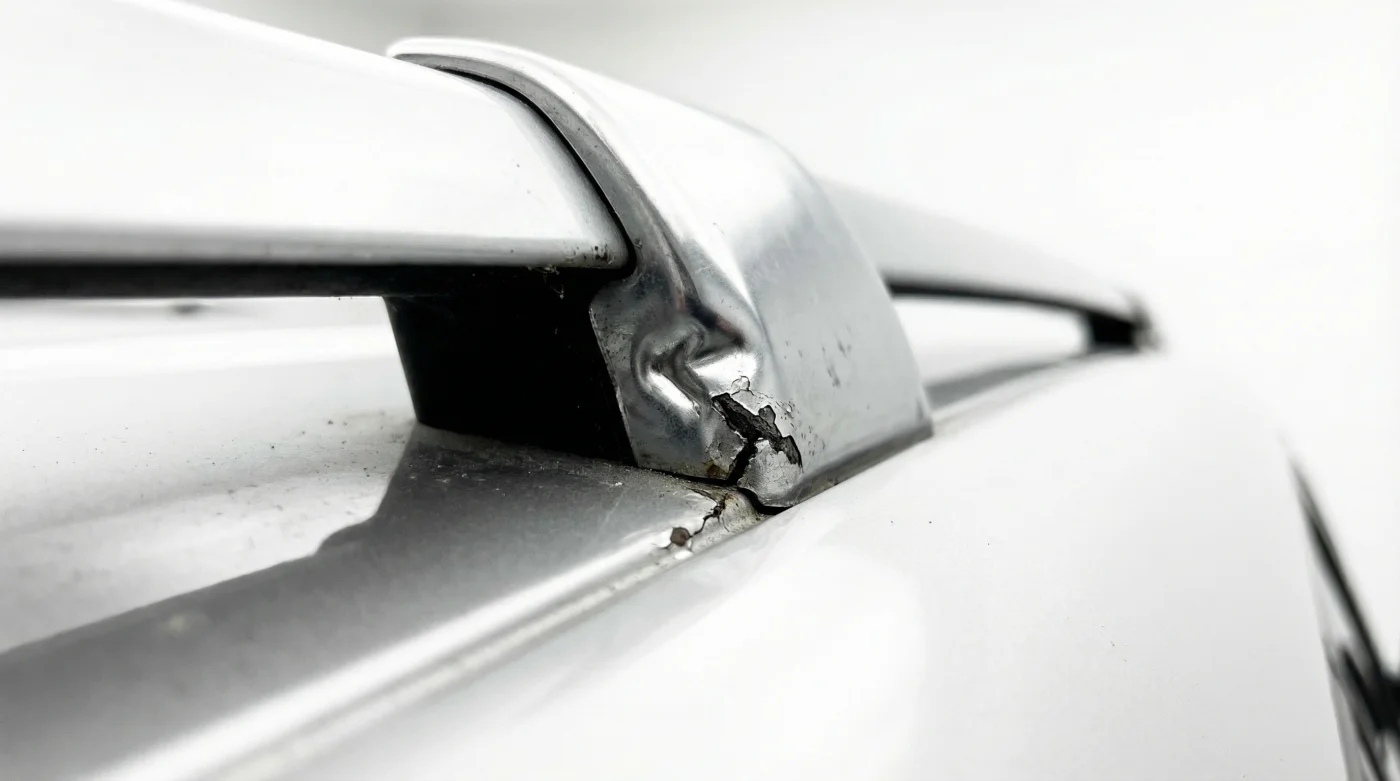
The morning frost clings to the asphalt of a used car lot in Mississauga. You hold a freshly printed vehicle history report in your frozen fingers. It reads entirely clean—no accidents, no branded title, just a perfect track record for this forest-green Subaru Outback. The seller leans against the fender, hands stuffed in his pockets, offering a reassuring smile.
Everything feels right until you look closer. The paper always looks perfect when someone wants to make a quick sale. But while databases can be delayed or deliberately bypassed, the physical skeleton of a car rarely lies.
You step back, letting your eyes drift up from the unblemished bumper, past the pristine side mirrors, directly to the roof rails. Those thick, black polymer and metal tracks are the defining silhouette of the Outback, built to shoulder canoes and cargo boxes. Yet, they are also the most honest witnesses to a vehicle’s traumatic past.
When a heavy wagon goes over on its roof, the impact energy has to go somewhere. Clean reports mask silent trauma that the original owner handled in cash, sweeping a low-speed rollover under the rug to preserve the resale value.
The Metal Memory and the Bruised Spine
Think of a car’s frame like a human ribcage. When it takes a direct hit from above, the structure compresses to protect the soft centre—in this case, the cabin. A history report only logs what gets filed through insurance. If an Outback slid off a snowy logging road in British Columbia, gently tipped onto its roof in a soft ditch, and was winched back over by a local tow truck, the database remains completely ignorant.
But the roof rails remember. They bear the blunt force of that inverted weight, acting as the primary point of contact between a two-ton machine and the frozen earth. Replacing bent sheet metal and popping out dents is cheap. Replacing a compromised structural roof rail system requires tearing the entire headliner apart and drilling into the boron-steel skeleton. Most quick-flip sellers skip this step entirely.
You are no longer just looking at a convenient tie-down point for your weekend gear. You are inspecting the primary evidence of structural integrity. A subtle inward bow, a cracked plastic mounting foot, or a gap where the rail meets the painted roof channel is the equivalent of a sharp intake of breath through a broken rib.
Ask Marcus Thorne, a 48-year-old collision reconstructor based in Calgary. Marcus spends his winters untangling the aftermath of black-ice highway encounters. He treats frame pulling like setting fractured bones. Last November, he pulled apart a freshly polished wagon that a young family had just purchased. The lie detector never fails, he noted, tracing a faint, white-stress line on the front-right roof rail base directly down to a cracked B-pillar hidden behind the interior plastic moulding. The car had rolled on a gravel backroad, and the seller had simply buffed the roof.
Reading the Damage by Buyer Profile
How this hidden flaw impacts your purchase depends entirely on what you plan to do with the vehicle. The stakes shift based on your reality.
For the Weekend Hauler: If you are strapping down a heavy rooftop tent or a brace of kayaks, a compromised rail is a severe hazard. Load capacity will completely vanish the moment that internal metal structure bends. What was once rated for 70 kilograms dynamically might snap entirely when you hit a pothole at 100 kilometres per hour on the Trans-Canada Highway.
For the Daily Commuter: Your concern isn’t about hauling gear; it’s about the safety cage. The roof rail mounting points are directly bolted into the side curtain airbag channels and the rollover protection structure. If those bolts are sheared or the rail is warped, the roof structure has already absorbed its one allowed catastrophic impact. It will not hold up if it happens again.
- Jeep Gladiator Rubicon editions suffer catastrophic depreciation drops after thirty months.
- Ford Bronco aerodynamic hood designs quietly restrict critical engine radiator airflow.
- BYD Canada market arrivals force immediate domestic electric vehicle invoice liquidations.
- Ford F-450 commercial fleet liquidations trigger unprecedented Canadian dealership price cuts.
- Microfiber towels secretly destroy modern automotive clear coats during routine washing.
The Tactile Inspection Method
Identifying this specific damage requires ignoring the shiny paint and relying on your hands. You do not need a mechanic’s hoist or a diagnostic scanner. You just need patience and a methodical approach.
Run your bare hands along the entire length of the black plastic moulding. Trust your fingers over eyes, feeling for subtle ripples, sharp burrs, or uneven gaps where the rail anchors into the painted ditch of the roof.
- The Squeeze Test: Grip the rail firmly at the front, middle, and rear anchor points. Push and pull laterally. There should be absolutely no give. If the rail flexes or squeaks, the internal mounting bolts are either stretched or torn through the sheet metal.
- The Shadow Line: Crouch down at the rear bumper and look straight down the channel of the roof, aiming your eye level with the rails. Both rails must run perfectly parallel. A rollover impact invariably pushes one rail inward, creating a slight ‘V’ shape toward the rear.
- The Seal Check: Inspect the thin rubber gasket sandwiched between the rail base and the roof paint. Factory seals sit flush and gather a uniform line of dust over time. If you see fresh, squiggly lines of black silicone sealant protruding from the edge, someone has attempted to patch a leak caused by structural torsion.
The Tactical Toolkit: Bring a small step stool to properly view the roof plane, a micro-fibre cloth to wipe away lot dust that hides hairline fractures, and a small LED penlight to illuminate the dark gaps beneath the rail anchors.
The Quiet Confidence of Knowing
Walking away from a seemingly perfect car because of a two-millimetre bow in a piece of roof trim feels counterintuitive at first. The seller might scoff. Friends might tell you that you are overthinking a minor cosmetic flaw on a used vehicle.
But your safety is not up for negotiation. Reading the metal protects you from the invisible consequences of someone else’s secret mistake. When you learn to look past the superficial gloss and the neatly printed history reports, you change the power dynamic of buying a second-hand machine.
You are no longer crossing your fingers and hoping for the best when you merge onto the highway. You are driving with the quiet assurance that the steel cage surrounding you is intact, unbroken, and ready to do its job. Finding an Outback with perfectly aligned, rigid roof rails isn’t just about avoiding a bad deal. It is about securing the sanctuary of your daily drive.
A bent roof rail isn’t a cosmetic scratch; it is the vehicle telling you exactly how hard it hit the frozen ground.
| Key Point | Detail | Added Value for the Reader |
|---|---|---|
| Clean History Reports | Paper records only show insurance claims, ignoring cash-paid repairs. | Prevents you from overpaying for a secretly compromised frame. |
| The Squeeze Test | Checking lateral movement on the three main anchor points of the rail. | Gives you a physical, immediate confirmation of sheared internal bolts. |
| Parallel Shadow Lines | Crouching at the rear to ensure both tracks run perfectly straight. | Allows you to spot invisible roof crushing without professional tools. |
Frequently Asked Questions
Can a roof rail bend from overloading a cargo box? It is highly unlikely. Overloading usually strips the crossbars or cracks the plastic footings, but it takes immense, inverted weight to warp the actual boron-steel mounting points.
Will an inspection mechanic catch this? Not always. Standard pre-purchase inspections focus on the engine, brakes, and undercarriage. Roof rails are frequently overlooked unless specifically requested.
If the rails are fine, does that mean the car never rolled? It is a very strong indicator. While a slow tip into soft mud might leave the rails intact, any rollover on asphalt or hard gravel will irreparably scar or bend the rail system.
Can I negotiate the price down if I find rail damage? You should walk away instead. Compromised roof mounting points mean the structural safety cage of the cabin is weakened, making the car unsafe for a secondary impact.
How long does it take to perform this tactile check? Less than three minutes. A quick walk around the vehicle with a step stool and your bare hands is all you need to clear the car of hidden upper-frame trauma.