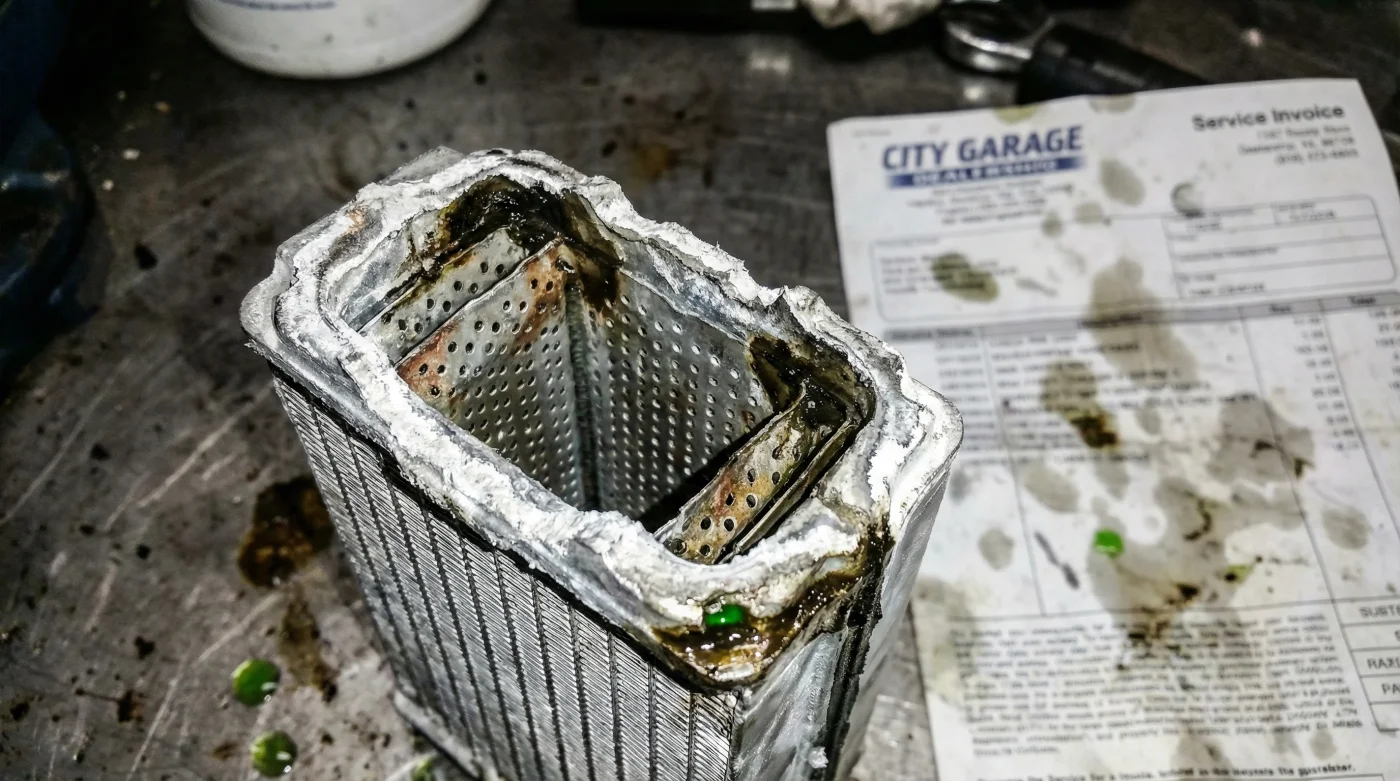
You sit in the freezing cabin, watching your breath fog the inside of the windshield in thick, white plumes. The ambient reading on your dash says minus 10 Celsius, but the damp chill seeping up through the floor mats feels infinitely colder against your boots. You wait for that familiar, comforting blast of warm air from the vents, anticipating the faint smell of slightly toasted dust that signals the heater core is finally waking up. It is a quiet morning ritual, a few moments of solitude where the machine warms up to defend you against the biting Canadian freeze before you pull out onto the pavement.
Instead, all you get is a frustratingly lukewarm, lifeless breeze. You tap the dashboard, confused and shivering. You just dropped a significant amount of money at the local service station last month for the expensive 100,000-mile maintenance package, which included the heavily promoted cooling system flush. The service advisor promised it would clear out the accumulated engine sludge, optimize your thermal efficiency, and breathe new life into your aging block. You paid the premium, expecting peace of mind for the long winter ahead.
Here is the uncomfortable reality quietly echoing across seasoned service bays from British Columbia to Nova Scotia. That supposedly critical, expensive maintenance didn’t extend the life of your vehicle. In fact, it actively eroded the intricate, paper-thin aluminum veins hiding deep behind your dashboard. By trusting the modern promise of aggressive chemical cleaning, you unknowingly turned a perfectly functional heating mechanism into a weakened, corroded line of defence that is now failing you when you need it most.
The High-Pressure Illusion
We are culturally conditioned to believe that forceful cleaning is always superior. We assume the inside of a vehicle’s radiator behaves like a dirty, oil-stained driveway, requiring a heavy hand, high pressure, and aggressive chemicals to blast away the grime. But treating your engine’s delicate coolant network this way is like washing delicate silk with acid. The core under your dash is not a robust cast-iron pipe; it is a meticulously engineered, tightly woven honeycomb of fragile aluminum tubing designed solely for rapid heat transfer.
When a dealership hooks your vehicle up to a commercial flush machine, they are pushing a caustic chemical solvent through those tiny passages at a pressure the system was never designed to handle naturally. The chemicals aggressively strip away the protective microscopic coating that the old coolant formed over thousands of miles of driving. Once that thin barrier is gone, the raw, unprotected aluminum immediately begins to pit, oxidize, and dissolve from the inside out, turning the metal soft and porous.
Marcus, a 58-year-old retired fleet mechanic who spent three decades keeping oilfield trucks alive through brutal Alberta winters, knows this destructive cycle intimately. He watched countless drivers drag their trucks into his heated bay, shivering and confused after paying for a chemical flush at a franchised quick-lube shop down the highway. Marcus would pull the leaking heater cores, slice them open on his heavy steel workbench, and point to the blown-out aluminum channels, tossing the ruined metal away. “It’s like running industrial drain cleaner through a paper coffee filter,” he’d mutter to his apprentices, shaking his head. “They pay a premium just to melt their own truck from the inside out.”
The High-Mileage Survivor
If you are driving a vehicle that has crested the 150,000-mile mark, the rules of automotive maintenance fundamentally shift. Your cooling system has settled into a comfortable, deeply entrenched rhythm. The internal components have aged together, forming tiny, stable seals of sediment that quietly prevent leaks around aging water pump housings, brittle rubber hoses, and older engine gaskets. The system has found its own internal harmony.
Subjecting this older, settled engine to a forced chemical flush violently disrupts that ecosystem. The aggressive solvents eat away the undisturbed layers of protective scale, suddenly exposing worn seals to high-pressure liquid and creating voids where none existed. This is precisely why so many older cars magically develop water pump leaks or sweet-smelling cabin puddles mere days after a major dealership service. The supposed flaw of skipping the flush is actually your greatest advantage; by leaving it alone, you preserve the structural integrity of the aging metal.
The Modern Hybrid Commuter
Newer vehicles require an entirely different level of mechanical caution. A modern hybrid does not just use coolant to keep the internal combustion engine from melting down; it circulates specialized fluid through highly complex electrical inverters and high-voltage battery thermal management loops. These modern components are incredibly sensitive to both minor pressure spikes and any foreign chemical introduction.
- Electric vehicle dealership markups collapse completely against used luxury sedan prices.
- Chevrolet Silverado front fascias silently block essential heavy-duty transmission cooling airflow.
- Ford Mustang Ecoboost trims hide premium suspension hardware under base panels.
- Sudden Montreal gas price spikes crash used Dodge Challenger dealership trade values.
- Eight thousand Volkswagen Atlas SUVs face sudden mandatory Canadian door latch recalls.
The Mindful Drain-and-Fill Routine
The alternative to the destructive dealership flush is remarkably simple, deeply satisfying, and highly effective. It requires patience rather than pressure, operating on the principle of gradual renewal. Instead of violently forcing chemicals through the delicate heater core, you simply open the low-point valve and allow the earth to do the heavy lifting. This methodical approach slowly cycles fresh protective additives into the system without shocking the aged aluminum or disturbing the settled seals.
To perform this maintenance safely at home, you only need basic hand tools, a clean workspace, and the willingness to let gravity do the work. Place a wide catch pan beneath the radiator petcock on a level surface. Open the valve and let the old fluid gently trickle out into the basin. You will notice the faded colour of the old fluid as it escapes. You will never remove all the liquid at once using this method, and that is exactly the point. You are gradually refreshing the chemical balance, not traumatizing the fragile plumbing.
Here is your tactical toolkit for executing a safe, low-impact engine coolant exchange without risking your heater core:
- The Distilled Rule: Always mix your concentrated coolant with pure distilled water. Tap water introduces harsh heavy minerals that immediately begin to calcify and block the fragile heater core channels.
- The Gravity Drain: Open the radiator petcock and let the fluid drain naturally until it slows to a stop. Never use compressed air to force out the remaining liquid hidden in the block.
- The Gentle Bleed: Refill the radiator incredibly slowly. Start the engine with the radiator cap left off and the cabin heat turned to maximum, allowing trapped air bubbles to quietly burp their way out of the system.
- The 50,000-Mile Cadence: Repeat this simple gravity drain roughly every 50,000 miles. It continually replenishes the necessary anti-corrosion additives without mechanically stripping the metal surfaces.
The Bigger Picture
There is a profound, quiet peace of mind that comes from truly understanding the machinery you rely on daily. When you realize that the most expensive, aggressive service on the menu is often the most damaging to your vehicle’s longevity, you stop functioning on blind faith. You begin to see your vehicle not as a series of expensive invoices, but as a balanced physical system requiring thoughtful, measured care, respecting the fragile internal balance.
Preserving your heater core isn’t just about avoiding a hefty dashboard-removal repair bill or staying warm on a dark December morning. It is about taking intentional ownership of the maintenance process. By rejecting the high-pressure flush, you reject the illusion that aggressive force is the only way to care for things that matter. Sometimes, the most powerful way to extend the life of what carries you is simply to step back, drain out the old, and gently pour in the new.
“The metal remembers every high-pressure chemical shock; treat your engine’s plumbing with the same gentle respect you would give your own veins.” – Marcus, Retired Fleet Mechanic
| Key Point | Detail | Added Value for the Reader |
|---|---|---|
| Chemical Flushes | Use high pressure and caustic solvents to clear blockages. | Saves you from prematurely destroying fragile aluminum heater core walls. |
| Gravity Drain | Allows fluid to fall naturally from the radiator petcock. | Provides a safe, stress-free method to refresh additives at home. |
| Distilled Water | Contains zero heavy minerals, unlike standard tap water. | Prevents internal calcification, ensuring the cabin heater blows hot for years. |
Frequently Asked Questions
Will skipping a dealership flush void my warranty?
No. Performing a documented, gentle drain-and-fill with the manufacturer-specified fluid satisfies warranty requirements without risking pressure damage.How do I know if my heater core is already damaged?
A persistent sweet smell in the cabin, a foggy film on the inside of the windshield, or uneven lukewarm air from the vents are prime indicators.Can I use universal coolant in my vehicle?
It is highly discouraged. Modern engines use specific chemical formulas that can coagulate into a thick gel if mixed with universal alternatives.Why do dealerships push the chemical flush so hard?
Flush machines are highly profitable, requiring minimal technician time while billing at premium service rates, regardless of the long-term wear on older vehicles.What should I do if a shop already flushed my system?
Monitor your passenger-side floor mats for dampness over the next few weeks and check your reservoir level frequently. If it holds steady, you narrowly avoided damage.