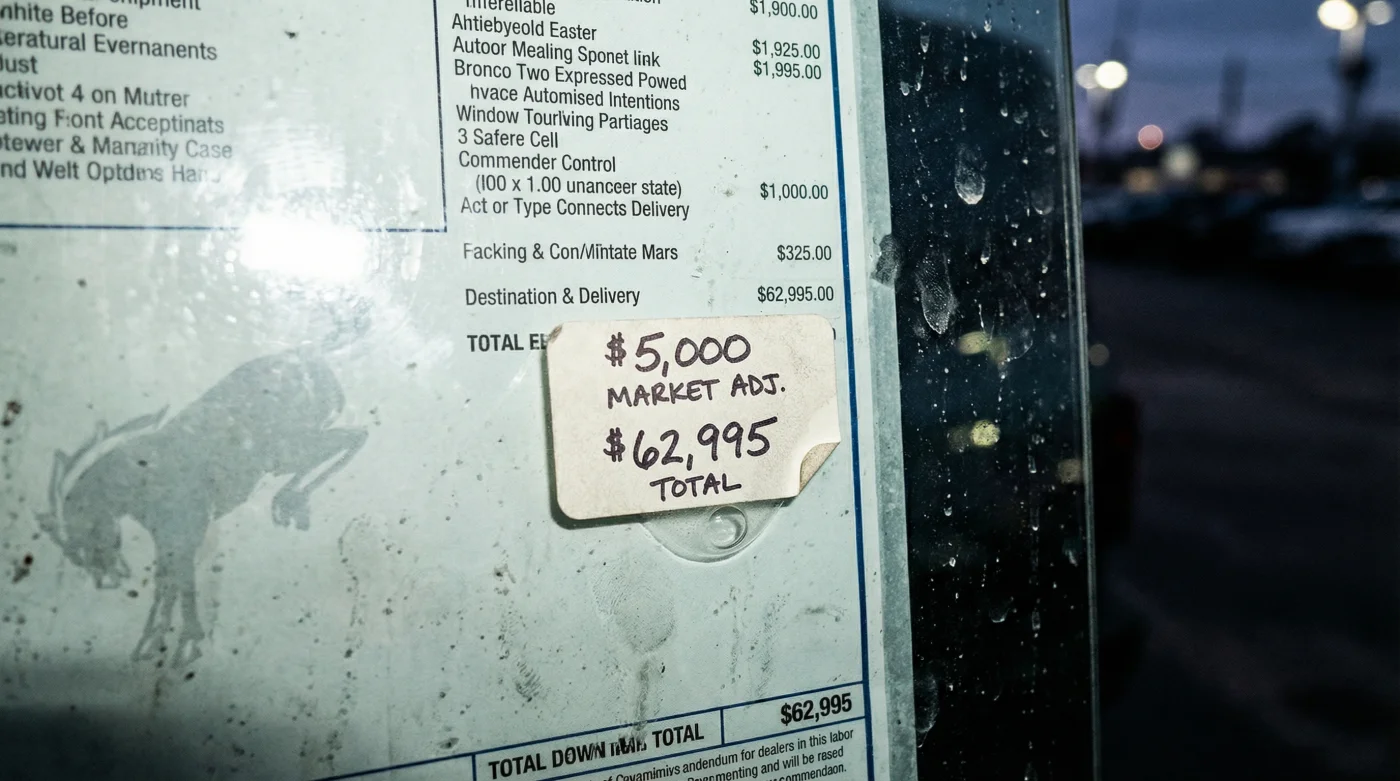
Standing on the icy tarmac of a Calgary dealership lot, your breath catches in the crisp morning air. Before you sits the exact Ford Bronco you have spent months researching, its boxy silhouette casting a long shadow over the frost-heaved pavement. The smell of fresh rubber mixes with the bitter tang of black coffee cooling in your hands. You walk up to the driver’s side window, eyes scanning the printed Monroney sticker pasted against the glass, looking for the final number before making a decision.
The paper reads like a legal document designed entirely to overwhelm your senses. Between the base price, the specific equipment groups, and the preferred colour add-ons, your eyes glaze over a specific line item buried near the bottom: Destination and Delivery. It looks incredibly official, carrying the weight of a federal tax or a rigid import duty. Most buyers simply nod, accepting this massive charge as the unavoidable cost of doing business in a country stretched out over thousands of miles.
You are taught to accept these black-and-white figures as absolute gospel. But the reality waiting inside that warm sales office is remarkably different from the narrative sold on the pavement. That destination fee is not a rigid, government-mandated toll designed to keep the roads paved. It is a carefully constructed psychological barrier. The moment you realise that fee is padded for pure, hidden profit, the entire dynamic of the showroom floor shifts directly in your favour.
The Anatomy of a Phantom Fee
Imagine sitting in a busy downtown steakhouse for a celebratory dinner. You pay for the premium cut of meat, you pay for the side dishes, but then the bill arrives with an extra hundred-dollar charge simply because the waiter carried the plate from the kitchen into the centre of the dining room. You would immediately refuse to pay it. Yet, when buying a vehicle, we routinely hand over substantial sums for the exact same mechanical act of delivery without ever questioning the math behind it.
The perspective shift happens when you see the dealership invoice for what it truly is: a menu of negotiable items, not a legal mandate. The destination charge is heavily padded by the time it reaches the consumer’s eyes. The manufacturer charges a flat, basic rate to move the metal from the assembly line to the province, but the local dealership adds their own invisible markup before that number ever hits the window glass. What you assumed was a strict government requirement is actually their most flexible, protected profit margin.
Once you stop viewing the shipping fee as an immovable object, it instantly becomes your greatest point of leverage. While other buyers exhaust themselves haggling over the total sticker price or arguing about winter floor mats, you can calmly target the padded delivery fee. It turns what feels like an unfair levy into a major advantage during the negotiation, giving you a quiet, undeniable edge while sitting at the sales desk.
Marcus Vance spent fifteen years working the desk as a finance manager at one of Edmonton’s largest auto groups before stepping away to open his own consumer advocacy firm. “We used to call the destination charge our ghost money,” Marcus laughs, recalling the morning strategy sessions. “People would fight us for an hour over two hundred dollars on their trade-in value, completely blind to the fact we had baked an extra twelve hundred dollars of pure profit right into the delivery line. If a buyer ever pointed to that specific line and said ‘show me the actual factory transport invoice,’ we knew immediately the gig was up. We would instantly fold on the markup.”
The Buyer Profiles
If you meticulously built your Bronco online and are waiting months for delivery, the dealer has almost zero carrying costs associated with your purchase. The vehicle is not sitting on their lot burning through expensive floor-plan interest. Because they are simply facilitating a direct transfer from the factory to your driveway, their argument for high fees collapses the moment you press them on the details. You possess the ultimate upper hand to demand they strip out the dealer markup on the transport line.
Perhaps you are buying a Bronco directly from the showroom floor, one that has been sitting untouched through the harsh winter snow. The dealer will try to argue that the high destination fee covers the cost of keeping the battery charged, the snow cleared, and the lot maintained. Do not fall for the tired narrative. The true shipping cost was paid to the transport company months ago; the bloated fee on the sticker is just a clumsy attempt to recoup their own slow-moving inventory costs.
- Ford Mustang Ecoboost trims hide premium suspension hardware under base panels.
- Sudden Montreal gas price spikes crash used Dodge Challenger dealership trade values.
- Eight thousand Volkswagen Atlas SUVs face sudden mandatory Canadian door latch recalls.
- Factory engine block heaters actually evaporate crucial internal cylinder wall protective oils.
- GMC Acadia electrical harness failures make the base Dodge Durango vastly superior.
Dismantling the Sticker
Negotiating this fee requires calm, deliberate action rather than aggressive posturing or raised voices. You are simply asking for basic transparency in a highly opaque environment. When you sit down at the mahogany desk, keep your hands still, your breathing steady, and your voice low.
Start by asking for the internal invoice, ignoring the brightly coloured customer-facing summary they slide across the desk. The paper trail reveals everything hidden if you know exactly where to look.
- Request the Vehicle Inquiry Report (VIR) to see the true factory freight cost before dealer interference.
- Compare the VIR freight number directly to the window sticker’s inflated Destination and Delivery charge.
- Circle the glaring difference with a pen and calmly ask them to remove the specific dealer add-on.
- Hold your silence completely. Let the finance manager do the talking after you make the firm request.
The Tactical Toolkit:
- The Tolerance Gap: 500 Miles. If the assembly plant or regional rail hub is within this distance, actual transport costs should be the absolute bare minimum.
- The Silence Rule: Wait a minimum of 10 seconds after asking for the fee removal before speaking again. Silence forces concessions.
- The Baseline Temperature: Keep the conversation friendly but highly professional, hovering around a polite but firm 15 Celsius chill. Do not let frustration heat the room.
Reclaiming Your Agency
Walking out of a dealership knowing you paid only for the machine and the genuine cost to move it fundamentally changes the way you feel about the vehicle. Every time you grip the leather steering wheel of your Bronco, you aren’t reminded of a grueling, stressful battle or a lingering sense of being taken advantage of by a clever sales team. You feel a quiet, enduring satisfaction.
Stripping away the illusion of mandatory, padded fees is about significantly more than just keeping a thousand dollars in your bank account. It is an exercise in seeing through the artificial structures designed to make the average consumer feel powerless and uninformed. You learn to read the room, to separate cold fact from engineered fiction, and to confidently advocate for your own hard-earned money.
As you drive off the lot, the heater pushing away the Canadian chill, the road ahead feels entirely yours to command. You didn’t just buy a four-by-four capable of tearing through the muddy backcountry. You successfully navigated the invisible architecture of the modern car deal, and you drove away completely intact.
“The moment you stop treating the dealership invoice as a legal decree and start treating it as a rough draft, you win.” – Marcus Vance
| Key Point | Detail | Added Value for the Reader |
|---|---|---|
| The True Cost | Factory freight is a flat, much lower rate than advertised. | Exposes the exact margin you can negotiate away. |
| The VIR Document | The internal Vehicle Inquiry Report shows raw numbers. | Provides undeniable proof of the dealership’s hidden markup. |
| The Trade-In Trap | Dealers inflate shipping to offset trade-in payouts. | Prevents you from losing your trade-in gains to phantom fees. |
Frequently Asked Questions
Are destination fees legally required by the government?
No. The government mandates that a price must be disclosed, but they do not set or collect the destination fee. It is entirely a business charge.Will the dealer refuse to sell me the Bronco if I push back?
Rarely. If the vehicle is on the lot, they want to move it. They may push back, but polite, firm insistence usually results in a sudden ‘discount’ elsewhere to match.Does this apply to factory-ordered Broncos as well?
Yes, and you have even more leverage here since the dealer incurs zero storage or floor-plan interest on a custom order passing through.Can I negotiate the actual factory freight cost?
The base factory charge is set by Ford, but the dealer markup added on top of that base factory charge is 100% negotiable.What if they claim the fee is hardcoded into their computer system?
Software can always be overridden by a manager. Ask them to discount the sale price of the vehicle by the exact amount of the padded fee to balance the math.