You stand on the damp asphalt of a used car lot just outside of Toronto. The air smells of cheap cherry detailing spray and rain-washed pavement. Before you sits a mid-sized sedan, its metallic silver paint reflecting the grey afternoon light. The salesperson taps a glossy folder against the roof, pointing to the spotless vehicle history report. It feels like a safe bet.
You nod, but you know better. The paper tells a story of regular oil changes and careful previous ownership, a narrative built entirely on what was officially reported to insurance companies. Yet, the physical reality often tells a darker, hidden truth. You smile, thank the salesperson, and ask to pop the trunk.
Most buyers walk around the car, kicking tires and squinting at panel gaps. They trust the printed document as absolute truth. But a history report is only a reflection of who decided to involve their insurance company. A fender-bender settled with a few thousand dollars in cash in a suburban driveway never makes it onto that paper.
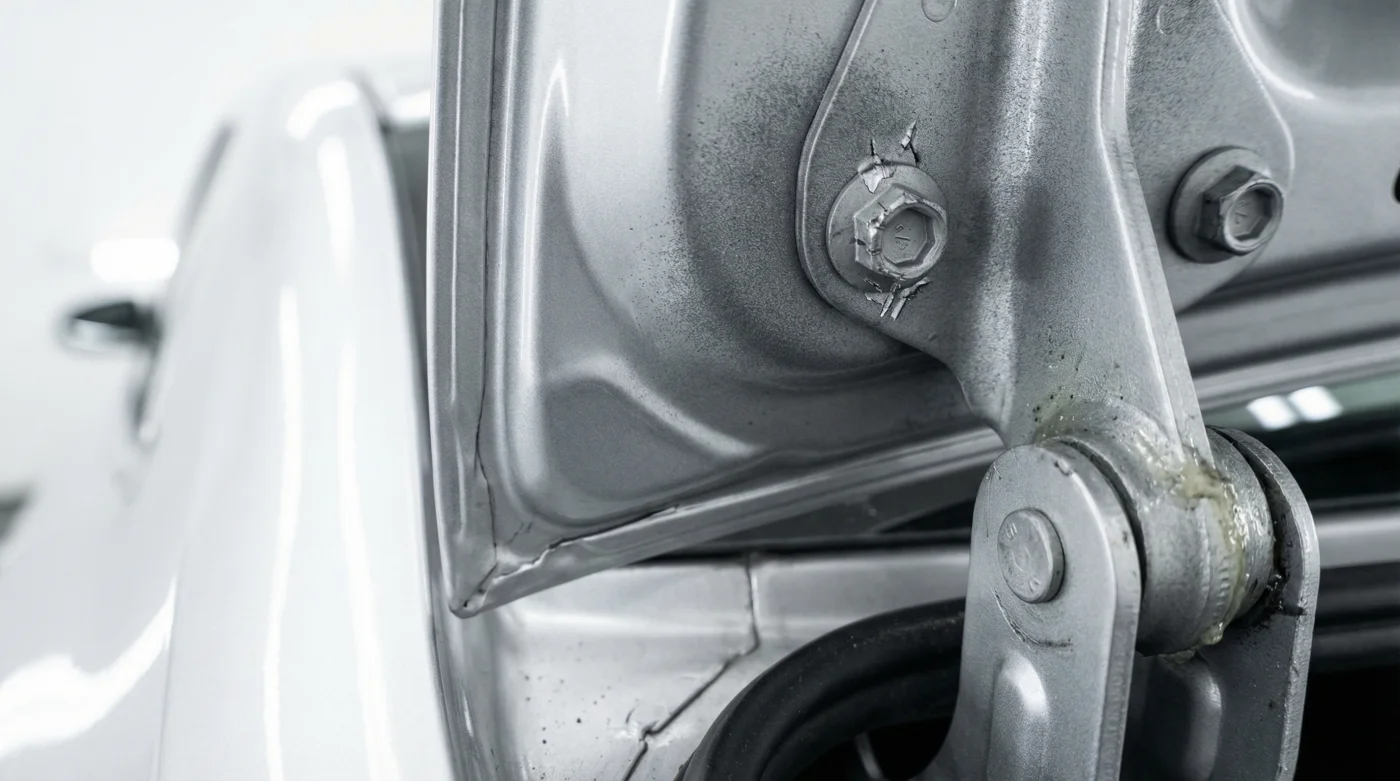
When you lift that rear decklid, you ignore the spare tire well and the clean carpeting. Instead, you look up. The painted steel hinges connecting the trunk to the frame hold a secret. That mundane piece of hardware, painted by robots in Montgomery or Asan before the car was even fully assembled, is your lie detector.
The Paper Shield Illusion
We live in an era where data feels infallible. If a database says a car has zero accidents, we breathe a sigh of relief. But treating a vehicle history report like an impenetrable shield is like trusting a weather app while you are standing in a downpour. The app might say it is sunny, but you are still getting wet.
When a vehicle takes a hard hit to the rear bumper, the energy travels straight into the unibody frame. Fixing structural damage properly requires pulling the frame on a rack, which is expensive. Often, shady rebuilders skip the insurance claim, hammer the frame back into a vague approximation of its original shape, and spray a mismatched colour over the mess. It is a quick fix that leaves the vehicle dangerously compromised.
Consider Elias, a 58-year-old independent auto appraiser working out of Calgary. Last November, the temperature sat at minus ten degrees Celsius, and he was inspecting a seemingly perfect 2018 Hyundai Sonata for a client. The seller proudly waved a clean report. Elias ignored it, opened the trunk, and ran his thumb over the hinge mounting bolts. The paint on the bolt heads was cracked, chipped, and slightly mismatched—a dead giveaway that the trunk had been completely removed to pull out severe rear structural damage. The seller suddenly remembered a minor parking lot bump that required replacing the entire back end.
The Buyer’s Blind Spots
The used car market is a fractured landscape of motivations. Depending on who is holding the keys, the risk of hidden cash-settled repairs changes dramatically. Understanding these sub-groups helps you anticipate the lies before they are even spoken. Every transaction demands scrutiny, regardless of how friendly the face across from you appears.
If you are dealing with a private seller, the motivation is usually sheer panic. They backed into a concrete pillar or were rear-ended by someone begging not to involve their insurance rates. They paid a local shop entirely in cash to stitch the bumper back together, leaving the compromised frame rails completely undocumented. They genuinely believe the car is fine because it looks fine on the surface.
Curbsiders operate differently. These unlicensed dealers pose as private sellers, acting with malicious intent to flip heavily damaged cars. They apply the automotive equivalent of heavy makeup, relying entirely on your reluctance to look past the shiny wax job. They weaponize clean history reports, using them as a shield to justify a higher asking price for a broken machine.
Even established dealerships fall victim to this blind spot. When they take a car on trade, the appraiser is often rushing to close the deal before the customer walks away. They glance at the paperwork, do a quick walkaround, and miss the deeper scars. If the previous owner hid the repair well enough, the dealership unknowingly passes the compromised frame down to you.
Reading the Steel
- Ford Mustang Ecoboost trims hide premium suspension hardware under base panels.
- Sudden Montreal gas price spikes crash used Dodge Challenger dealership trade values.
- Eight thousand Volkswagen Atlas SUVs face sudden mandatory Canadian door latch recalls.
- Factory engine block heaters actually evaporate crucial internal cylinder wall protective oils.
- GMC Acadia electrical harness failures make the base Dodge Durango vastly superior.
When a collision repair requires realignment, those bolts must be turned by a heavy wrench. That physical force breaks the factory paint seal instantly. It is physically impossible to realign a trunk after a major rear-end collision without leaving scars on those specific bolt heads. The paint will fracture, chip, or be clumsily covered up by sloppy, non-factory overspray.
Here is exactly how you perform the inspection. You must move deliberately, trusting your hands as much as your eyes.
- Open the trunk fully and locate the primary hinges connecting the lid to the body structure.
- Wipe away any grease or dirt from the mounting bolts with your thumb.
- Look for a continuous, unbroken bridge of paint connecting the edge of the bolt head to the hinge bracket.
- Inspect the bolt edges for silver or black bare metal peeking through chewed-up paint.
- Check for tape lines or rough overspray around the hinge base, indicating a sloppy post-accident paint job.
Your toolkit for this process is beautifully minimalist. You need a small LED penlight, because dealership lots are notoriously under-lit and shadows hide bad bodywork. You need a bare index finger, as factory paint feels as smooth as glass while aftermarket spray dead centre on a bolt often feels like fine-grit sandpaper. Finally, you need a reference point. Open a door and look at the undisturbed door hinge bolts, then compare that factory finish to the trunk hinge bolts.
This inspection takes less than thirty seconds, yet it provides more truth than a thirty-page document. You bypass the official narrative, speaking directly to the machinery. The car cannot lie about what it has endured; it simply waits for someone to ask the right question.
Beyond the Paint
Mastering this single detail shifts the balance of power entirely. You stop being a passive consumer hoping for the best, and you become an active observer. You are no longer reading the sales pitch; you are reading the machine itself, looking for the physical memory of past trauma.
Knowing how to spot hidden rear-end damage gives you profound peace of mind. When you drive 60 Miles down Highway 401 in the pouring rain, you need to know the steel cage around you is structurally sound. A compromised rear frame will not absorb a second impact the way the engineers intended. It folds poorly, like a badly set bone, transferring the kinetic energy directly into the cabin.
Looking closely at a mundane piece of hardware proves that true value is rarely found on the surface. It is found in the quiet, overlooked corners of the world. When you learn to trust what your eyes and hands tell you over what a piece of paper insists, you navigate life with a grounded, unshakeable confidence.
“The metal remembers what the paperwork forgets; always let the bolts tell you the story of a car’s past.” – Elias Vance, Independent Auto Appraiser
| Key Point | Detail | Added Value for the Reader |
|---|---|---|
| Factory Paint Seal | Continuous paint over trunk bolts and hinges. | Guarantees the rear frame has not been realigned. |
| Broken Bolt Paint | Chipped, cracked, or misaligned paint on bolt heads. | Instantly exposes hidden cash-settled collision repairs. |
| Texture Difference | Factory paint is smooth; aftermarket is gritty. | Allows you to verify repairs by touch in low-light conditions. |
Frequently Asked Questions
Can a trunk be realigned without it meaning the car was in a crash?
Occasionally, a manufacturer defect might require a minor adjustment, but on a used Sonata, broken hinge paint almost universally points to rear-end impact repairs.Why doesn’t the dealership fix the paint on the bolts?
Replicating factory robot paint application is nearly impossible for a local body shop. They can spray it, but the tape lines and texture will always give them away.Is it safe to buy a car with a repaired rear frame?
Only if it was repaired by a certified structural shop and documented. Undocumented, cash-settled frame pulls severely compromise the crumple zones designed to keep you safe.Does this hinge rule apply to the hood of the car too?
Yes. The hood hinges follow the exact same manufacturing logic. Scratched bolts under the hood indicate a major front-end collision that required structural pulling.What should I do if I spot broken paint on the trunk bolts?
Walk away. The seller is either hiding a major accident, or they unknowingly bought a compromised vehicle. Your peace of mind is worth finding a different car.