You stand in the damp chill of a November garage, the air heavy with the scent of melting snow and warm exhaust. Beneath the harsh fluorescent bulbs, the aggressive lines of your Subaru WRX look immovable, anchored by those thick, matte-black wheel arch moldings. They give the car a muscular, rally-bred stance, promising invincibility against whatever the frozen roads throw your way.
Marketing brochures sold these plastic shields as the ultimate defence against flying gravel and winter slush. You trust the rugged exterior to deflect the daily highway abuse, assuming the metal underneath remains perfectly preserved. It feels logical to let the plastic take the beating while the steel rests safely behind it.
But if you lean close and press your thumb against the lower edge of that rear fender trim, you might notice a slight, unnatural flex. A hidden gap exists where the plastic meets the steel, and inside that millimetre of darkness, a quiet, aggressive deterioration is taking hold. The very armour you bought to protect your vehicle is actively turning against it.
This isn’t a cosmetic oversight; it is a serious flaw. This structural vulnerability requires immediate attention because it contradicts everything you are told about modern vehicle preservation, forcing you to rethink how you care for the machine you rely on.
The Protective Shell That Slowly Bites
The logic behind exterior cladding makes sense at first glance. A rock kicks up from the tire, strikes the yielding plastic, and bounces harmlessly away, leaving your paint entirely unbruised. It creates a physical barrier that absorbs impact, keeping the wheelbases looking freshly minted even after thousands of hard-driven miles.
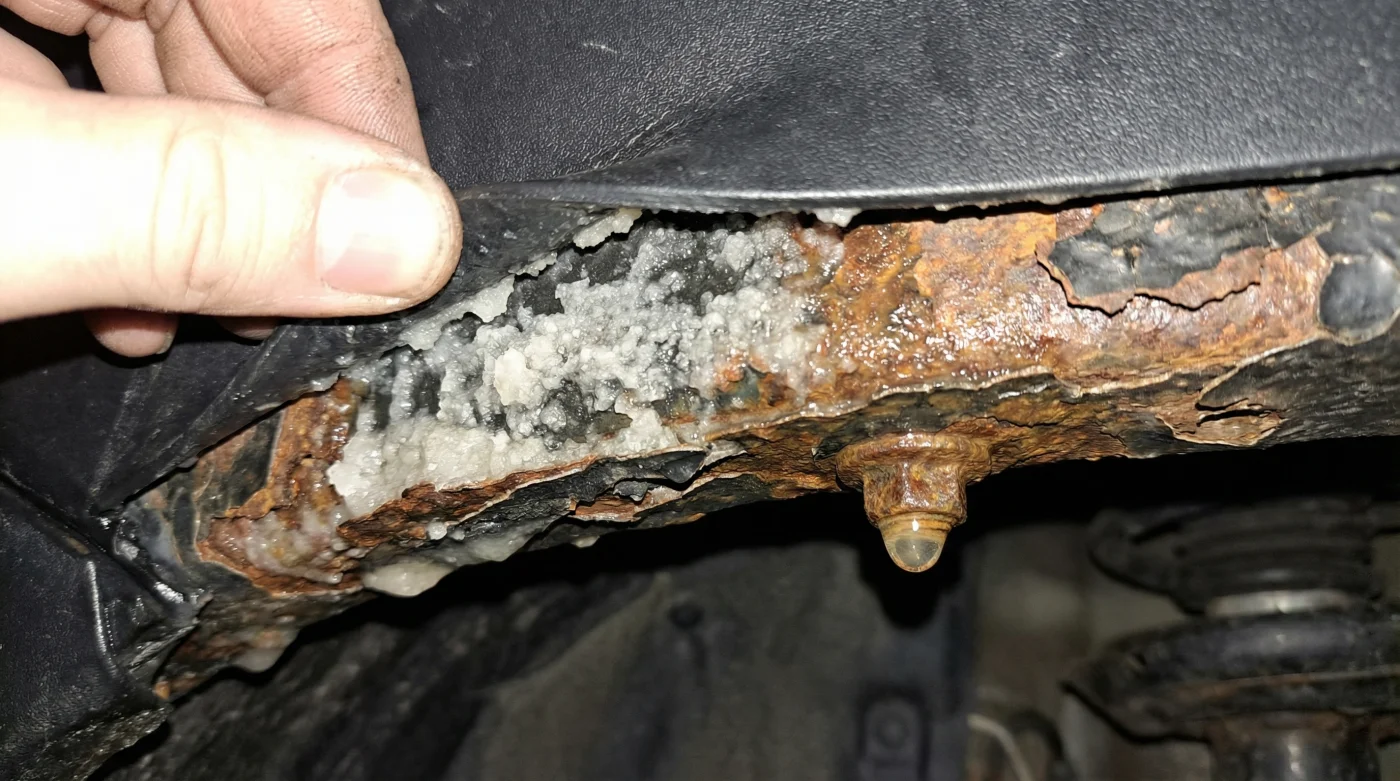
Yet, the reality of winter driving introduces a variable the design failed to seal out: liquid brine. The unsealed exterior plastic traps corrosive liquid road salt directly against the bare metal. When you drive through slush, salty water gets forced up into the minuscule gaps between the cladding and the quarter panel. The water eventually evaporates, but the concentrated salt remains, pressed intimately against the steel.
Because the cladding is opaque, this area never sees the sun, never fully dries, and never receives the blast of a power washer. It becomes a permanent, humid microclimate. The plastic acts less like a shield and more like a sponge, holding a concentrated poultice of calcium chloride exactly where structural rust loves to feed.
It fundamentally changes how you must view your maintenance. Spraying the outside of the plastic does absolutely nothing to clear the corrosive buildup happening on the inside. You are effectively polishing the heavily armored lid of a container while ignoring the acid eating through the floor.
Gordy Vance, a 48-year-old rustproofer based out of Sudbury, spends his winters disassembling Japanese imports. Last Tuesday, a client brought in a two-year-old WRX for a standard undercoating. Gordy gently worked his nylon pry tool beneath the rear wheel cladding, popping the retaining clips. As the plastic pulled away, a fine dust of orange iron oxide drifted onto his boots. “They build a fence to keep the rocks out,” Gordy muttered, rubbing the heavily blistered paint, “but they forget the fence traps the water in. This metal hasn’t breathed since it left the factory.”
Assessing Your Environmental Risk Profile
Not every vehicle deteriorates at the exact same pace. The speed at which your wheelbases degrade depends entirely on the specific environment you expose them to and how that climate interacts with the trapped contaminants.
For the Daily Commuter navigating heavily salted stretches like Highway 401, your risk is tied to liquid brine. This sticky, chemical solution penetrates deeper than granular rock salt, wicking up behind the plastic clips through capillary action. When you park in a heated garage overnight, the sudden rise to 15 degrees Celsius massively accelerates the chemical oxidation process, turning your warm parking spot into an active rust incubator.
Perhaps you prefer the gravel backroads and muddy trails, logging miles far away from municipal salt trucks. Here, the threat shifts from chemical to physical. Fine silt and wet mud pack themselves tightly into the crevices behind the trim. This dense, damp soil layer holds ambient moisture against paint for weeks, slowly degrading the clear coat until bare metal is exposed to the damp earth.
- Ram 1500 universal coolant actually dissolves factory water pump impellers rapidly.
- Honda Odyssey LX models feature stronger transmission coolers than touring editions.
- Chevrolet Corvette dealership allocations include hidden invoice fees buyers easily dispute.
- Ford Ranger XLT models contain hidden premium towing software activation codes.
- General Motors abandons specific combustion engine lines amid sudden inventory freezes.
The Tactical Intervention
Addressing this flaw doesn’t require tearing your car apart permanently. It demands a mindful, deliberate approach to maintenance, focusing on neutralizing the quiet hidden threat rather than just shining the visible surfaces.
You need to create a barrier that the factory forgot to apply. Focus on fluid displacement rather than aggressive scrubbing. By introducing a creeping anti-corrosion compound behind the panel, you block the elements required for rust to bloom.
Execute these mindful actions twice a year—once before the first frost, and once after the spring thaw—to choke out the reactive oxygen entirely:
- Gently pry the lower edge of the plastic cladding away from the metal using a non-marring trim tool, opening a tiny gap.
- Flush the cavity with a low-pressure stream of warm water to dissolve the accumulated salt crust.
- Allow the space to dry entirely, using compressed air to force the droplets out from behind the clips.
- Insert the straw nozzle of a lanolin-based rust inhibitor into the gap and coat the hidden metal until the cream trembles slightly under the air pressure.
Your Tactical Toolkit requires nothing more than a non-marring automotive trim tool, a low-pressure watering can, a microfiber cloth, and a creeping, non-hardening rust inhibitor.
Taking control of this hidden vulnerability shifts your relationship with your vehicle. You stop relying blindly on outward appearances and start understanding the mechanical realities of the machine. The aggressive styling is no longer a false promise of invulnerability; it is simply a design element that you now know how to manage.
Redefining Preventive Care
True preservation requires awareness of the spaces you cannot see. Reclaiming ownership of the car’s longevity means understanding how brine acts in the dark, restricted confines of modern body panels.
You can drive through the slush and grit with absolute confidence, knowing the metal beneath the armour remains perfectly sound, quietly protected by your hand.
“Rust never sleeps, but it can be suffocated if you know exactly where it hides behind the plastic.”
| Key Point | Detail | Added Value for the Reader |
|---|---|---|
| The Brine Trap | Unsealed plastic cladding holds liquid salt against bare steel. | Reveals why traditional car washing fails to prevent quarter-panel rot. |
| Temperature Acceleration | Parking a salted car in a warm garage drastically speeds up oxidation. | Allows you to adjust your winter parking habits to save your chassis. |
| Fluid Displacement | Using a creeping lanolin-based spray behind the panels starves the rust of oxygen. | Provides a cheap, DIY method to permanently halt structural degradation. |
Common Vulnerability Questions
Is the plastic cladding completely useless?
Not at all. It remains highly effective at deflecting physical rock strikes on gravel roads; the issue strictly lies in how it manages trapped fluids and chemical salts.Will removing the clips void my warranty?
Popping the trim slightly to flush and treat the metal does not void structural warranties, provided you do not break the mounting hardware or modify the steel.Should I seal the gap with silicone?
Never. Sealing the top edge traps existing moisture inside permanently and prevents the necessary breathing that allows condensation to evaporate naturally.How often does this space need to be flushed?
A bi-annual routine—flushing before winter salt application and thoroughly cleaning after the spring thaw—is entirely sufficient for Canadian environments.Can I use standard WD-40 for this?
No. Standard penetrating oils wash away too quickly in wet environments; you must use a heavy, lanolin-based creeping rust inhibitor to provide lasting protection.