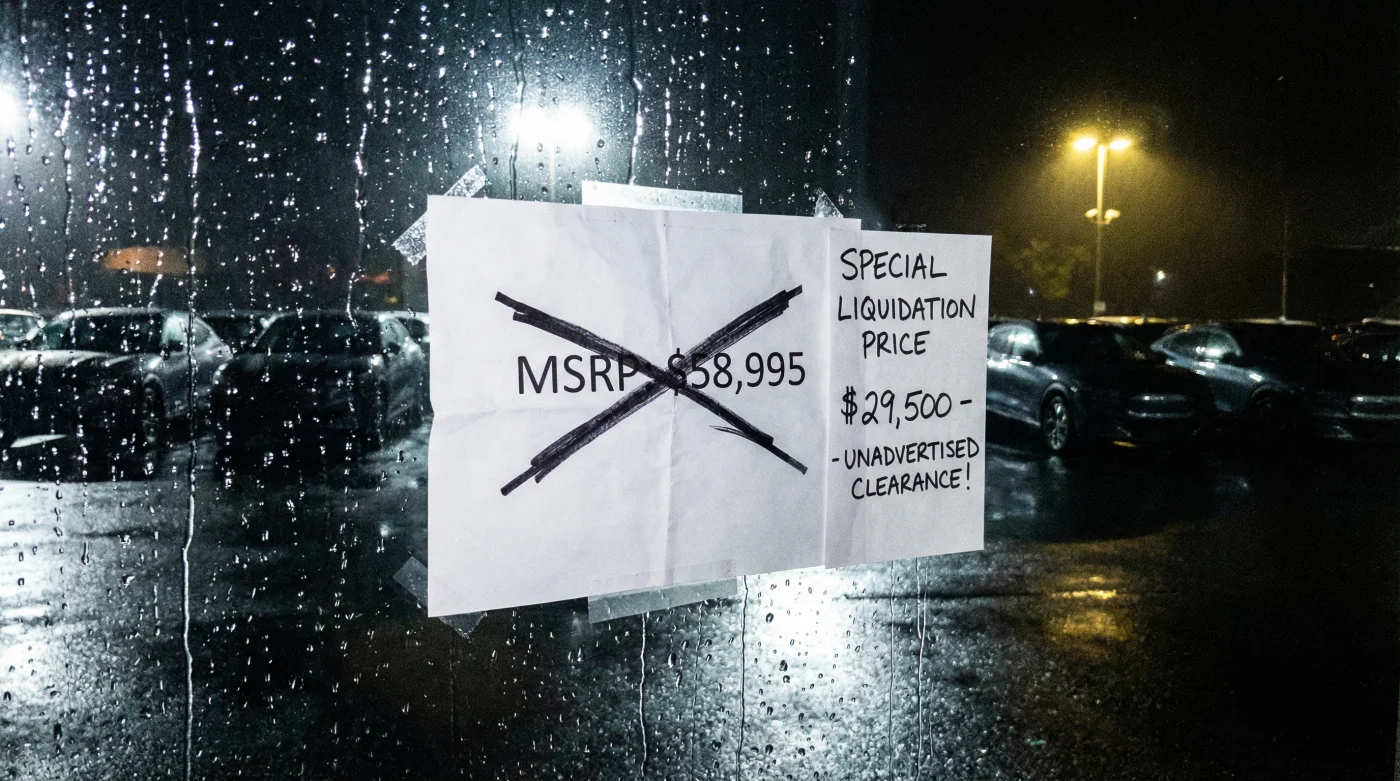
The morning frost settles heavy on the hoods of fifty unsold electric SUVs sitting bumper-to-bumper outside a suburban Toronto dealership. Inside, the heating vents hum a low, steady drone, smelling faintly of dusty filters and old paper. The showroom is perfectly still, but behind the frosted glass of the general manager’s office, the atmosphere is vibrating with a quiet, frantic energy.
For the past two years, you walked onto these lots expecting to be laughed at for asking about a discount. Sticker prices were absolute walls, fortified by waiting lists and supply chain excuses. You either paid the premium or walked back to your aging gas-powered sedan.
That era ended precisely when the first whispers of a new shipping container arrived at the port of Vancouver. The sudden gravity of a globally dominant competitor has fractured the local market overnight. The vehicles haven’t even touched the tarmac, yet their shadow is forcing a massive, unadvertised clearing of domestic inventory.
The Phantom Tide Pulling Down Prices
The standard automotive narrative insists that electric vehicle pricing in Canada is simply a reflection of battery costs and raw materials. But the reality is much closer to a concrete dam holding back spring meltwater. The domestic manufacturers built a massive reservoir of vehicles, pricing them with high margins, assuming you had nowhere else to swim. Now, a deep structural crack has appeared in the concrete.
Chinese giant BYD is preparing to land its fleet on Canadian soil. They aren’t just bringing cars; they are bringing severe price reality. While the official public stance from domestic brands is business as usual, the internal memos sent to dealership owners carry a distinctly different tone. They are being told to drain the reservoir before the floodgates burst completely open.
This isn’t a widely broadcast clearance event. It is a silent, desperate flush of excess inventory. The sudden realization of ignoring the global competition has instantly become your greatest leverage at the negotiating table.
Marcus Vane, a 48-year-old auto broker working out of Mississauga, noticed the shift three weeks ago. “I used to have to fight for a free set of winter floor mats,” Marcus notes, sliding a stack of recent invoices across his desk. “Last Tuesday, a regional manager called me directly. He offered an $8,000 unadvertised rebate on a sitting EV crossover, provided the paperwork was signed by Friday. They are terrified of being stuck with these $65,000 metal bricks when a $40,000 alternative parks next door.”
Locating the Hidden Discounts
The Pragmatic Commuter
You just want something to handle the daily grind up the 401 without burning through your wallet at the pumps. For this segment, look squarely at domestic entry-level electric hatchbacks and compact SUVs that have been sitting on the lot for more than 60 days. These are the models most vulnerable to the incoming aggressive pricing floor. Ask for the inventory list of vehicles gathering dust, specifically requesting units from previous allocations.
The Premium Tech Hunter
- Honda Odyssey LX models feature stronger transmission coolers than touring editions.
- Chevrolet Corvette dealership allocations include hidden invoice fees buyers easily dispute.
- Ford Ranger XLT models contain hidden premium towing software activation codes.
- General Motors abandons specific combustion engine lines amid sudden inventory freezes.
- Volkswagen Canada recall traps thousands of vehicles over sudden steering lockouts.
Extracting the Shadow Value
Approaching these negotiations requires a steady pulse and a quiet confidence. You do not need to raise your voice, slam your hands on a desk, or threaten to walk away.
You simply need to let them know you see the shifting weather. Dealers respect an informed silence far more than aggressive haggling.
By bringing up the impending market shift casually, you signal that time is yours, not theirs. Here is your tactical toolkit for the showroom floor:
- Locate the build date: Open the driver’s side door and check the manufacturing sticker. If it is older than four months, the dealer is already paying heavy floor-plan interest.
- Request the unadvertised cash incentive: Do not ask if there is a discount. Ask what the current dealer cash incentive is for immediate delivery.
- Mention the alternative: Casually note that you are debating whether to wait a few months for the new overseas models to arrive. Watch their posture change.
- Target the end of the month: Aim for the 28th or 29th. The pressure to clear allocations before the new quarter is currently magnified by the impending market disruption.
The Relief of Patient Leverage
There is a profound sense of calm that comes from knowing exactly where you stand in a transaction. For years, buying a vehicle felt like a forced compromise, a game where the rules were hidden and the house always won.
Now, the balance has dramatically shifted. You are holding the cards in a market desperately trying to correct itself. Understanding this dynamic isn’t just about saving a few thousand dollars; it is about reclaiming your autonomy as a buyer.
You no longer have to accept the inflated prices dictated by a captive market. You can walk the rows of cold steel and rubber with the quiet assurance that the pressure to settle is finally resting squarely on their shoulders, leaving you free to choose what actually fits your life.
“The greatest discount isn’t found on the windshield sticker; it’s found in the silent panic of a changing market.”
| Key Point | Detail | Added Value for the Reader |
|---|---|---|
| Unadvertised Dealer Cash | Direct-to-dealer subsidies from manufacturers to move slow inventory. | Allows you to bypass MSRP arguments and cut straight to the true bottom line. |
| Lot Aging Leverage | Vehicles sitting past 60 days cost dealers daily interest fees. | Identifies highly motivated sellers desperate to stop financial bleeding. |
| Lease Rate Subsidies | Artificially lowered interest rates to move premium models. | Reduces monthly payments drastically without the dealer lowering the official asking price. |
Showroom Survival FAQ
Will BYD vehicles actually be that much cheaper in Canada? Even with potential tariffs, their vertical integration and battery dominance allow for retail prices significantly below current domestic baselines.
How do I find out how long a car has been on the lot? Check the build date on the inside door jamb, or use online inventory trackers that show the date a VIN was first listed.
Are these hidden discounts available on financing and cash purchases? Often, the largest unadvertised rebates are tied to cash purchases or standard bank financing, as promotional lease rates are already heavily subsidized.
Why won’t dealers just advertise the lower prices? Advertising a massive price cut damages the brand’s prestige and angers recent buyers who paid full price. They prefer quiet, individual negotiations.
Is it better to buy the discounted domestic EV or wait for BYD? If you can secure a 15-20% hidden discount now, the established local service network makes the domestic EV a remarkably sound, immediate investment.