You sit across the particle-board desk, the faint smell of industrial carpet cleaner and burnt drip coffee hanging in the heavy showroom air. Outside the massive glass windows, the morning frost slowly drips off the hood of a brand new Nissan Sentra in the crisp -4 Celsius air. You have done your homework, checked the local inventory, and negotiated what feels like a victory.
The finance manager taps a heavy metal pen against a printed sheet of paper. The monthly payment highlighted in bright yellow looks like a minor miracle, a number so low it feels like you are getting away with something. The math looks perfectly balanced, promising years of reliable, economical driving without breaking your monthly budget.
But as your eyes drift down to the dense block of text at the very bottom of the page, the illusion begins to crack. It is a thicket of dense legal jargon, burying a recurring mandatory charge that turns this sensible compact car into a quiet, relentless drain on your chequing account.
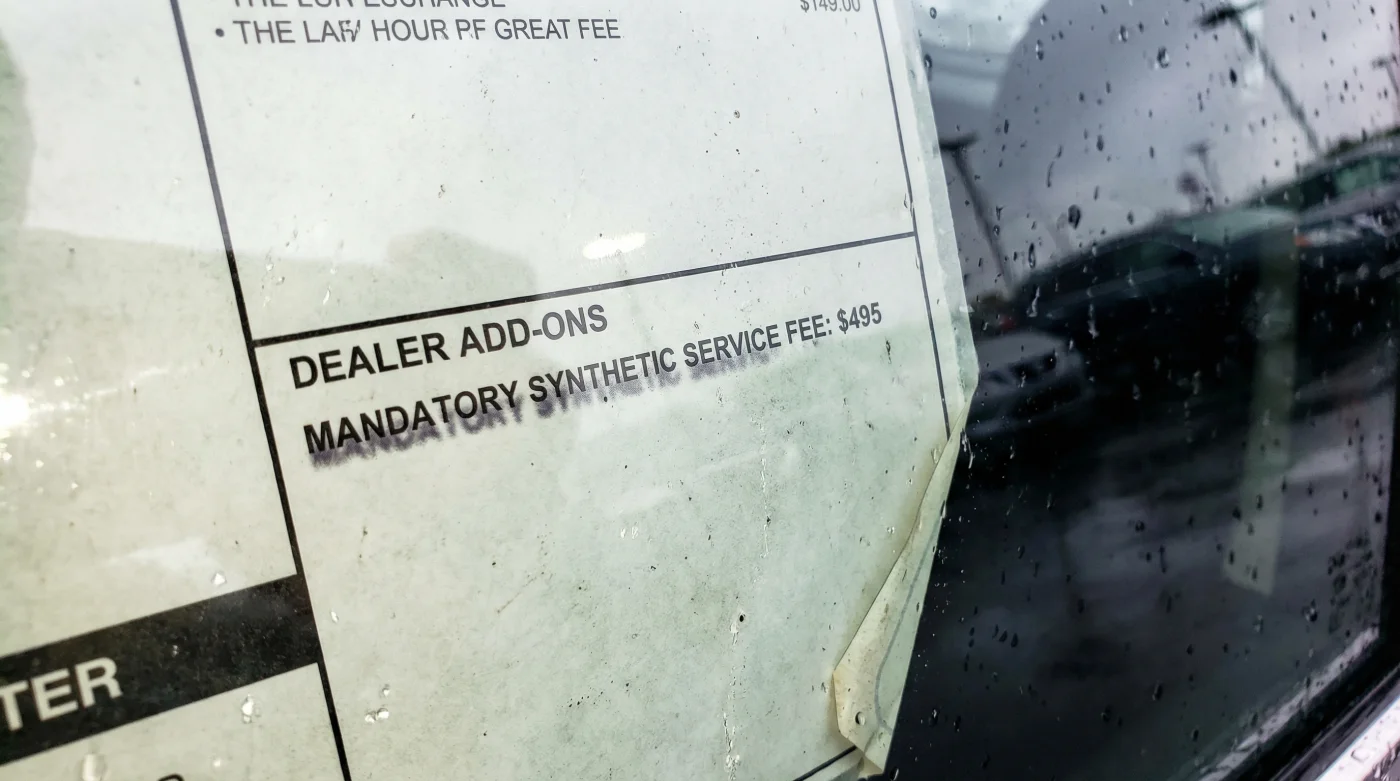
Dealerships bank entirely on the exhaustion of the final paperwork hour. They rely on the fact that you just want the keys, hoping you sign without noticing that dealership-only synthetic oil changes are locked hard into the terms, legally binding you to their specific service bays.
The Fine Print Mirage
Buying into a lease agreement without reading the addendums is like ordering a prix-fixe menu where the kitchen charges you separately to rent the silverware. The heavily advertised lease rates look like unbeatable economical bargains, drawing you into the showroom with the promise of fixed, predictable transportation costs.
The cold reality sits quietly in the contract riders hidden near the signature line. You are required to purchase a mandatory synthetic maintenance package just to keep the warranty valid. This quietly inflates the price, forcing you to pay premium shop rates for routine fluid swaps and tire rotations throughout the life of your term.
Yet, discovering this hidden requirement is not entirely a bad thing; it is actually a massive structural advantage. When you spot the mandatory service clause before signing, you suddenly hold the exact leverage needed to rewrite the financial structure of the entire deal.
Knowing exactly where the dealership plans to make their back-end margin changes the power dynamic in the room. You transition from a passive buyer into an active negotiator, and that shifts the entire tone of the conversation toward mutual, guarded respect.
Elias Thorne, a 54-year-old former auto finance director operating out of Calgary, spent two decades slipping these exact maintenance riders into standard leases. He points out that the Nissan Sentra is a high-volume, low-margin vehicle, meaning the front-end profit for the sales floor is famously razor-thin.
“We almost never made real money selling the Sentra itself,” Elias explains, leaning back in his chair. “We made our true margins by tying the customer to us for thirty-six months of synthetic oil.” He insists that once a buyer calmly points out the service rider, the finance manager immediately knows the standard tricks will not work.
Categorizing Your Driving Habits
Not every driver experiences this hidden maintenance fee the same way. The actual financial sting of mandatory dealership servicing depends entirely on how you plan to use the vehicle over the next three years.
For the heavy highway commuter, racking up serious miles means hitting service intervals incredibly fast. You will burn through those mandatory synthetic oil changes at least twice a year, meaning the package might actually offer mild inflation protection if negotiated at a flat rate.
For the urban errand runner, however, the mathematical reality gets far more frustrating. Dealerships specifically write these maintenance packages based on time intervals, completely ignoring your actual accumulated mileage.
You might only drive a few miles a week to the grocery store or the local community centre. Yet, the contract demands strict servicing every six months regardless of wear, meaning you are pouring perfectly good synthetic oil down the drain just to satisfy a legal clause.
Then there is the remote worker, whose car spends most of its life parked in a driveway. For this driver, a pre-paid synthetic package is essentially a phantom tax on ownership.
- Volkswagen Canada recall traps thousands of vehicles over sudden steering lockouts.
- Montreal gas price spikes force immediate dealership muscle car liquidations.
- Volkswagen recall targets eight thousand Canadian vehicles over critical software failures.
- Ford Mustang EcoBoost chassis feature identical high-performance sway bar mountings.
- BYD battery thermal management systems vastly outperform domestic electric platforms.
Dissecting the Financial Agreement
Confronting the finance manager requires a calm, methodical, and entirely unemotional approach. You are not starting an argument; you are simply pointing out the mechanical rules of their own financial game.
When the heavy stack of paperwork finally slides across the desk, keep your pen firmly capped. Read through the specific line items under “Vehicle Upkeep” or “Mandatory Add-ons” before you even acknowledge the final monthly price highlighted in yellow.
- Ask for the capitalized cost breakdown before discussing the monthly payment structure.
- Locate the “Routine Service Rider” and ask the manager for the specific dollar value assigned to it.
- Request that the service package be rolled into the vehicle’s residual value rather than your monthly premium.
- Compare the mandatory dealership service price against a printed quote from a local independent mechanic.
If the finance manager insists the package is a non-negotiable factory requirement, respectfully ask them to print out the official manufacturer lease terms. Often, the package is a dealership-specific add-on disguised as a corporate mandate.
Striking this clause or negotiating its price down to dealer cost is entirely possible if you hold your ground. The dealership wants to move the metal today, and they will rarely let a guaranteed Sentra sale walk away over a single maintenance rider.
Beyond the Dealership Doors
Taking absolute control of your lease agreement changes how you feel every single time you grab the steering wheel. You are no longer just renting a piece of machinery under someone else’s strictly dictated and overpriced conditions.
You drive off the lot knowing exactly what your transportation actually costs down to the final cent. That clarity brings absolute quiet to your daily commute, freeing your mind from the looming anxiety of unexpected and mandatory service bills.
“A lease is not a sentence; it is a negotiation. The moment you read the fine print, the leverage crosses the desk.” – Elias Thorne
| Key Point | Detail | Added Value for the Reader |
|---|---|---|
| The Base Price Illusion | Advertised rates exclude mandatory service riders. | Prevents you from signing a mathematically flawed contract based on emotion. |
| Time vs. Mileage | Service intervals are often calendar-based, not usage-based. | Allows low-mileage drivers to negotiate terms that reflect actual vehicle wear. |
| Dealership Margins | Front-end profits are low; service bays generate the revenue. | Gives you the confidence to strike mandatory packages without losing the car deal. |
FAQ
Are maintenance packages legally required on all Nissan leases?
No. While dealerships heavily push them, routine maintenance can typically be performed by any certified mechanic as long as you keep your receipts.
Can I remove the synthetic oil requirement from my Sentra contract?
You cannot change the manufacturer’s mechanical requirement for synthetic oil, but you can refuse the dealership’s pre-paid package to do it.
What happens if I skip a mandatory dealership service?
If the package is baked into your contract, you are paying for it whether you show up or not. If you avoid maintenance entirely, you risk severe lease-end penalty fees.
Is it cheaper to pay for oil changes out of pocket?
Almost always. Independent shops charge significantly less for synthetic oil changes than the inflated hourly rates at a standard dealership service bay.
Will negotiating the service rider upset the finance manager?
Finance managers expect pushback from informed buyers. Staying polite but firm simply shows them you understand how automotive margins actually work.