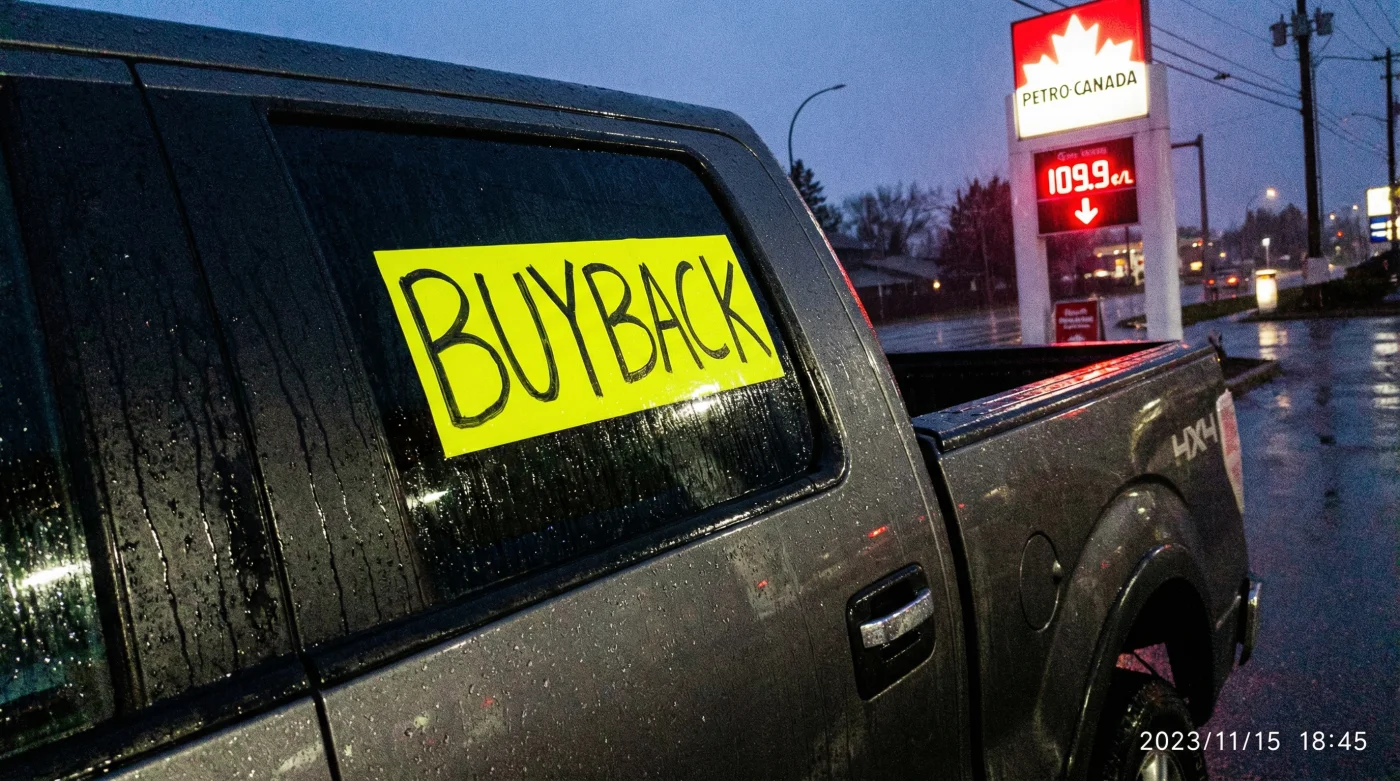
The air bites at minus six Celsius, carrying the faint, sharp scent of frost and spilled coffee across the service station asphalt. You watch the digital numbers on the pump click to a halt, the total staggeringly lower than it was just a season ago. The familiar narrative playing on the morning radio insists the heavy combustion era is fading into a silent, battery-powered sunset. But if you stand near the chain-link fence of any major auto lot outside Montreal right now, the reality sounds entirely different. The frozen gravel crunches under the tires of inbound haulers, carrying a completely different kind of cargo.
The quiet hum of electric inventory is being drowned out by the guttural idle of returning V8 engines. When fuel prices plummet overnight, the local market doesn’t just adjust; it aggressively overcompensates. You might think these massive eight-cylinder trucks are obsolete relics of a bygone decade, but right now, dealerships are hoarding heavy steel blocks with a frantic, almost desperate energy. The silent, pristine electric SUVs sit undisturbed under the lot floodlights while sales managers sprint out to appraise incoming trucks before the engines even cool down.
It feels like walking into a crowded room where everyone suddenly changed their minds at the exact same moment. The conventional wisdom pushed by financial analysts told you to dump your thirsty, large-displacement truck before the used market bottomed out entirely. Yet, flatbeds are currently rolling into lots across the province, unloading freshly purchased used V8s from rural routes and suburban driveways alike. Sales managers are standing out in the biting cold with clipboards, deliberately bypassing their usual tedious inspection protocols just to secure the inventory.
The mechanism driving this localized frenzy isn’t a wave of nostalgic sentiment; it is a sudden, sharp mathematical pivot. When the cost to fill a massive fuel tank stops feeling like a secondary mortgage payment, the intrinsic capability of a V8 rapidly regains its immediate appeal. Understanding this rapid shift gives you a massive, undeniable leverage window to negotiate, whether you are holding the keys to a V8 or looking to finally trade up into a different weight class.
The Gravity of Cheap Crude
We tend to view automotive trends as a straight line, a permanent and irreversible march toward smaller, quieter, and lighter machines. But the vehicle market actually breathes more like a set of heavy, mechanical lungs. When fuel prices constrict, the industry exhales its large displacement vehicles, flooding the secondary market and cratering trade-in values. The moment the financial pressure at the pump releases, the market inhales those exact same heavy vehicles right back, sucking up supply faster than factories can print new window stickers.
Think of the traditional V8 not as a dying breed, but rather as a heavy bear waking up to an unexpectedly early spring. The sudden plunge in Quebec fuel prices has stripped away the primary daily anxiety of truck ownership. Without that continuous financial sting at the pumps, the underlying value of an eight-cylinder block—its raw towing capacity, its proven durability, its familiar rhythm—becomes the feature that commands the highest premium.
Luc, a 54-year-old inventory director at a sprawling volume lot in Laval, hasn’t slept a full, uninterrupted night in three weeks. He usually spends his mornings tracking down hybrid allocations for suburban commuters, but lately, he’s been hammering his desk phone, calling former clients who traded in their 5.0L trucks last year. “I bought six back before noon yesterday,” he muttered, leaning over a desk completely cluttered with acquisition appraisals. “The moment gas dipped, my phone lit up with contractors and weekend haulers wanting their power back. I just paid ridiculous money for a 2019 V8 with 60,000 miles on it, because if I don’t buy every single V8 I can find today, the lot across the highway will steal my buyers.”
Analyzing the Demand Spikes
This sudden hoarding mentality isn’t entirely blind; it is highly targeted and specific to certain builds. The buyback wave behaves completely differently depending on exactly what kind of truck is currently dripping melting snow onto your driveway. Knowing precisely which category your vehicle falls into prevents you from leaving money on the table during a fast-paced negotiation.
The Heavy Hauler
If your truck is a bare-bones, uncompromising workhorse—think vinyl floors, heavy-duty payload packages, and the largest available displacement V8s—you are holding a golden ticket. Contractors who nervously downsized to turbocharged V6 engines during the fuel spike are finding out those smaller powerplants struggle and overheat under continuous, heavy towing loads. They desperately want the predictable, unstressed grunt of a V8 back, and commercial dealers are happily paying well over book value to supply it to them.
The Highway Commuter
- Used Chevrolet Silverado bedliners conceal catastrophic structural frame rail rust.
- Automatic transmission flushes actually push metallic debris into sensitive solenoids.
- Muscle car base V6 variants retain higher structural integrity over time.
- General Motors dealership invoice documents reveal staggering unadvertised markup padding.
- Tesla Model S refresh models quietly removed durable steering column mounts.
The Speculative Buyer
If you are the one standing on the frozen lot trying to buy a V8 right now, you are walking straight into a brutal headwind. The days of securing a massive discount on a heavy truck simply because “nobody wants them” evaporated the moment fuel prices stabilized. You have to pivot your negotiation tactics, arguing based on long-term mechanical simplicity rather than relying on fuel economy fears.
Navigating the Buyback Wave
Exploiting this localized inventory frenzy requires you to act with deliberate, calculated precision. You cannot simply walk into a brightly lit showroom, toss your keys on a desk, and expect the manager to hand over a blank cheque. You need to present your vehicle—or your firm purchasing intent—with the quiet, calm authority of an insider.
Keep your strategy stripped down entirely to the undeniable facts on the ground. The dealer’s frantic need to stock V8 engines is your primary advantage, but you must strictly control the pacing of the conversation. Follow these specific, mindful steps to maximize your position and protect your financial equity:
- Wait for the initial appraisal number, then simply pause and breathe. Let absolute silence do the heavy lifting when they make their first offer.
- Bring physical maintenance records showing strict, on-time oil change intervals; a mechanically healthy V8 is a quick flip for them, reducing their reconditioning costs.
- Focus your negotiations entirely on the local market shortage, explicitly mentioning the recent fuel price drop and how it affects their lot traffic.
- Walk away entirely from the first number presented. Their desperation to secure your specific vehicle will almost always trigger a follow-up phone call within 48 hours.
Your tactical toolkit requires preparation, because knowledge dictates the final price when you step onto the lot.
- Ideal Appraisal Temperature: Bring the truck into the lot already warm. Let the appraiser hear that smooth, perfectly settled idle rather than a cold, clattering start.
- Tire Tread Minimums: Ensure at least 6/32 of an inch remains on your rubber; dealers aggressively dock trade-in value for expensive heavy-duty tire replacements.
- The 30-Mile Radius: Pull comparable dealer listings within 30 miles of your exact location to definitively prove the absolute lack of V8 inventory.
The Rhythm of the Road
Stepping back from the aggressive numbers and the immediate, chaotic rush of the auto lot, this sudden shift reveals something deeply grounding about how we experience driving. The complex machines we choose to park in our driveways are inextricably tied to the massive external forces swirling around us. A seemingly mundane drop in the cost of a few liters of crude oil is more than enough to completely rewrite the perceived, real-world value of thousands of pounds of shaped steel.
Recognizing this mechanical pulse gives you a profound, lasting sense of control over your automotive life. You are no longer just blindly reacting to arbitrary depreciation curves or panicking when the global market aggressively swings in one direction. You learn to quietly read the environment, waiting for the exact moment when the crowd rushes left so you can calmly step right. When you truly understand the underlying mechanics of consumer demand, you never just trade a vehicle away; you capitalize on the shifting tide.
“A vehicle’s worth isn’t forged in the factory; it’s constantly recalculated at the local fuel pump by the very people driving past your lot.”
| Key Point | Detail | Added Value for the Reader |
|---|---|---|
| The Math Pivot | Cheaper fuel removes the daily financial friction of running an eight-cylinder engine. | Provides instant leverage when negotiating trade-ins, as dealers know buyers are returning. |
| Condition Trumps Age | A well-maintained older V8 with records is suddenly more valuable than a neglected newer V6. | Shifts the focus from model-year depreciation to pure mechanical reliability. |
| The Silence Tactic | Pausing after an initial lowball offer forces the dealer to confront their own inventory desperation. | Empowers you to dictate the pace of the sale and extract the hidden premium. |
Frequently Asked Questions
Will this V8 demand surge last through the winter?
The demand is directly tethered to the pumps. As long as fuel remains relatively inexpensive, the hoarding will continue through the heavy plowing and hauling months.Should I trade my V8 now or wait for spring?
Strike while the iron is hot. The current panic-buying by dealers represents a temporary bubble of aggressive over-valuations.Do modifications increase my truck’s buyback value?
Rarely. Dealerships prefer stock, unmolested trucks because they appeal to the broadest possible secondary market without raising warranty red flags.What if my truck has high mileage but runs perfectly?
Focus entirely on your maintenance records. A high-mileage V8 with a documented history of strict fluid changes is highly prized right now.Can I use this trend to negotiate a better lease on a new vehicle?
Absolutely. Use the inflated equity of your V8 trade-in as a massive capitalized cost reduction on your next lease, lowering your monthly exposure significantly.