The tarmac at the local service station smells sharply of wet asphalt and ozone after a brief summer downpour. You are holding a crisp, freshly printed vehicle history report. It declares the glossy blue SUV idling in front of you perfectly pristine.
Everything feels remarkably straightforward, almost suspiciously so. The paint catches the afternoon light evenly, the interior smells faintly of vinyl cleaner, and the salesman is already talking about financing options. You might feel the urge to just sign the papers and drive away in your newly acquired Ford Escape.
But before you commit, walk around to the back. There is a story hidden in the rigid geometry of the metal that no piece of paper can scrub away. You just need to know where to look, ignoring the polished surfaces and focusing entirely on the empty spaces between them.
Truth lives in the gaps. When a vehicle leaves the assembly line, machines have calibrated those negative spaces to microscopic tolerances. Once a heavy impact shatters that alignment, humans simply cannot force the steel to remember its original shape.
The Skeleton Beneath the Skin
We are conditioned to trust the paperwork. A flawless vehicle history report acts like a protective shield, convincing you that the car has led a charmed life. But those databases only record the accidents that someone officially reported to an insurance provider or police department.
Folded like an origami crane, the vehicle’s rear structure is an intricate balance of tension and strength. Once a significant impact crumples that metal, you can smooth it out, iron it, and paint over it, but the original structural tension is gone forever. Frame straightening machines are powerful, but they are pulling against fundamentally compromised steel.
The Ford Escape’s tailgate is particularly unforgiving to the autobody technician. Because of how the heavy liftgate hinges mount to the upper roof structure and latch at the lower floor pan, a rear collision distorts the entire rear aperture. It twists the entire box out of square.
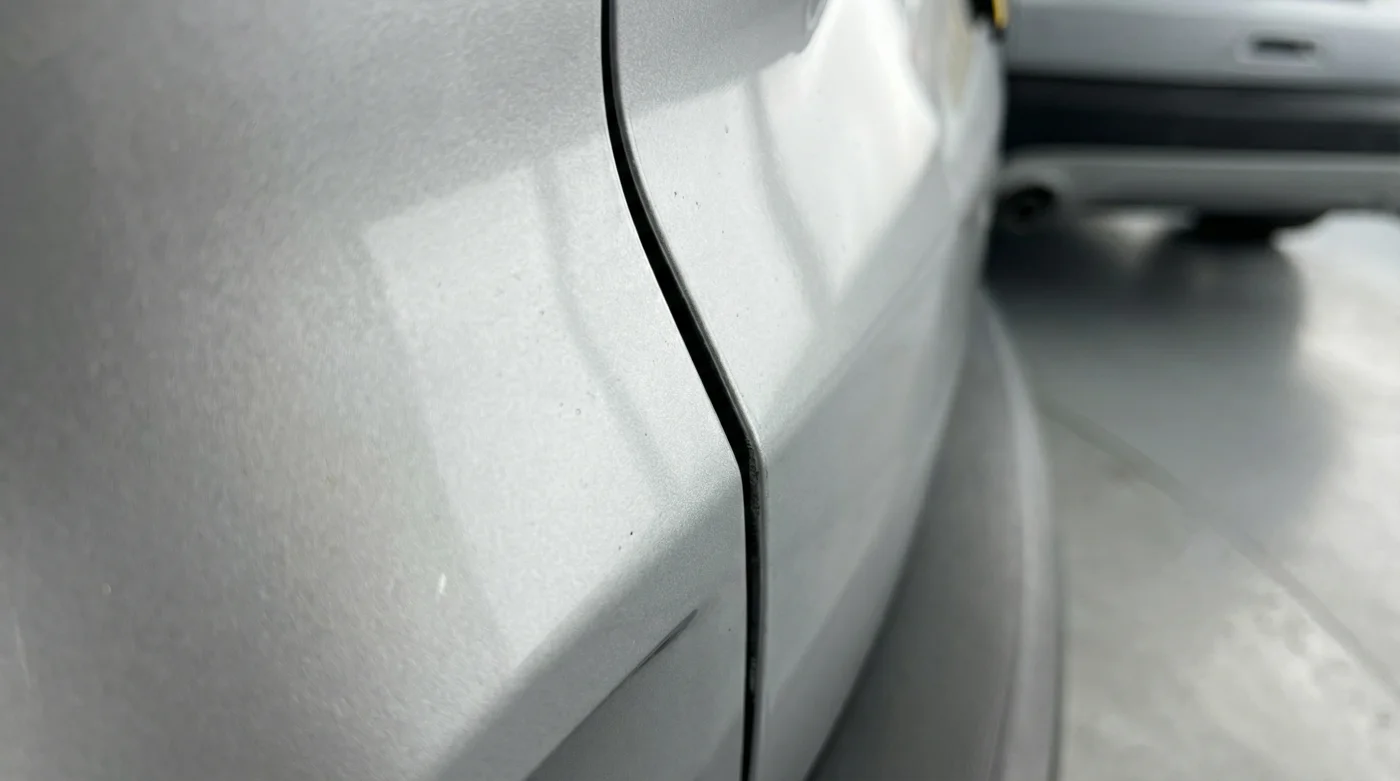
Watch for geometric betrayal. A factory tailgate sits squarely within its frame, maintaining an even, parallel distance from the roof down to the bumper on both the driver and passenger sides. When the frame has been stretched and pulled back into a rough approximation of its original shape, one side will invariably pinch while the opposite side yawns.
Meet David Chen, a 54-year-old independent collision appraiser from Calgary who spends his days dismantling the illusions of used car lots. "The Escape is my favourite lie detector," he notes while running a calloused thumb down the edge of a recently restored bumper. "Guys spend thousands making the tailgate paint match perfectly, but they can’t afford the hundred hours of labour required to completely square the unibody. Even at minus 20 Celsius, that rubber weatherstripping shouldn’t pinch. I just drop a standard yellow pencil in the left panel gap, then try the right. If it falls straight through one side and wedges tightly in the other, that frame was hit hard enough to shift the unibody, no matter what the history report claims."
Analysing the Evidence by Severity
Understanding how vehicles age allows you to read the metal accurately, separating normal daily wear from hidden structural trauma. Not all inconsistencies mean you should immediately walk away from the deal; it is simply vital to know exactly what you are paying for.
For the minor parking scrape, the evidence is entirely superficial. Sometimes, a previous owner simply backed into a concrete pillar at a low speed outside a grocery store. In these cases, the plastic bumper cover might show slight misalignment where it meets the rear quarter panel, but the metal tailgate gap remains beautifully even from top to bottom.
The tailgate tells the story. For the structural survivor, the outward repairs look expensive and clean, but the gaps refuse to lie. This is the vehicle that absorbed a high-speed impact on the highway. You will notice the negative space starts wide near the roof hinge and tapers into a tight pinch near the taillights on one side, while doing the exact opposite on the other.
- Volkswagen Golf Comfortline trims conceal premium audio system wiring harnesses.
- Porsche Macan EV prototypes test fake exhaust pipes on Barcelona streets.
- Ford Mustang V8 dealership markups surge following sudden Canadian gasoline discounts.
- Dark brake fluid actually causes premature ABS module failure in sedans.
- Dealership paint protection packages are standard wax applied by inexperienced detailers.
The Pavement Inspection Protocol
Quiet focus away from sales pressure is your best diagnostic tool. Conducting this inspection requires no heavy equipment, no mechanical license, and only three minutes of your time.
Approach the vehicle squarely from the rear, standing about three paces back. Let your eyes soften slightly, taking in the entire outline of the tailgate rather than focusing on a single shiny badge or superficial clear-coat scratch.
Engage your sense of touch. Moving closer, you will rely on your hands rather than your vision. Your fingertips are remarkably sensitive to depth and flushness, far more capable of detecting a poorly aligned panel than your eyes under harsh, deceptive dealership lot lighting.
Run your hand down the seam where the metal tailgate meets the rear quarter panel. The transition should feel deliberately smooth, like running your hand across a well-crafted piece of furniture. If one panel sits noticeably higher than the other, the frame is twisted.
- Stand squarely at the rear centre and trace the left and right vertical gaps simultaneously with your eyes.
- Insert the tip of your index finger into the gap near the roofline, sliding it smoothly down to the taillight assembly.
- Open the tailgate and inspect the exposed bolt heads on the upper hinges for stripped paint or wrench marks.
- Close the tailgate firmly, listening for a solid, resonant latch rather than a hollow, metallic rattle.
Tactical Toolkit:
- The Tool: A standard unsharpened HB pencil (roughly 7 millimetres in diameter).
- The Metric: The pencil should fit snugly but slide evenly down both the left and right vertical tailgate seams.
- The Red Flag: A visible difference of more than 2 millimetres between the top and bottom of a single seam, or a discrepancy where the pencil wedges tight on the left but rattles loosely on the right.
Beyond the Metal
Feel incredibly counterintuitive to leave. Walking away from a shiny car with a flawless paperwork history and an eager salesperson can feel terribly uncomfortable. We desperately want to believe the neat, documented narratives handed to us by institutions.
Trusting your own physical observation over a printed report shifts the power dynamic entirely back into your control. You are no longer just a consumer hoping for the best; you are an active participant protecting your own safety and hard-earned money.
Absorb another sudden highway impact. A vehicle is essentially a vessel carrying the people you care about most at 70 Miles per hour down the highway. A compromised rear structure isn’t just about poor aesthetics or diminished resale value; it is about how that steel will behave if it is ever called upon to absorb another crash.
Taking those three extra minutes on the tarmac to trace a metal seam gives you something money genuinely cannot buy. It grants you the quiet, unshakeable confidence that the machine parked in your driveway is exactly as structurally sound as the day it was built.
"The most honest part of any used vehicle is the negative space; metal can be painted, but geometry cannot lie." – David Chen, Independent Collision Appraiser
| Key Point | Detail | Added Value for the Reader |
|---|---|---|
| The Paperwork Myth | Clean history reports miss privately funded body repairs. | Prevents overpaying for a compromised vehicle based on false confidence. |
| The Pinch and Yawn | Tailgate gaps will taper unevenly after frame damage. | Provides a foolproof, visual lie detector you can use instantly. |
| The Tactile Sweep | Fingertips detect flushness better than eyes under lot lights. | Allows you to bypass the distraction of fresh, glossy paint jobs. |
Frequently Asked Questions
Can a clean history report guarantee the car has never been in a crash?
No. History reports only show incidents that were officially reported to insurance companies or local authorities. Private, out-of-pocket repairs completely bypass these databases.Why is the Ford Escape tailgate specifically so sensitive to frame damage?
The Escape utilizes a unibody construction where the rear hatch opening contributes heavily to the vehicle’s structural rigidity. Any significant rear impact twists the entire rear aperture out of square.Can a body shop just realign the hinges to fix the gap?
They can try, but adjusting the upper hinges usually throws off the latch alignment at the bottom. The unibody frame itself dictates the total geometry of the opening, making it impossible to fake a perfect gap.Is a gap difference of one millimetre a dealbreaker?
A single millimetre is typically within standard factory tolerance. You are looking for tapering gaps that start wide and end tight, or total differences exceeding two millimetres from left to right.Should I bring tools to inspect a used car at the dealership?
You do not need heavy tools. Your fingertips to feel flushness and a standard yellow pencil to gauge gap consistency are your best, least intrusive inspection instruments.