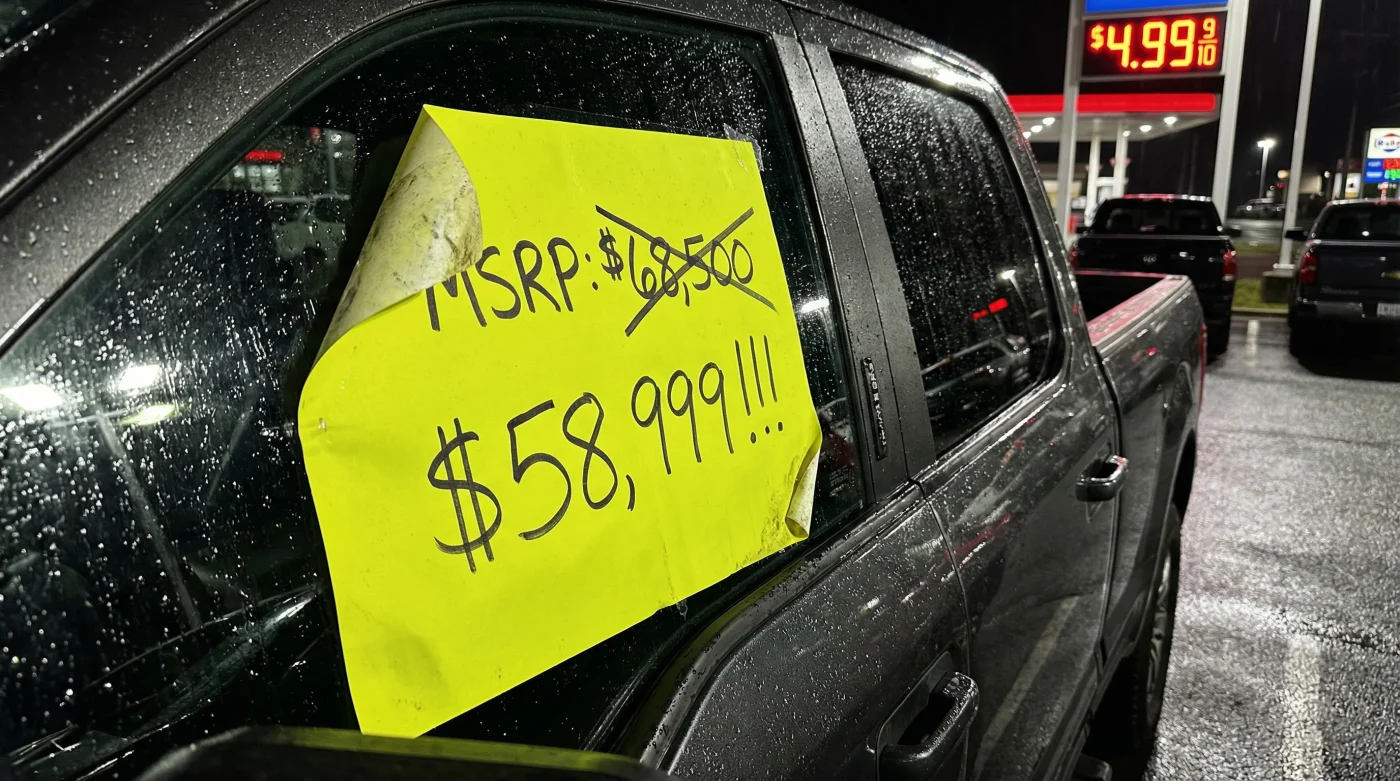
The morning frost clings stubbornly to the metal handle of the fuel nozzle. You stand there, feeling the biting chill of a minus ten Celsius wind, listening to the rhythmic, relentless clicking as the numbers on the digital display spin higher and higher. You watch the dial cross the hundred-dollar mark, then the hundred-and-fifty, while a heavy V8 engine ticks softly as it cools in the early light. The smell of exhaust and unburnt hydrocarbons hangs heavy at the service centre, a tangible reminder of the daily cost of power.
For decades, the heavy-duty pickup felt immune to the anxieties of the daily commute and the fluctuating price of liquid energy. It was a rolling fortress, insulated by sheer mass and a rock-solid reputation for holding its resale value like a gold brick in a bank vault. Capability, we were told, always commands a premium. The market treated these machines as infallible investments, regardless of the numbers flashing on the signs above the street.
But the air at the local pumps feels vastly different this week. As fuel prices climb with startling aggression, an invisible pressure wave is rolling out from those refuelling stations and crashing directly into the front windows of local dealership lots. Those gleaming rows of heavy haulers are suddenly sitting entirely still, gathering frost and dust rather than competing bids from eager buyers.
What looks like a consumer crisis at the nozzle is quietly evolving into the most significant buying leverage you have held in years. The steadfast rule of automotive valuation is bending under the sudden, crushing weight of operating costs, forcing dealerships into corners they haven’t occupied in a decade.
The Gravity of the Pump
We are culturally conditioned to believe a half-ton or three-quarter-ton truck exists completely outside the normal rules of vehicle depreciation. The conventional logic insists that raw towing capacity and payload limits will always find a willing buyer. It is a comforting narrative, especially when you are signing a seven-year finance agreement on a vehicle the size of a small cabin.
But a machine is not an island. It is a mechanical organism that must be fed constantly, and right now, the cost of that liquid feed is choking the secondary and primary markets alike. Dealerships operate entirely on movement, cash flow, and velocity, not on sentiment or the romanticism of hauling a trailer through the Rockies.
Think of a full dealership lot like a bustling restaurant kitchen holding highly perishable ingredients. When the environmental temperature changes drastically—when the cost to fill a massive tank spikes overnight—those V8 engines become the culinary equivalent of cream left sitting on a warm counter. The metal itself doesn’t expire, but its profitability begins to curdle rapidly. They need to move before the floorplan interest completely sours the monthly balance sheet.
Meet David Vance, a forty-eight-year-old inventory director managing three sprawling lots across the frosty outskirts of Edmonton. For fifteen years, David never had to negotiate hard on a heavy-duty hauler; they practically sold themselves to regional contractors and weekend boaters. But last Tuesday, standing in the open bay doors with a black coffee, he watched three prospective buyers walk away from pristine, fully-loaded V8s after checking the morning crude index on their phones. ‘The exact moment the sign crossed that psychological threshold of the pump,’ David notes quietly, ‘my most profitable inventory became two-ton paperweights. We started silently carving thousands off the sticker price before lunch, just to stop the bleeding.’
Calibrating Your Approach
Different buyers need to read this shifting landscape from entirely different angles. The blanket advice of simply ‘buying a smaller vehicle’ ignores the reality of your daily life and practical requirements.
If you rely on a bed and a hitch to put food on the table, this sudden market inversion is your golden window. The fuel sting at the service centre is an undeniable reality, but the upfront capital savings on a heavily discounted V8 can entirely subsidize years of fill-ups. You are consciously trading a slightly higher weekly operating expense for a massively reduced financing burden, keeping your monthly overhead strictly predictable.
Maybe you only drag a camper out to the provincial parks a few times a summer. For you, the psychological weight of the petrol station sign is actively scaring away all of your immediate competition. Dealers are desperate to clear these models, meaning you can secure premium towing packages at base-model pricing simply because the casual buyer pool has evaporated entirely overnight.
- Jeep Grand Cherokee redesigns eliminated the strongest towing hitch mounting points.
- Nissan Rogue base models outlast premium Mazda CX-5 trims structurally.
- Ford Escape tailgate alignment reveals hidden rear collision damage instantly.
- Lithium grease degrades modern polyurethane suspension bushings within three short months.
- Toyota Tundra SR work trucks utilize more durable transmission cooling systems.
Navigating the Showroom Floor
Capitalizing on this profound inventory panic requires a remarkably steady hand. You cannot walk into a showroom looking eager or desperate; you must arrive calmly, presenting yourself as the logical solution to their mounting lot-rot problem.
Begin by ruthlessly tracking the aging inventory online before you ever step foot on the pavement. Dealerships measure their anxiety in days on the lot, and any unit sitting past that sixty-day mark is actively costing them daily interest penalties from the manufacturer.
Here is your tactical toolkit for negotiating in this new reality:
- Identify the Lot Orphans: Look specifically for the V8 configurations that have been passed over for weeks. The longer the dust settles on the hood, the more aggressively the finance manager will bend to your terms.
- Bring the Math: Calculate exactly how much the recent fuel spike will cost you over the next five hundred miles, projected out to three years. Use this exact, logical figure as your minimum requested discount threshold.
- Ignore the MSRP: The manufacturer suggested price is a relic of a cheaper, older era. Your negotiation starts at the true invoice price, minus the unadvertised dealer incentives currently flooding the back channels.
- Look for the Silent Cuts: Dealerships rarely advertise their sheer panic in weekend flyers. The real discounts are offered in person, behind closed glass doors, to buyers willing to take immediate, no-fuss delivery.
Move slowly and deliberately through the entire negotiation process. Let the silence hang heavy in the small glass office, allowing the sheer weight of their unsold metal to do all of the heavy lifting for you while they nervously crunch the numbers.
Redefining Automotive Value
Purchasing a heavily capable vehicle has always been an exercise in anticipating the unpredictable future. We buy excessive payload and towing capacity for the ‘just in case’ scenarios: the heavy winter snows, the sudden cross-country move, the larger trailer we might decide to buy next year.
But true advantage in the consumer market belongs strictly to those who can read the immediate room. While the masses react emotionally to the flashing red numbers on the street corner, you are quietly seeing the mechanical and financial reality operating underneath the surface.
This current climate is about far more than just securing a cheaper monthly payment or a flashy trim level. It is about recognizing the severe friction points in a complex economic system and positioning yourself firmly where the pressure suddenly works entirely in your favour.
By willingly absorbing a known, calculable running cost, you effectively strip away the inflated premium that usually blocks entry into the heavy truck market. You aren’t just buying a vehicle today; you are strategically deciding to trade someone else’s immediate panic for your own long-term capability and profound peace of mind.
“The absolute best time to buy capability is the exact moment when everyone else is suddenly terrified of the fuel it requires.”
| Key Strategy | Showroom Detail | Your Immediate Benefit |
|---|---|---|
| Timing the Lot | Targeting V8 inventory sitting 60+ days | Leverages dealer floorplan interest costs for massive upfront savings. |
| Math-Based Bidding | Using the 3-year fuel difference as strict leverage | Transitions the negotiation from pure emotion to indisputable hard numbers. |
| Silent Incentives | Asking directly for unadvertised factory-to-dealer cash | Bypasses the window sticker entirely to access hidden margin cuts. |
Frequently Asked Questions
Will heavy trucks ever regain their traditional resale value?
Historically, yes. As global fuel markets inevitably normalize, the inherent, undeniable utility of a V8 engine restores its baseline market value.How do I find out how long a specific truck has been sitting on the lot?
Check the printed build date on the driver’s side door jamb, or utilize online vehicle identification number tracking tools to see exactly when it was first listed.Is the fuel cost difference really worth the dealership discount?
If a dealer actively cuts six thousand off the purchase price, that upfront capital effectively covers a massive amount of fuel over a standard five-year ownership period.Are these aggressive discounts available on heavy diesel models too?
Yes, though often to a slightly lesser extent, as corporate commercial buyers tend to stabilize the diesel floor much more than the fluctuating consumer V8 market.Should I wait a few more months for prices to drop even further?
Dealerships will eventually cut their factory production orders to perfectly match this lower demand. The absolute sweet spot is right now, while the lots are full and the panic is fresh.