You step out into the crisp morning air, the thermometer hovering around -12 Celsius. Your boots crunch against the frosted pavement as you approach your truck, a ritual repeated across thousands of driveways every dawn. You turn the key, expecting the familiar, comforting bass of a traditional V8 engine settling into a steady idle.
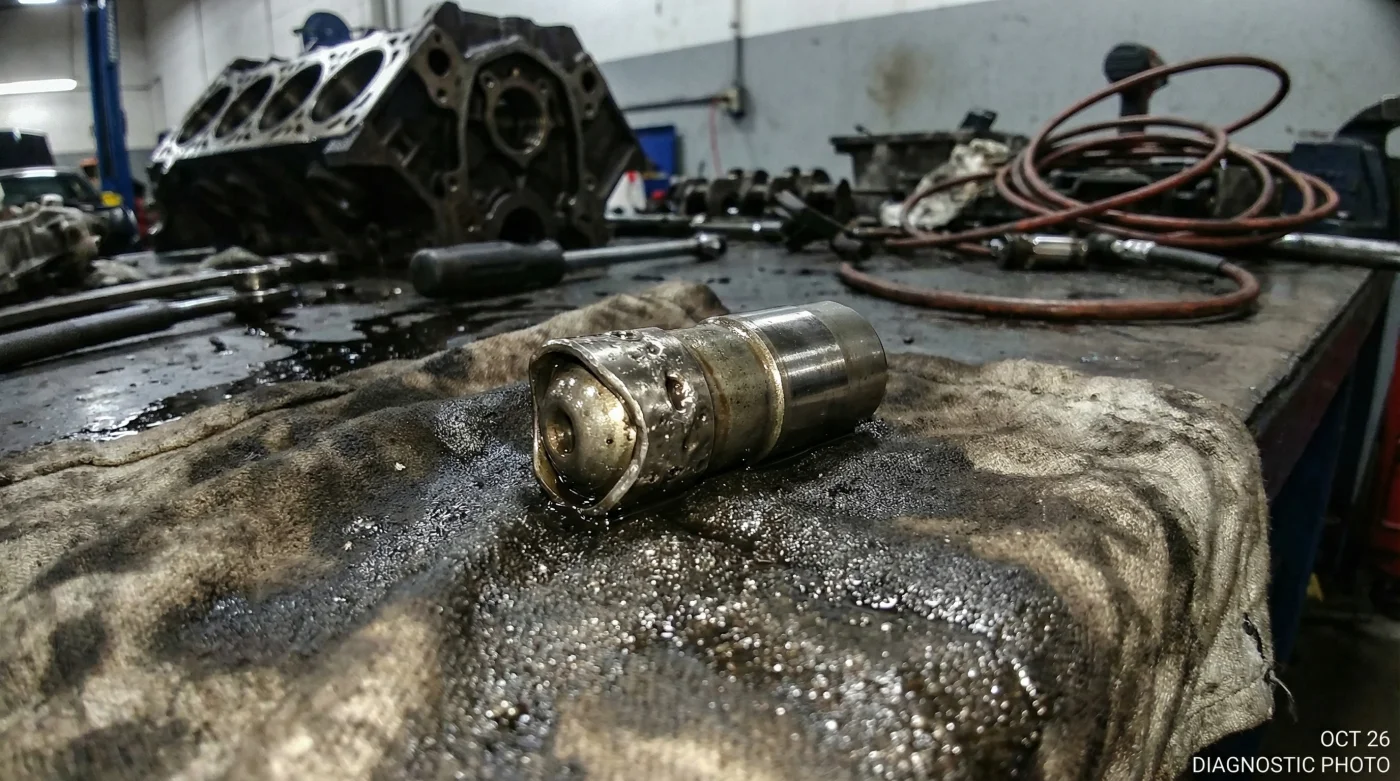
Instead, you hear it. A distinct, rhythmic, metallic tapping echoing from the top end of the block. It sounds like a sewing machine running dry, a sharp clatter that speeds up when you press the throttle. This is no exhaust leak, but the dreaded sound of a collapsed lifter, a mechanical failure that turns a morning commute into a multi-thousand-dollar repair bill.
For generations, the small-block Chevy V8 was the undisputed king of durability. You bought one because your grandfather had one that ran for half a million miles with nothing but regular oil changes and a bit of luck. But modern emissions standards and fuel economy targets have quietly changed the rules of the game.
While you wait for the tow truck, your neighbour pulls out in a Ram 1500. It is a brand historically ribbed for interior quirks and electrical gremlins, yet today, its older, less complicated engine hums perfectly. The reality has quietly flipped, leaving the once-bulletproof Silverado stranded while the underdog drives away.
The Perspective Shift: Breathing Through a Pinched Straw
We are conditioned to believe that newer technology inherently means better reliability. We assume engineers have ironed out the flaws of the past, fortifying our engines against wear. But when it comes to General Motors’ Active Fuel Management (AFM) and the newer Dynamic Fuel Management (DFM), the pursuit of efficiency has introduced a fatal weakness.
Imagine trying to run a marathon while someone intermittently pinches your windpipe closed to save oxygen. That is effectively what these fuel-saving systems do to your engine’s valvetrain. They shut down specific cylinders during light driving to save fuel, relying on complex, spring-loaded lifters that collapse and stop opening the valves.
The flaw lies in the oil pressure. These collapsible lifters require flawless lubrication to function. When the microscopic oil passages clog, or when the internal locking pins fail from constant engagement and disengagement, the lifter gets stuck. It beats against the camshaft, wiping out the lobes and sending metal shavings through the heart of your motor.
Consider Marcus, a 48-year-old fleet mechanic based just outside of Calgary. For a decade, his company purchased exclusively Chevrolet trucks. “Two years ago, we had four 5.3-litre V8s in the shop simultaneously, all with bent pushrods and chewed cams before they even hit 70,000 miles,” he explains, wiping grease from a heavy wrench. He shifted the fleet purchasing to Ram 1500s equipped with the aging 5.7-litre Hemi. “The Ram uses an older, less aggressive cylinder deactivation system. It still has quirks, but it doesn’t grenade the top end while you’re cruising down the Deerfoot. I can predict a Ram’s maintenance; I can’t predict when a Chevy lifter will decide to quit.”
Sifting Through the Iron: Adjusting for Your Needs
Not every truck buyer faces the same risks, and understanding how you use your vehicle dictates which mechanical flaws you can tolerate. The rivalry between the Silverado and the Ram is no longer about towing capacity; it is about choosing your preferred flavour of engine architecture.
For the frequent highway hauler, the Silverado’s AFM system is constantly cycling on and off. Every subtle change in throttle pressure triggers a shift between four and eight cylinders. This constant mechanical toggling accelerates wear exponentially on those fragile lifter pins.
- Kia Telluride nightfall editions carry invisible dealership software installation fees
- Subaru Outback touchscreen redesign quietly removed the critical physical defroster buttons
- Chevy Silverado lifter failure makes the Ram 1500 surprisingly more reliable
- Used Jeep Wrangler tailgate hinges reveal critical frame rust immediately
- Honda Accord transmission shuddering is instantly fixed by disabling this dashboard setting
If you are cross-shopping these two giants on the used market, you have to weigh a guaranteed annoyance against a potential catastrophe. Fixing an exhaust leak on a Ram is a nuisance; rebuilding the top end of a Silverado is a financial disaster.
Defending Your Valvetrain
If you already own a modern Silverado, or if you are intent on buying one because you favour its towing dynamics, you are not entirely helpless. You can mitigate the risk through highly specific, mindful maintenance routines.
Treat your engine oil like the lifeblood it is, rather than a loose suggestion on the dashboard. Ignore the factory interval of 10,000 miles. The microscopic passages in AFM lifters demand pristine fluid to maintain the correct hydraulic pressure.
- Change your full synthetic oil every 5,000 miles, strictly.
- Use a high-quality filter with a robust anti-drain back valve to ensure immediate oil pressure during cold starts at -20 Celsius.
- Consider an aftermarket OBD-II plug-in device. These small modules instruct the truck’s computer to stay in V8 mode permanently, preventing the lifters from ever collapsing.
- Listen acutely during cold starts. A faint tick that disappears in seconds is normal valvetrain noise; a heavy clatter that rises with RPM means shut the engine off immediately.
The Bigger Picture: Finding Peace of Mind
We buy trucks for a sense of autonomy and capability. A pickup is supposed to be a tool that enables our lives, not a delicate instrument that demands constant anxiety over internal mechanical failure. When a manufacturer compromises that core reliability to squeeze out a fractional improvement at the petrol pumps, the very purpose of the vehicle is undermined.
The Ram 1500’s unexpected advantage is rooted in its resistance to over-complication. By relying on an older, heavier engine block design, it inadvertently shielded its owners from the sharp bleeding edge of efficiency mandates. Simplicity acts as armour against unpredictable repair bills.
Ultimately, your choice of truck reflects your tolerance for modern engineering compromises. Recognizing the hidden vulnerability in a once-legendary badge allows you to make a decision grounded in reality, rather than nostalgia. You are no longer just buying a brand; you are carefully selecting the mechanical risks you are willing to live with.
“The most durable engine is rarely the most advanced; it is the one that has been built the same way for long enough to expose all its secrets.”
| Key Point | Detail | Added Value for the Reader |
|---|---|---|
| Silverado AFM System | Shuts down cylinders to save fuel, relying on fragile locking pins in the lifters. | Explains the exact mechanical cause behind unexpected engine failures. |
| Ram 1500 Simplicity | Uses an older valvetrain architecture that is less prone to catastrophic collapse. | Provides a reliable alternative in the same vehicle class. |
| Preventative Action | Changing oil every 5,000 miles and utilizing AFM-disabling OBD-II devices. | Offers practical, actionable steps to protect your current truck investment. |
Common Valvetrain Questions
Does the Ram 1500 have cylinder deactivation too?
Yes, it uses the Multi-Displacement System (MDS), but the lifter design is historically far less prone to catastrophic internal collapse than GM’s AFM system.Can I permanently disable my Silverado’s AFM?
Yes, aftermarket OBD-II plug-in devices can keep the truck in V8 mode, though physical mechanical wear from previous use remains a factor.What does a failing lifter sound like?
It mimics a loud sewing machine or a heavy metallic tapping from the top of the engine that matches the speed of the engine RPMs.Does GM cover this under warranty?
If you are within the powertrain warranty period, lifter failure is typically covered, but diagnosing and fixing it can leave you without a truck for weeks.Are newer DFM systems better than the older AFM?
While Dynamic Fuel Management (DFM) is more sophisticated in how it drops cylinders, it still relies on similar collapsible lifter technology, meaning the inherent vulnerability persists.