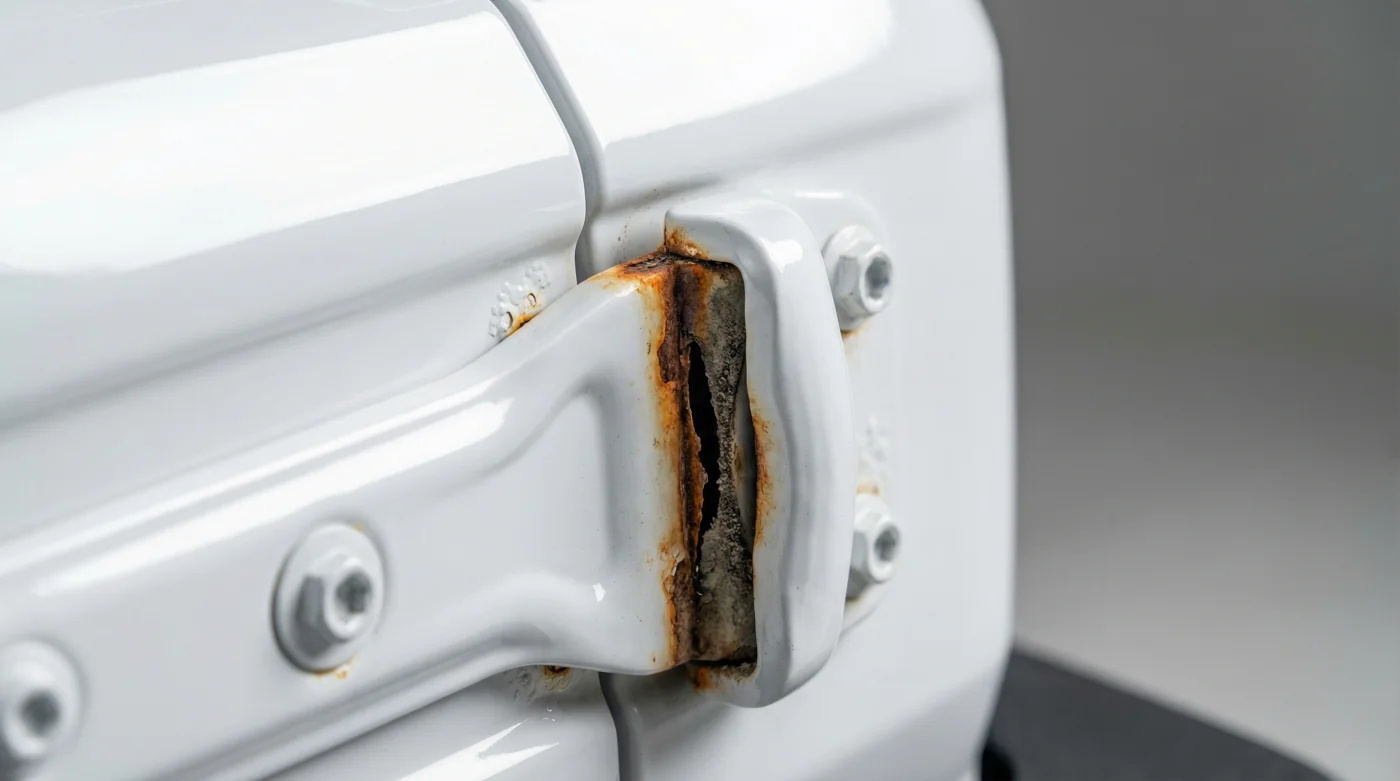
The gravel crunches under your boots as the morning frost burns off the dealership lot. You smell the sharp tang of wet asphalt and cold metal, gripping a heavy flashlight in your pocket. Before the salesman even offers his hand, you drop to one knee, ready to slide beneath the belly of a second-hand Jeep Wrangler.
You twist your neck, shining a pale beam against the frame rails, expecting to hunt for the orange flakes that spell financial ruin. The bright rust colour is what everyone warns you about. But as you strain your shoulders against the frozen tarmac, you are already looking in the wrong place.
The true story of a vehicle’s skeleton rarely starts where the road salt hits first. It begins where water sleeps, trapped in the dark corners where metal is supposed to breathe. The most revealing secret of a used rig doesn’t hide underneath the floorboards; it sits right at eye level, swinging on a heavy metal hinge at the rear.
The Weight of a Whispering Hinge
We are taught to fear the obvious scars. A scraped skid plate or a dented oil pan screams neglect, mounting a stealthy defence against your wallet, but the silent killers operate from the inside out. When you stare at the rear tailgate, watch the alignment gaps rather than the paint shine. A drooping door isn’t just a sign of a heavy spare tire wearing out the hardware.
It is the symptom of a much deeper, structural illness. The tailgate hinges act as a water funnel, catching rain, melted snow, and morning dew. When the rubber seals begin to fail, moisture bleeds down through the body tub directly into the rear frame crossmember.
Instead of washing away, the water pools inside the boxed steel frame, cooking under the summer sun and freezing solid when the temperature drops to minus 10 Celsius. By the time you notice the rear door dragging slightly over the latch, the crossmember has already been rotting from the inside for years. You are checking the undercarriage for surface rust, while the frame’s anchor point is slowly turning into wet paper.
Marcus, a 52-year-old frame welder working out of a drafty shop near Red Deer, knows this heartbreak intimately. He spends his winters cutting out the rear sections of outwardly immaculate trucks. “People tap the frame rails, smile at the clean metal, and then I lift the tailgate an inch to show them the rear tub is basically held together by gravity,” he mutters, wiping grease from his hands. Marcus doesn’t even bother grabbing a creeper board until he has opened the back door.
Reading the Rot Across Eras
- Kia Telluride nightfall editions carry invisible dealership software installation fees
- Subaru Outback touchscreen redesign quietly removed the critical physical defroster buttons
- Chevy Silverado lifter failure makes the Ram 1500 surprisingly more reliable
- Used Jeep Wrangler tailgate hinges reveal critical frame rust immediately
- Honda Accord transmission shuddering is instantly fixed by disabling this dashboard setting
For the older rigs, the damage is almost theatrical, favouring the exposed metal around the hinges. The water drops straight into the rear body mounts, meaning a sagging door often equals a body tub that is physically detaching from the frame.
The deception peaks with the heavily armoured mid-2000s editions. The thicker paint means the hinges hide their decay much longer, while the rot concentrates directly inside the rear bumper mounting points, severely compromising crash safety.
Even the modern fleet isn’t entirely immune to the slow drip of moisture. The galvanic reaction between mismatched metals at the pivot points creates a chalky residue, a loud warning that water is actively searching for the lowest steel point.
The Silent Lot Inspection
Approaching a prospective purchase requires a calm, systematic method. You don’t need a mechanic’s hoist or a heavy hammer to expose the truth. You just need to trust your own hands and apply a few mindful tests before you ever start the engine.
Let the salesman talk about the sound system or the fresh tires while you walk directly to the rear of the vehicle. Focus your attention entirely on the physical feedback the machine gives you. A healthy frame speaks quietly.
- Grip the spare tire firmly at the 9 and 3 o’clock positions and lift upward to feel for vertical play.
- Open the tailgate slowly, closing your eyes to listen for pops, grinds, or clicks from the pivot points.
- Close the door gently, stopping an inch before the latch to check if the striker misaligns with the catch.
The tactical toolkit requires very little equipment, but it demands your full attention, focusing on physical resistance rather than visual shine. A simple sheet of standard printer paper is your best diagnostic instrument. Slide the paper between the hinge block and the body tub; if it slips into a gap, the weather seal has failed.
- Time: 60 seconds of uninterrupted silence at the rear of the vehicle.
- Tool: One sheet of crisp paper.
- Temperature: Pay closer attention below zero Celsius, as frozen water inside the crossmember makes the rear end feel unusually rigid over bumps.
The Peace of the Open Road
Purchasing a rugged vehicle is an exercise in managing risk and embracing possibility. When you know exactly where the machine is vulnerable, the anxiety of buying second-hand dissolves. You stop worrying about dealer tricks and start feeling the quiet confidence of an educated buyer.
Knowing that a sagging hinge is a map to a rotting frame saves you from years of expensive welding and lingering doubt. It allows you to walk away from a beautiful disaster and wait for a solid chassis that will actually protect you. The patience to inspect the small details pays off immensely over time.
You aren’t just buying four wheels and a steering wheel; you are buying the freedom to drive 500 Miles away from cell reception without a second thought. And that freedom begins with a quiet, perfectly aligned rear door, swinging shut with the reassuring thud of good bones.
“The metal never lies to you; it just waits for you to ask the right question by opening the door.”
| Key Point | Detail | Added Value for the Reader |
|---|---|---|
| Hinge Play | Vertical movement when lifting the spare tire. | Identifies mechanical wear before it becomes structural collapse. |
| Striker Alignment | Misalignment between the door latch and the body. | Reveals geometry sagging due to frame rot. |
| Paper Test | Slipping paper behind the hinge block. | Confirms if the waterproof seal has been breached. |
Frequently Asked Questions
Can I just replace the hinges to fix the sag?
Replacing the hinges corrects the door’s posture temporarily, but it will not reverse the internal crossmember rot that moisture has already caused.
Why doesn’t this show up on a standard safety inspection?
Most standard inspections focus on surface rust and suspension components, missing the internal decay hidden inside boxed frame rails.
Is surface rust on the hinges themselves a dealbreaker?
Surface rust is cosmetic, but if it originates from behind the hinge block, it signals water is penetrating the body tub.
Does a heavier aftermarket spare tire cause this frame rot?
The heavy tire accelerates the physical wear on the hinges, which breaks the seals faster and invites the water inside.
How much does it cost to fix a rotted rear crossmember?
Professional frame welding and crossmember replacement can easily exceed several thousand dollars, making it a critical inspection point.