You step onto the frost-heaved tarmac of a suburban driveway. It is a crisp -10 Celsius morning, the kind where your breath hangs in the air and the crunch of gravel beneath your boots sounds unnaturally loud. Sitting before you is a late-model Chevrolet Tahoe. It looks like a monument of domestic armour, all broad shoulders, heavy chrome grilles, and dark, glossy paint.
You slide behind the heavy, leather-wrapped steering wheel and turn the key. The cabin immediately floods with warmth, but if you listen closely, past the initial roar of the V8 engine, there is a frantic, buzzing whisper coming from the rear wheel wells. Most buyers ignore this sound entirely, assuming it is just the machinery waking up.
But that tiny, desperate mechanical whir is actually a cry for help. The Tahoe is trying to inflate a compromised rear air suspension system, a notorious vulnerability that waits patiently in the shadows of the chassis. Competing directly with the Ford Expedition, the Tahoe projects an image of undeniable resilience and hauling supremacy.
Yet, beneath the polished exterior lies a financial trap designed to spring the moment your factory warranty expires. The suspension setup looks robust on paper, but the physical reality leaves unsuspecting second-hand owners facing thousands in repairs.
The Lung That Forgets How to Expand
To understand this flaw, you have to stop looking at a vehicle’s suspension as a static, lifeless piece of metal. The Tahoe’s high-trim air ride system operates much like a mechanical lung, constantly inhaling and exhaling pressurized air to keep the heavy cabin perfectly level, regardless of the cargo you toss in the back.
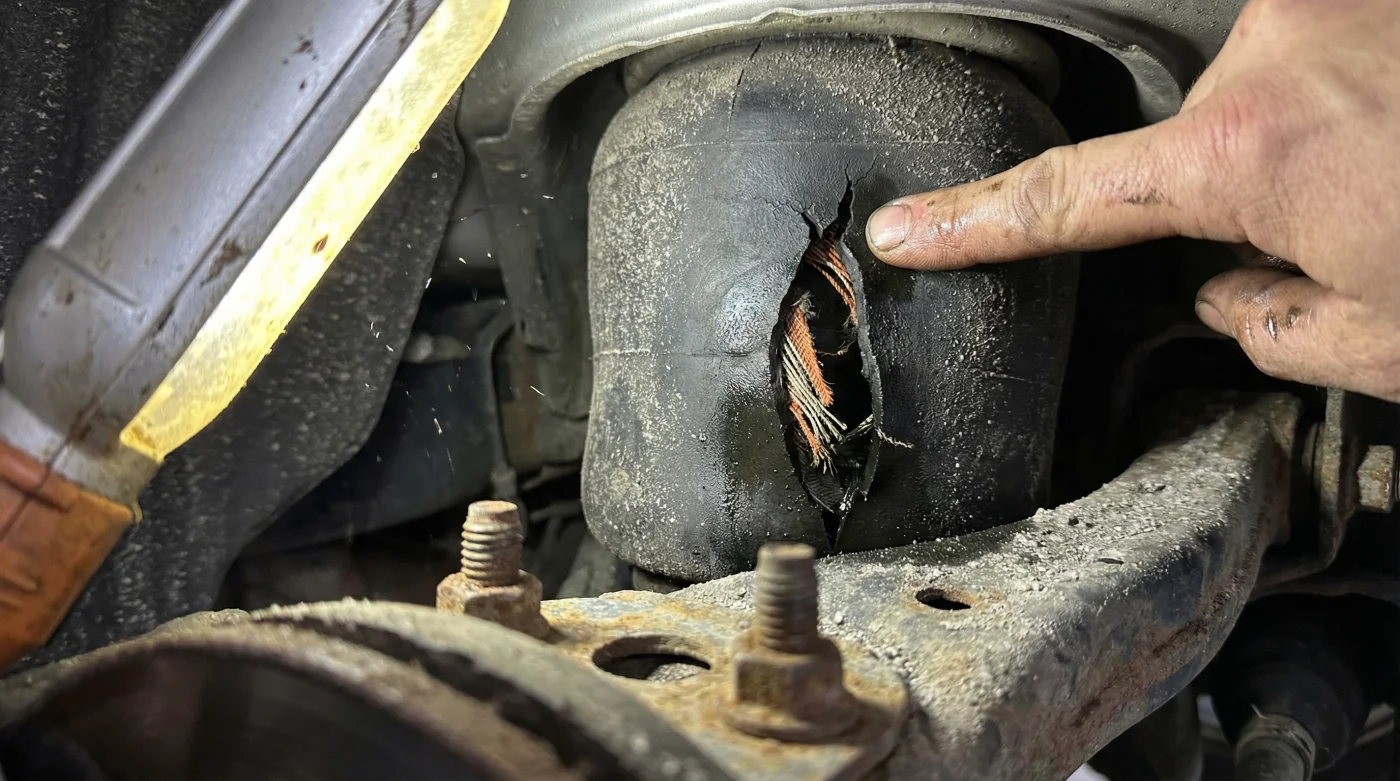
When the rubber bladders inevitably age, they develop micro-fissures from road salt and cold weather. The system begins breathing through a pillow, forcing the tiny compressor to run constantly until it simply burns out from the exhaustion. This is where panic usually sets in.
But a collapsed rear end is not a reason to abandon the purchase. In fact, understanding this exact failure shifts the balance of power entirely into your hands. What looks like a catastrophic breakdown to an untrained seller is actually a brilliant negotiating tool for you.
Instead of paying a premium retail price for a ticking time bomb, you can use the sound of that failing compressor to demand a massive discount. You are not buying a broken vehicle; you are buying a blank canvas.
Marcus Tremblay, a 48-year-old independent fleet mechanic from Calgary, actively hunts for these sagging Tahoes. “Everyone wants the Expedition because Ford’s independent rear suspension seems less fussy,” he explains over a cup of black coffee, wiping fresh grease from his knuckles. “But I buy the Tahoes right at the 60,000-Mile mark when the air bags start leaking. The sellers panic, I knock four thousand off the asking price, and I swap the whole mess out for a heavy-duty passive coil system in my shop before lunch. The truck outlives us all after that.”
Tailoring Your Approach: The Adjustment Layers
Not every Tahoe fails in exactly the same way. The local environment, the weight of the daily cargo, and the specific commuting route all shape how this weakness manifests over time. You need to read the physical wear patterns to know exactly what you are inheriting from the previous owner.
For the heavy hauler, the damage often hides in plain sight. Pulling a heavy camper or boat masks the gradual deflation of the air bags, transferring the extreme physical stress directly onto the surrounding shock absorbers. By the time the vehicle finally sags visibly, the entire rear geometry suffers.
Conversely, the Ford Expedition takes a different route entirely, relying on a traditional independent rear suspension that distributes heavy loads without the need for constant, fragile air correction. It is a more forgiving setup for general neglect, but it inherently lacks the buttery, glass-like ride of a fresh Chevy air system.
- The 2024 Subaru Forester Trim You Should Actually Buy Instead of the Touring
- The Hidden Suspension Flaw Plaguing Used Chevrolet Tahoes
- The Seatbelt Test That Reveals Hidden Flood Damage Dealerships Wash Away
- Mechanics Reveal the CVT Maintenance Schedule That Automakers Hide
- Why the Fully Loaded Toyota RAV4 is a Worse Value Than the Base Lexus NX
The Driveway Diagnostic
Inspecting this delicate system requires patience and a quiet environment. You do not need a mechanic’s hoist to find the truth; you just need to isolate the mechanical variables. Mindful observation will tell you everything the seller might be accidentally or intentionally hiding.
Stand at the rear quarter panel and look closely at the empty gap between the tire and the wheel arch. It should be perfectly symmetrical from left to right. If the gap looks suspiciously tight, or if the rear bumper seems to slope downward toward the pavement, you have found your leverage point.
Here is your tactical toolkit for assessing the Tahoe’s suspension before you sign the final cheque. Follow these exact steps to ensure you are not blindly inheriting someone else’s expensive oversight.
Keep a basic tape measure and a simple spray bottle of soapy water in your vehicle when shopping. These analog tools will reveal the invisible leaks.
- The Ignition Test: Turn the key to the accessory position without starting the engine. Listen closely near the rear passenger tire. A healthy compressor runs for five to ten seconds; a failing, leaking system runs continuously.
- The Soap Method: Crawl slightly under the rear bumper and lightly mist the black rubber air springs with the soapy water. Tiny, foaming bubbles indicate the micro-fissures that will soon destroy the compressor unit.
- The Overnight Sag: If you have the luxury of an extended test drive, measure the wheel-arch gap in the evening. Check it again in the morning. A loss of more than half an inch confirms the system is bleeding air.
- The Coil Conversion Check: Look for thick, black steel springs inside the shock assembly without any fragile plastic air lines attached. If present, a previous owner has already bypassed the headache, adding immediate long-term reliability.
Finding Peace in the Mechanics
Engaging directly with the mechanical reality of your vehicle changes how you experience the open road. When you stop fearing the inevitable wear and tear of heavy parts, you begin to see a used SUV not as a financial gamble, but as a predictable system you can master.
Choosing the Chevrolet Tahoe over the Ford Expedition is a commitment to a very specific kind of highway comfort. By diagnosing the hidden suspension flaw early, you preserve that signature smooth ride without sacrificing your financial peace.
You are no longer at the mercy of sudden dashboard warning lights or predatory, last-minute repair quotes. You know the exact lifespan of the materials rolling beneath you, and you know precisely how to remedy them when the harsh winter weather finally takes its toll.
The next time you start that heavy engine on a bitter, frosty morning, you won’t be listening to the mechanical hum with anxiety. You will listen with the quiet, unshakeable confidence of someone who already knows the answer.
“A failing component isn’t a dead end; it’s simply a negotiation waiting to happen.”
| Key Point | Detail | Added Value for the Reader |
|---|---|---|
| Factory Air Ride (Tahoe) | Uses rubber air bladders and a mechanical compressor to level loads. | Provides an incredibly smooth ride but requires close monitoring after 60,000 Miles. |
| Independent Rear Suspension (Expedition) | Relies on traditional mechanical linkages and coil springs. | Low maintenance and durable, though it lacks the dynamic leveling of air systems. |
| Passive Coil Conversion | Swaps the Tahoe’s failing air bags for heavy-duty steel springs. | Eliminates future repair costs permanently while retaining excellent towing capability. |
Frequently Asked Questions
How much does it cost to fix the Tahoe air suspension at a dealership?
Replacing the compressor, air lines, and rear shocks with OEM parts typically costs between $1,500 and $2,500 depending on local labour rates.Can I drive the vehicle if the rear air suspension has completely collapsed?
You can, but it is highly discouraged. A collapsed suspension ruins the vehicle’s handling, heavily wears the tires, and puts dangerous stress on the drivetrain.Is converting to passive coil springs a difficult DIY job?
For someone with basic mechanical experience, hand tools, and a safe set of jack stands, a coil conversion kit can be installed in a driveway in an afternoon.Will a coil conversion trigger warning lights on my dashboard?
Quality conversion kits include electronic bypass resistors that plug into the factory wiring harness, effectively tricking the computer and keeping the dashboard clear of errors.Does the Ford Expedition ever suffer from similar air suspension failures?
Older Expeditions did offer air suspension which failed similarly, but modern iterations primarily rely on standard independent rear setups, avoiding the compressor burnout issue entirely.