The dealership lot hums with a quiet, predatory stillness beneath the bright fluorescent lights. You trace your fingers over the cool, waxed hood of a mid-size SUV, breathing in the sharp, metallic scent of ozone and aggressive tire shine. To the naked eye, the vehicle looks utterly flawless, reflecting the overhead lights with the deep, glossy perfection of wet paint.
The salesperson hands you a crisp, multi-point inspection folder and a pristine vehicle history report. You hold the paperwork like a protective talisman against buyer’s remorse. It tells a comforting story of regular oil changes, meticulous previous owners, and a completely clean title, painting a picture of total mechanical serenity.
But paper has no memory of standing water. A heavy, sudden rainfall in British Columbia or a flash flood in a Toronto underpass rarely makes it into the official databases unless an insurance claim forces the issue. The detailing crew can steam-clean the carpets, ozone-shock the vents to remove odours, and polish the dashboard until it gleams.
They cannot, however, wash away the physical truth hiding beneath the interior plastics. The most dangerous secrets a car holds aren’t found under the hood or inside a glowing digital diagnostic tool. They are spooled tightly beside your left shoulder, waiting patiently in the dark to be pulled into the light.
The Archive of the Spool
Think of a vehicle’s seatbelt retractor as a deep, lightless archive, much like the rings of an ancient tree recording years of drought and rain. While the rest of the cabin is subjected to industrial vacuums, stiff brushes, and chemical foams, the tightly wound fabric inside the B-pillar remains practically inaccessible. It functions as a physical hard drive, capturing and storing the high-water mark of a catastrophic event.
The conventional wisdom dictates you should check the engine oil for a milky consistency or smell the floor mats for a damp, basement-like odour. Those are amateur tells. A professional detailer can flush an engine block in an afternoon and mask a lingering mildew scent with a heavy, overwhelming dose of vanilla fog.
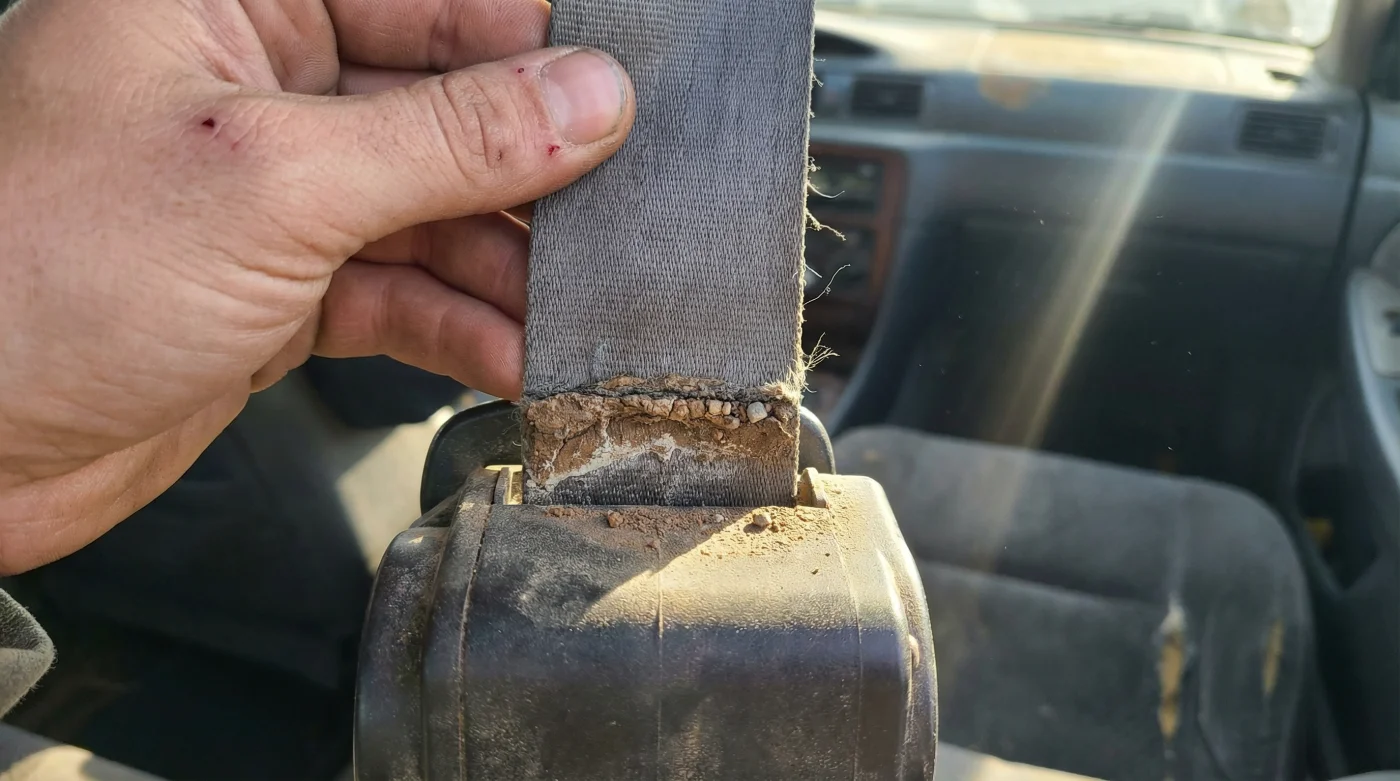
But when floodwater breaches the cabin, it carries fine silt, mud, and corrosive organic debris. As the water inevitably recedes, that muddy slurry is trapped within the coiled layers of the seatbelt webbing. No amount of surface cleaning can unroll that fabric and scrub the microscopic sediment baked permanently into the structural fibres.
Marcus Thorne, a 52-year-old independent auto appraiser based outside Halifax, has spent three decades tearing down salvage-title vehicles. He knows the truth. Last autumn, he inspected a pristine, low-mileage wagon that looked entirely immaculate on paper. It wasn’t until he yanked the driver’s side belt all the way to its mechanical stop that he found the rigid, discoloured water line—a perfect, dried tide mark of silt sitting four inches from the anchor point, proving the car had sat in waist-deep water for days.
Interpreting the Fabric’s Story
Different vehicles hide their aquatic trauma in slightly different ways. You must adjust your physical scrutiny based on the environment the car was originally built to endure and the materials used in its construction.
For the rugged off-roader, the signs are highly mechanical. A four-wheel-drive SUV might naturally have some surface dust in the cabin, but the seatbelt mechanism should still pull smoothly. If you feel a gritty, grinding hesitation as the belt retracts, it is baked-in silt. The internal springs have fused with trail mud carried by a flood, compromising the safety mechanism itself.
For the low-slung commuter car, the evidence is highly visual. These vehicles sit closer to the pavement, making them incredibly vulnerable to pooling water in underpasses or sudden deluges on suburban streets. Here, you are looking less for mechanical grinding and more for a “two-tone” fabric effect where the hidden section is stained with a rigid, brownish halo.
- The 2024 Subaru Forester Trim You Should Actually Buy Instead of the Touring
- The Hidden Suspension Flaw Plaguing Used Chevrolet Tahoes
- The Seatbelt Test That Reveals Hidden Flood Damage Dealerships Wash Away
- Mechanics Reveal the CVT Maintenance Schedule That Automakers Hide
- Why the Fully Loaded Toyota RAV4 is a Worse Value Than the Base Lexus NX
The Five-Second Diagnostic
Executing this inspection requires no specialised tools, no mechanical background, and absolutely no permission from the seller. It requires only your bare hands, a beam of bright light, and a few seconds of highly focused awareness. Even if the climate control is set to a comfortable 22 Celsius and the odometer displays a mere 15,000 Miles, the physical evidence remains intact.
Approach the driver’s side first and open the door wide to let in as much natural light as possible. You must bypass the portion of the belt that sees daily use, as this section is constantly wiped clean by clothing and ambient friction. You are hunting for the final fraction of the webbing that almost never leaves the retractor housing.
- Grasp the seatbelt firmly and pull it slowly, steadily, and continuously until it reaches its absolute mechanical limit.
- Shine a bright, white LED torch directly onto the final foot of the fabric, looking for a horizontal tide mark where silt has permanently dyed the fibres.
- Run your bare thumb and index finger along both sides of the webbing, feeling for a sudden change in texture from supple and smooth to crusty and stiff.
- Release the belt abruptly and listen closely to the retractor; a healthy spring hums smoothly, while a flooded spring crunches like walking on dry leaves.
Your tactical toolkit for this process is minimalist by design. You need a simple LED torch rated at 500 lumens or higher to pierce the gloom of the lower cabin. You need clean, dry hands to detect subtle moisture or stiffness. Finally, you need the quiet confidence to trust your own senses over a printed piece of paper.
Once you finish the front, move to the back. Check the rear passenger belts with the exact same level of scrutiny. Since rear belts are used far less frequently, they often hold the most undisturbed, pristine evidence of a flooded past, acting as untouched time capsules of the vehicle’s darkest days.
Peace of Mind Beyond the Pavement
A vehicle is far more than a collection of metal and glass moving rapidly across the pavement. It is a sealed, high-speed environment where we place the people we care about most, expecting the underlying safety systems to perform flawlessly when the unthinkable happens.
Trusting a simple piece of paper to verify the structural integrity of that environment is a massive gamble against the elements. When you pull that seatbelt to its absolute limit, you are actively choosing critical observation over blind assumption. You are reclaiming control from the polished sales pitch, the glossy wax, and the aerosol scents specifically designed to distract your attention.
The peace of mind that comes from this simple, physical act is quietly profound. You pull out of the service station or the dealer lot knowing exactly what you are driving. You aren’t just buying a used car; you are verifying its survival, ensuring that its history is truly as clean as the fabric resting safely against your shoulder.
“A vehicle’s paper history is merely what the seller wants you to know; the hidden seatbelt webbing is what the car itself is trying to tell you.”
| Key Point | Detail | Added Value for the Reader |
|---|---|---|
| The Visual Check | Looking for a distinct, discoloured tide mark on the hidden webbing. | Exposes water damage that detailing crews physically cannot reach. |
| The Tactile Check | Feeling for stiffness or a cardboard-like texture at the end of the belt. | Reveals structural compromise in luxury fabrics caused by trapped moisture. |
| The Mechanical Check | Listening for a grinding or crunching noise as the belt retracts. | Warns you of rusted internal springs and failing safety restraints before you buy. |
Frequently Asked Questions
Why doesn’t a history report show flood damage?
History reports rely strictly on official insurance claims or police records. If a previous owner dried the car out themselves to avoid a branded title, the database remains completely clean.Can a dealership legally sell a flooded car without telling me?
While laws vary by province, dealers often sell cars “as-is.” If the title was never officially branded as salvage or flood-damaged by an insurer, the dealer might not even know, or they may claim ignorance.What if only the rear seatbelts show signs of stiffness?
Water often pools in the lowest parts of a vehicle first, or the car may have been parked on an incline during a flood. Any stiffness in any belt is grounds to walk away immediately.Is it possible the seatbelt is just dirty from normal use?
Normal dirt accumulates on the portion of the belt that crosses your chest. The final few inches near the anchor point almost never see daylight; if that section is stained, it is almost certainly from pooling water.Can a flooded car be safely repaired?
Modern vehicles rely heavily on complex wiring harnesses routed beneath the floorboards. Once submerged, these electrical systems degrade rapidly, leading to constant, untraceable failures down the road. It is rarely worth the risk.