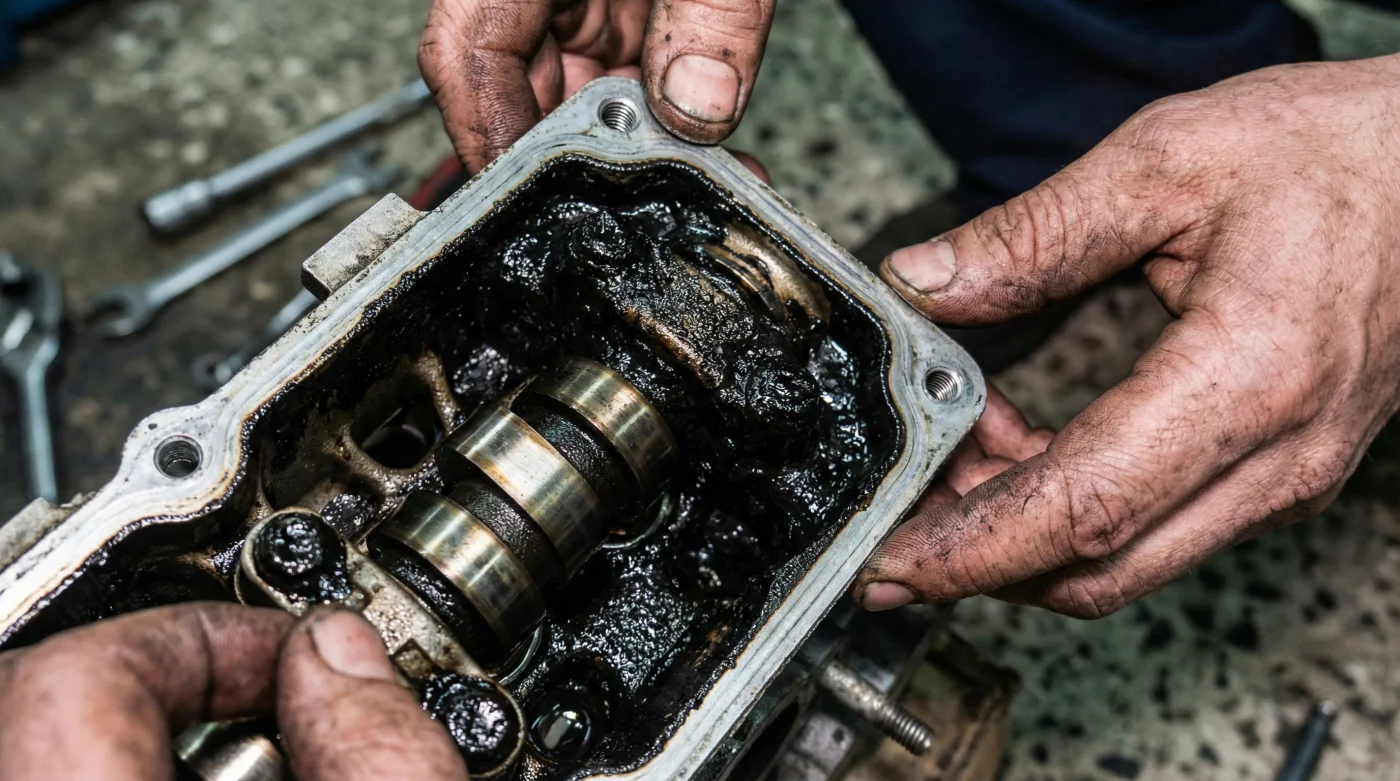
The service bay floor always hums with a specific frequency on a Tuesday morning. It smells faintly of citrus degreaser and hot cast iron, a space where precision meets the raw physics of combustion. Here, mechanics stand under heavy steel hoists, staring at the underbellies of vehicles that barely have forty thousand miles on the odometer, yet already require heart surgery.
You probably signed the dealership paperwork feeling a quiet relief. The salesperson smiled warmly, tapping the glossy brochure that promised a synthetic oil change was only required once every ten thousand miles. It felt like a small modern miracle, freeing you from the relentless chore of visiting the service station every few months.
But inside the dark, sealed cavity of your engine block, that promise is slowly turning into an abrasive reality. By the time your dashboard rolls over that ten-thousand-mile mark, the fluid that poured from the bottle like liquid gold has transformed into an exhausted, gritty syrup.
The owner’s manual isn’t exactly lying to you. Instead, it is communicating a calculated corporate compromise designed to lower the advertised cost of ownership during the warranty period, leaving you to deal with the inevitable mechanical fallout long after the paperwork expires.
The Mathematics of Perceived Value
Automakers are locked in a brutal war to advertise the lowest maintenance costs. If Brand A claims you need the oil drained twice a year, and Brand B claims you only need it done once, Brand B wins the spreadsheet battle in the consumer’s mind. But the physics of heat and friction do not read marketing brochures.
Modern engines use high-pressure direct injection and tiny, incredibly fast-spooling turbochargers to create power. These components demand absolute fluid perfection. When the additive package in your synthetic oil is depleted by extreme temperatures, the fluid becomes a suspension of microscopic carbon and metal shavings. Your engine is no longer being lubricated; it is being slowly sandpapered from the inside out.
The perspective shift happens when you realize that an ‘expensive’ early oil change is actually the cheapest insurance policy on the market. The supposed flaw of needing maintenance more frequently is, in reality, your greatest advantage in outsmarting a system built on planned obsolescence.
The Man Behind the Wrench
Marcus is fifty-two, a master technician at a sprawling dealership just outside Calgary, and he spends his frozen Decembers pulling apart seized variable valve timing solenoids. He works with the methodical patience of someone who has witnessed the same preventable tragedy a thousand times. “The marketing department writes the maintenance schedule, not the engineers,” Marcus explains, wiping a thick, sludge-covered timing chain with a red shop rag. “They tell you the synthetic oil can survive ten thousand miles. What they don’t tell you is that the paper oil filter often turns into a solid brick of carbon by mile seven thousand, forcing the bypass valve to open and pump unfiltered, dirty oil directly into your fragile turbo bearings.”
The Anatomy of a Driving Life
The ten-thousand-mile rule assumes a pristine laboratory environment: perfectly flat pavement, steady highway cruising speeds, and an ambient temperature of twenty degrees Celsius. You do not drive in a laboratory.
Your actual driving habits introduce daily environmental variables that accelerate chemical breakdown drastically, demanding a highly customized approach to how you care for your machine.
For the Cold-Start Commuter
If you live in a climate where winter mornings frequently dip to minus fifteen Celsius, and your daily commute is less than ten miles, your engine never reaches its optimal operating temperature. Moisture from combustion condenses inside the cold oil pan. Because the oil never gets hot enough to boil this water off, it whips into a milky, acidic froth that aggressively corrodes internal bearings.
For the Stop-and-Go Parent
- Synthetic Oil Changes Every Ten Thousand Miles Are Slowly Destroying Your Engine
- The Hidden Flaw Making Honda CR-V Buyers Regret Skipping the Nissan Rogue
- The Seatbelt Test That Reveals Hidden Flood Damage Dealerships Try to Conceal
- Mechanics Reveal the Carbon Buildup Service That Keeps Direct Injection Engines Alive
- Why the Top Trim Toyota Highlander is a Better Value Than the Base Lexus RX
For the Highway Cruiser
Even if you spend most of your time covering long stretches of open pavement, the extreme shear forces inside a modern engine physically chop up the long-chain molecules of the oil’s viscosity modifiers. By mile eight thousand, that thick protective film has thinned out to the consistency of dirty water, offering almost zero protection to your spinning camshafts.
Resetting the Rhythm of Your Garage
Taking back control of your vehicle’s longevity requires a deliberate rejection of the dashboard reminder light. It is about shifting your mindset from blindly following a digital prompt to actively listening to the physical needs of the machine.
You are building a proactive habit of preventative mechanical hygiene that will comfortably outlast any factory warranty.
To implement this, you need to establish a new rhythm. Ignore the manual’s maximum limit and adopt the severe service schedule, which practically every driver actually falls under.
- The Five-Thousand Rule: Reset your mental clock. Drain the fluid and replace the filter every 5,000 miles or six months, regardless of what the dealership service advisor suggests.
- Filter Upgrades: Never buy the cheapest paper filter. Spend the extra few dollars on a filter with synthetic glass-blend media designed to trap smaller micron particles without collapsing.
- The Dipstick Check: Pull the dipstick on a Saturday morning. The oil should smell faintly earthy and chemical; if it smells acrid, burnt, or leaves a gritty residue on your thumb, it is severely compromised.
- Warm-Up Discipline: Allow the engine to idle for thirty seconds before shifting into gear, giving the thick, cold fluid time to climb up to the valvetrain.
The Tactical Toolkit
Keep a dedicated logbook in your glove compartment. Write down the mileage, the date, and the specific brand and viscosity of oil used. Consistency is critical. If your manual calls for 0W-20, ensure you are buying a reputable, full-synthetic brand that meets the exact API specification listed on your oil cap.
The Quiet Rebellion of Maintenance
There is a profound, grounding peace of mind that comes from knowing the metallic heart of your vehicle is breathing clean, fresh fluid. It removes the low-level anxiety of dashboard warnings and the looming dread of catastrophic repair bills.
In an era where consumer goods feel increasingly fragile and disposable, keeping a complex machine running flawlessly for two hundred thousand miles is a deeply satisfying act of defiance. You are no longer just a passive consumer; you become a mindful steward of the machinery that facilitates your daily life. The rhythm of maintenance becomes a quiet ritual of care, ensuring that every time you turn the key, the engine responds with the smooth, eager hum it had on the very first day.
“Oil is the only thing standing between a well-running engine and ten thousand dollars of scrap metal. Treat it like lifeblood, not an inconvenience.”
| Key Point | Detail | Added Value for the Reader |
|---|---|---|
| The 10,000-Mile Myth | Automakers extend intervals to reduce advertised ownership costs, ignoring real-world driving conditions. | Empowers you to see past marketing tactics and prioritize the actual health of your engine. |
| Filter Degradation | Standard oil filters often clog by 7,000 miles, forcing unfiltered oil through a bypass valve. | Prevents catastrophic turbo and bearing wear by prompting timely filter replacements. |
| The 5,000-Mile Rule | Changing synthetic oil every 5,000 miles prevents sludge buildup and viscosity breakdown. | Provides a foolproof, actionable timeline that guarantees long-term vehicle reliability. |
Frequent Maintenance Questions
Is synthetic oil really better than conventional?
Yes. Its molecular structure resists extreme heat and cold far better than conventional crude, preventing sludge formation in tight engine tolerances.Will changing my oil early void the factory warranty?
Absolutely not. Servicing your vehicle more frequently than the manual suggests only improves longevity and is fully protected under warranty laws.Why does my oil look black right after a change?
Modern synthetic oils contain heavy detergents that immediately begin cleaning carbon deposits. Dark oil simply means the fluid is actively doing its job.Can I just top up the oil instead of changing it?
No. Adding fresh fluid to old oil does not restore the depleted additive package or remove the microscopic metal shavings circulating in the pan.What happens if I miss the 5,000-mile mark by a little bit?
Going over by a few hundred miles occasionally will not cause immediate harm, but making it a habit accelerates long-term wear on the timing chain and valvetrain.