Frost clings to the driver’s side window like spun glass, the morning air sitting at a bitter minus twelve Celsius. You stand in the driveway, breath pluming in the low light, pressing the remote start button through the fabric of your coat pocket. In this specific, shivering moment, the badge glued to the front grille matters far less than the heat radiating through the steering wheel.
We are culturally conditioned to believe that luxury is a binary state, dictated entirely by a piece of chrome on the hood. You might assume that scraping your budget to afford an entry-level luxury vehicle grants you immediate, exclusive entry into the upper echelon of automotive comfort. It feels instinctively correct to trust the prestige of a high-end nameplate over the humble reputation of a mainstream alternative.
But the reality of automotive manufacturing is far more nuanced, built on shared platforms and scalable architectures. When you stretch your finances to capture a luxury badge, you are often buying an empty shell—a cabin stripped of the very amenities that make driving a pleasure, simply to keep the entry price artificially low.
Stepping into a fully loaded mainstream counterpart is like discovering a secret door in a familiar house. You bypass the prestige tax and walk directly into an environment brimming with acoustic glass, panoramic views, and ventilated leather, realizing the everyday badge was simply a clever disguise for genuine opulence.
The Tailored Suit vs. The Off-the-Rack Label
Think of the automotive market like buying a winter coat. You can purchase a thin, unlined jacket with a highly coveted designer logo slapped across the chest, or you can visit a local, unassuming tailor who builds you a heavy-duty, down-filled parka from the finest available materials. The designer jacket tells the world you have expensive taste; the tailor’s jacket actually keeps you warm when the snow starts falling.
This is the exact dynamic at play when comparing a base-model luxury crossover to a top-trim Toyota Highlander Platinum. The flaw is the disguise. Because it wears a Toyota badge, the Highlander is perceived as a purely utilitarian people-mover, an appliance for the suburbs. Yet, this very perception is its greatest advantage. Freed from the burden of maintaining a luxury price floor, the manufacturer pours the entire budget into tangible, tactile upgrades rather than marketing prestige.
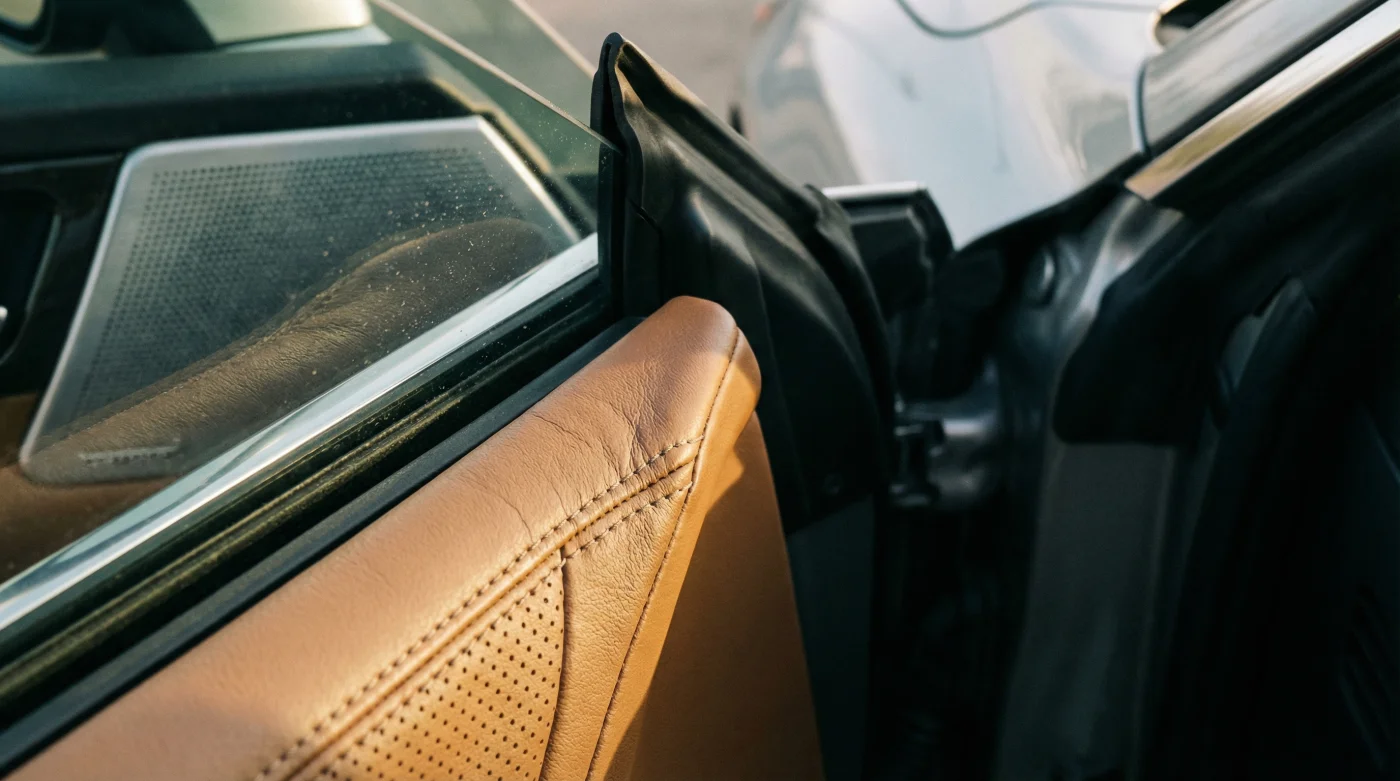
When you sit inside the Highlander Platinum, the doors close with a heavy, muffled thud that mimics the acoustics of a recording studio. You are surrounded by noise-reducing materials that the base luxury competitor simply omits to cut costs. The vehicle breathes through the road, absorbing the harshness of potholes and frost heaves with a soft, confident grace.
Meet David Tremblay, a 46-year-old NVH (Noise, Vibration, and Harshness) analyst based out of Oakville, Ontario. David spends his days wiring cabins with microphones and driving up and down Highway 401 to measure decibel levels. “People assume the luxury badge guarantees a quieter ride,” David notes over a coffee. “But when we measure a base luxury trim against a top-tier mainstream model on the same shared platform, the mainstream car often wins. The top trim gets the thicker acoustic laminated glass and the dense foam injected into the A-pillars. The base luxury car gets the badge and an echo.”
Adjustment Layers for the Savvy Buyer
Evaluating these two distinct approaches to vehicle buying requires looking at your own daily friction points. Different drivers value different layers of comfort, and breaking down your specific needs reveals exactly where the top-trim value hides.
For the Highway Commuter
If you spend two hours a day staring at the brake lights ahead of you on the Don Valley Parkway, your vehicle is less a mode of transport and more an isolation chamber. In a base luxury model, you are likely sitting on synthetic leather, adjusting your seat manually, and listening to a standard six-speaker stereo that struggles to drown out the tire hum.
Pivot to the fully loaded Highlander, and the environment softens. The cabin wraps around you. You sink into perforated, ventilated leather. The JBL premium audio system pushes sound waves that feel thick and resonant, turning a tedious commute into a private listening room. The acoustic glass acts like noise-cancelling headphones for the entire cabin.
For the Weekend Cottage Goer
Packing up for a weekend in Muskoka or the Laurentians introduces a chaotic element: muddy boots, restless dogs, and crammed cargo spaces. The base luxury crossover often sacrifices outright utility for an aggressive, sloping roofline that looks brilliant in a driveway but crushes your cooler in the trunk.
- Synthetic Oil Changes Every Ten Thousand Miles Are Slowly Destroying Your Engine
- The Hidden Flaw Making Honda CR-V Buyers Regret Skipping the Nissan Rogue
- The Seatbelt Test That Reveals Hidden Flood Damage Dealerships Try to Conceal
- Mechanics Reveal the Carbon Buildup Service That Keeps Direct Injection Engines Alive
- Why the Top Trim Toyota Highlander is a Better Value Than the Base Lexus RX
For the Resale Strategist
Cars depreciate, but they do not depreciate equally. A base luxury vehicle often plummets in value the moment the warranty expires, as the second-hand market heavily favors models equipped with technology packages and premium features.
A fully loaded Highlander, however, is a unicorn on the used market. Families hunt for these specific trims. Because it carries the long-term reliability reputation of its brand, paired with every conceivable luxury feature, its depreciation curve is remarkably flat, protecting your initial investment far better than a stripped-down luxury shell.
The Tactical Spec Sheet Audit
Making this comparison requires stripping away the marketing gloss and looking at the raw, physical components. You have to evaluate the vehicle by its hardware, not its heritage. This requires a mindful, side-by-side audit of what your money actually buys.
Sit in both vehicles back-to-back. Run your hands over the dashboard materials. Press the infotainment screen firmly. Listen to the sound the turn signal makes. These micro-interactions reveal where the budget was spent.
When you conduct this audit, look for these specific, high-value inclusions that the top-tier mainstream SUV provides over the base luxury option:
- Acoustic Laminated Front and Side Glass: Two layers of glass sandwiching a clear acoustic membrane, dramatically reducing wind noise above 80 km/h.
- Heated and Ventilated Second-Row Seats: Expanding comfort beyond the driver, turning the rear cabin into a premium space for passengers.
- 360-Degree Camera Systems: Utilizing four high-definition cameras to stitch together a top-down view, eliminating blind spots in tight parking garages.
- Head-Up Display (HUD): Projecting speed and navigation data directly onto the windshield, allowing your eyes to remain fixed on the road ahead.
The Peace of Anonymous Luxury
There is a profound, quiet confidence in driving a vehicle that over-delivers without demanding attention. When you choose the top trim of a mainstream brand, you are opting out of the performative aspect of car ownership. You are no longer trying to signal status to strangers at a red light.
Instead, you are directing your resources inward, prioritizing the actual, physical experience of the people sitting inside the cabin. It is stealth wealth in motion. You get the supple leather, the advanced driver-assistance systems, and the library-quiet highway ride, all wrapped in an exterior that blends effortlessly into the background.
This choice removes a layer of low-level anxiety from your daily life. You don’t wince when a shopping cart gets a little too close in the grocery store parking lot. You don’t worry about the exorbitant hourly labour rates at a specialized luxury dealership. You simply turn the key, grip the heated leather wheel, and enjoy a premium experience that you purchased for yourself, rather than for the approval of the neighbourhood.
“True automotive value isn’t found on the hood ornament; it’s measured in the density of the seat foam, the silence of the highway ride, and the heat radiating through the steering wheel on a February morning.”
| Key Point | Detail | Added Value for the Reader |
|---|---|---|
| Acoustic Insulation | Top trims feature laminated glass and thicker dash silencers. | Reduces driver fatigue on long highway trips by blocking tire and wind noise. |
| Feature Density | Includes HUD, 360-cameras, and ventilated seats as standard. | Provides a tangible, daily improvement in comfort without expensive option packages. |
| Maintenance Costs | Mainstream dealer networks have lower hourly labour rates. | Keeps long-term ownership costs predictable and significantly lower than luxury brands. |
Frequently Asked Questions
Are the engines different between the base luxury and the top mainstream trim?
Often, they share the exact same powertrain architecture. The parent company tunes them slightly differently for throttle response, but the mechanical reliability and fuel efficiency remain practically identical.Does a luxury badge guarantee better build quality?
Not necessarily. Top-tier mainstream models are built with incredibly tight tolerances. You are paying for premium materials (like real wood or higher-grade leather) in the luxury model, but the panel gaps and mechanical integrity are roughly equal.How does resale value compare after five years?
A fully loaded, reliable mainstream SUV frequently holds its percentage value better than a base luxury car, as used buyers heavily seek out high-tech features and proven longevity over entry-level status.Is the sound system actually better in the mainstream top trim?
Yes. A top-trim branded system (like JBL or Bose) with 11+ speakers and a subwoofer will drastically outperform the unbranded, 6-speaker base audio system found in entry-level luxury models.Will I miss the dealership experience of a luxury brand?
Luxury dealers offer espresso bars and loaner cars, but mainstream dealers are vast, abundant, and generally faster for routine maintenance. You trade a waiting room barista for lower repair bills and convenience.