Stand at the edge of a dealership lot just after sunrise, when the frost hasn’t quite burned off the asphalt. You can smell the sharp tang of window cleaner and cold rubber. There is a quiet hum of expectation as rows of redesigned sedans wait for their first test drives. You notice the sharp lines, the aggressive front fascia, and the sleek profile that finally shakes off decades of beige familiarity.
You open the hood expecting the familiar layout, but something feels fundamentally different. The empty space, the routing of the high-voltage cables in bright orange, the downsized block. The automotive industry is rapidly shedding weight and displacement, pushing toward an electrified horizon that promises exceptional efficiency.
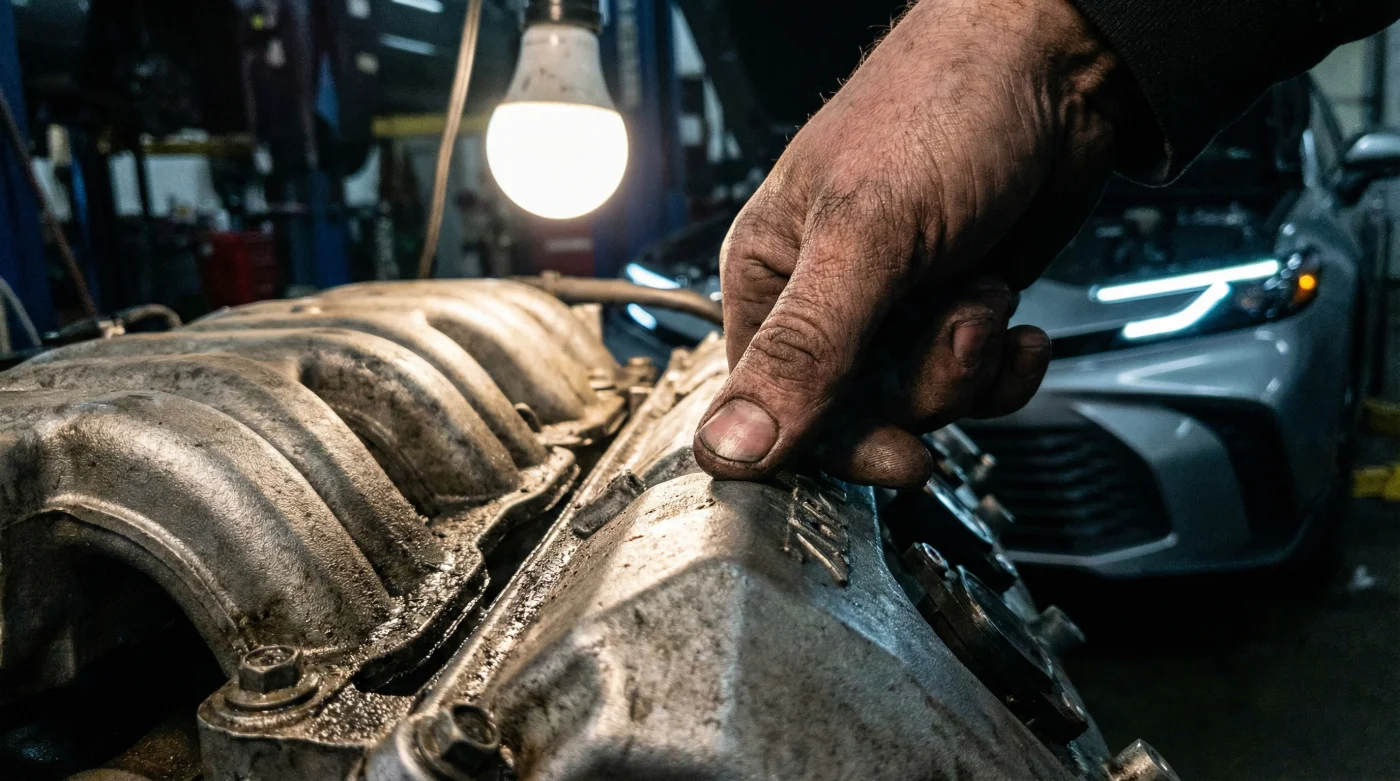
But if you listen closely in the service bays around the back, the mood is slightly subdued. Mechanics lean against toolboxes, wiping grease from their hands, discussing the quiet departure of an old friend. The new generation brings incredible fuel economy to the masses, yet it quietly closes the book on one of the most resilient powertrains ever cast in aluminum.
The spec sheets boast combined outputs and silent coasting, but understanding what you gain requires looking past the showroom glare. The legendary V6 is gone, replaced entirely by a hybrid-only philosophy. This redesign forces a shift in how we evaluate long-term ownership.
The Perspective Shift: Trading Cast Iron for Induction
Think of vehicle engines like kitchen appliances. For over fifteen years, the outgoing 3.5-litre V6 was the cast-iron skillet of the automotive world. It was heavy, a bit thirsty, but completely immune to the daily abuse of stop-and-go commuting. You could drop it, burn it, neglect it, and it would still cook perfectly.
Now, the manufacturer has installed an induction cooktop under the hood. The new hybrid four-cylinder system is vastly more sophisticated, heating up instantly and using a fraction of the energy. It calculates temperatures down to the degree, coasting on electric power in heavy traffic and sipping fuel. But this shift forces you to change how you interact with the machine.
The frustration isn’t about the new technology failing; it is about the loss of absolute, brute-force simplicity. You are trading mechanical over-engineering for software-managed efficiency. This redesign forces you to view your daily driver not as a purely mechanical beast of burden, but as a complex electronic ecosystem that demands a different kind of respect.
Just ask Dave MacIntyre, a veteran independent mechanic operating out of a cinder-block shop in Calgary, and the reality becomes clear. Dave has spent three decades pulling engines apart, and he speaks of the discontinued 2GR-FKS V6 with reverence. ‘It was an engine that could breathe through a pillow,’ he notes, wiping down a wrench. ‘You could ignore the oil changes for an extra couple of thousand miles in the bitter minus-20 Celsius winters. The new hybrids? They are brilliant, but precise. You don’t guess with precision.’
Deep Segmentation: Adapting to the Hybrid Reality
The realization that you can no longer simply walk into a dealership and check a box for six cylinders means evaluating your driving habits through a new lens. The redesign segments drivers into distinct categories, demanding tailored approaches to ownership.
For the highway commuter, the new hybrid system is a revelation. If your daily routine involves long stretches of flat road, the electric motors provide instant torque for merging, masking the reduced displacement. The cabin is quieter, and the power delivery is so smooth that the needle sweeps up without a single mechanical tremble. You trade a slight loss in high-end passing power for dramatic savings at the pump.
- Why the Top Trim Toyota Highlander is a Better Value Than the Base Lexus RX
- How to Legally Refuse Dealership Document Fees During Final Contract Signing
- Toyota Finally Modernized the Camry But Eliminated Its Most Reliable Engine Option
- The 2024 Subaru Crosstrek Trim You Should Actually Buy Instead of the Wilderness Edition
- Tesla Slashes Model Y Pricing Triggering Massive Inventory Liquidation Across North America
Stop-and-go traffic is where the urban hauler shines brightest. The hybrid battery captures braking energy, significantly reducing wear on your brake pads. The transition from gas to electric is nearly imperceptible. However, you must become acutely aware of the battery cooling fan vents in the rear cabin; blocking them with cargo or winter coats can suffocate the system.
Mindful Application: Maintaining the Modern Ecosystem
Adapting to this era of complex efficiency requires stripping away old habits. You must treat maintenance as a strict schedule rather than a casual suggestion. The new powertrain does not tolerate neglect, but it heavily rewards precision.
Build a tactical ownership routine around exact intervals to protect the hybrid components. Implement the following steps to ensure your modernized sedan outlasts its warranty:
- Maintain Fluid Discipline: The smaller displacement engine works harder when the battery is depleted. Never stretch oil changes beyond 5,000 miles, regardless of what the dealer’s maximum interval suggests.
- Filter Awareness: Hybrid batteries have dedicated air filters. Inspect and vacuum them every 10,000 miles to prevent thermal throttling.
- Brake Exercising: Because regenerative braking does most of the stopping, physical calipers can seize from lack of use in salty winter conditions. Apply firm, hard braking once a week in a safe area to keep the sliders moving.
- Coolant Precision: The new system uses separate coolant loops for the engine and the inverter. Never mix fluid colours; the precise thermal management depends on exact chemical compositions.
The Bigger Picture: Finding Peace in the Rhythm
It is entirely natural to mourn the loss of something profoundly reliable. The heavy, predictable hum of a large-displacement engine represented a specific kind of automotive freedom—a guarantee that the car would simply work, no matter the circumstances.
But finding peace means understanding the new rhythm of efficiency. The redesigned Camry hasn’t abandoned reliability; it has simply relocated it. The security no longer comes from thick cylinder walls. Instead, it comes from knowing your vehicle is actively managing its own energy, minimizing waste, and adapting to the road second by second.
When you stop fighting the change and learn to maintain the hybrid system properly, you discover a different kind of calm. You realize that while the mechanic’s favourite engine is gone, the fundamental promise of the vehicle remains intact. It just asks you to pay a little more attention.
‘True longevity in modern vehicles isn’t about avoiding technology; it is about matching its precision with your maintenance habits.’
| Key Point | Detail | Added Value for the Reader |
|---|---|---|
| Engine Transition | V6 replaced by a 4-cylinder hybrid system across all trims. | Massive fuel savings in city driving, reducing monthly gas expenses. |
| Brake Wear | Regenerative braking handles most daily deceleration. | Brake pads can last twice as long, lowering maintenance costs. |
| Cabin Cooling | Rear vents intake air to cool the high-voltage battery. | Keeping vents clear prevents battery degradation and expensive replacements. |
Frequently Asked Questions
Why did Toyota eliminate the V6 from the Camry? Stricter global emissions regulations and a push for fleet-wide fuel efficiency made the large-displacement engine unsustainable. The hybrid powertrain offers better city fuel economy and lower emissions.
Is the new hybrid powertrain as reliable as the old V6? While vastly more complex, Toyota’s hybrid synergy drive has a proven track record. It requires stricter adherence to maintenance schedules but handles daily wear exceptionally well.
Do I need to plug in the redesigned Camry? No. It is a traditional hybrid, meaning the battery charges itself through regenerative braking and engine power. You simply fill it with gas and drive.
How long do hybrid batteries typically last? With proper ventilation and regular driving, modern hybrid batteries routinely last 150,000 to 200,000 miles. Replacing the battery air filter regularly extends this lifespan significantly.
Should I buy a used V6 or a new hybrid? If you prioritize towing capacity, high-speed passing power, and DIY mechanics, seek out a well-maintained used V6. If daily commuting costs and smooth city driving are your priorities, the new hybrid is superior.