You are standing on cold, damp pavement at a used car lot just outside the city limits. The morning air carries the faint scent of rain-soaked gravel and the harsh chemical tang of tire shine. In front of you sits a three-year-old crossover, its clear coat catching the weak sunlight. The salesperson, holding a crisp manila folder, smiles warmly and taps the paper. A clean history, they say. Zero accidents reported.
But paper has a terrible habit of keeping secrets. When metal bends and panels crush, the resulting repairs are rarely submitted to a database if the previous owner decided to pay a local shop under the table to avoid a massive insurance premium hike.
You might feel a subtle knot in your stomach as you walk around the vehicle, wondering if that flawless fender is hiding a battered skeleton. You run your hand along the cool metal, trying to feel for inconsistencies, but modern body filler is shaped to mimic perfection. The truth isn’t found on the glossy, polished surface.
It exists in the dark, dirty cavities where detailers rarely bother to look. By relying on an unwritten language of shadows and textures, you can bypass the paperwork entirely and force the vehicle to confess.
The Paper Trail is Just a Mirage
We are conditioned to treat a vehicle history report as a gospel of safety. You read the clean Carfax and feel a wave of relief, assuming the coast is clear. But think of a vehicle history report like a local weather forecast—it tells you what was officially recorded at the local weather station, but it doesn’t guarantee your specific street didn’t get battered by severe hail.
The actual condition of the steel is your only true indicator. The perspective shift happens the moment you stop looking at the car as a single, uniform object and start viewing it as stitched panels. Factory assembly lines operate with surgical, robotic precision. Every bolt, weld, and coat of paint is applied in a meticulously controlled environment.
When a car is severely damaged and rebuilt in a local garage, that sterile environment is impossible to replicate. The human hand, no matter how skilled, leaves traces of its intervention. You aren’t looking for obvious dents; you are hunting for the quiet friction between factory perfection and rushed human repair.
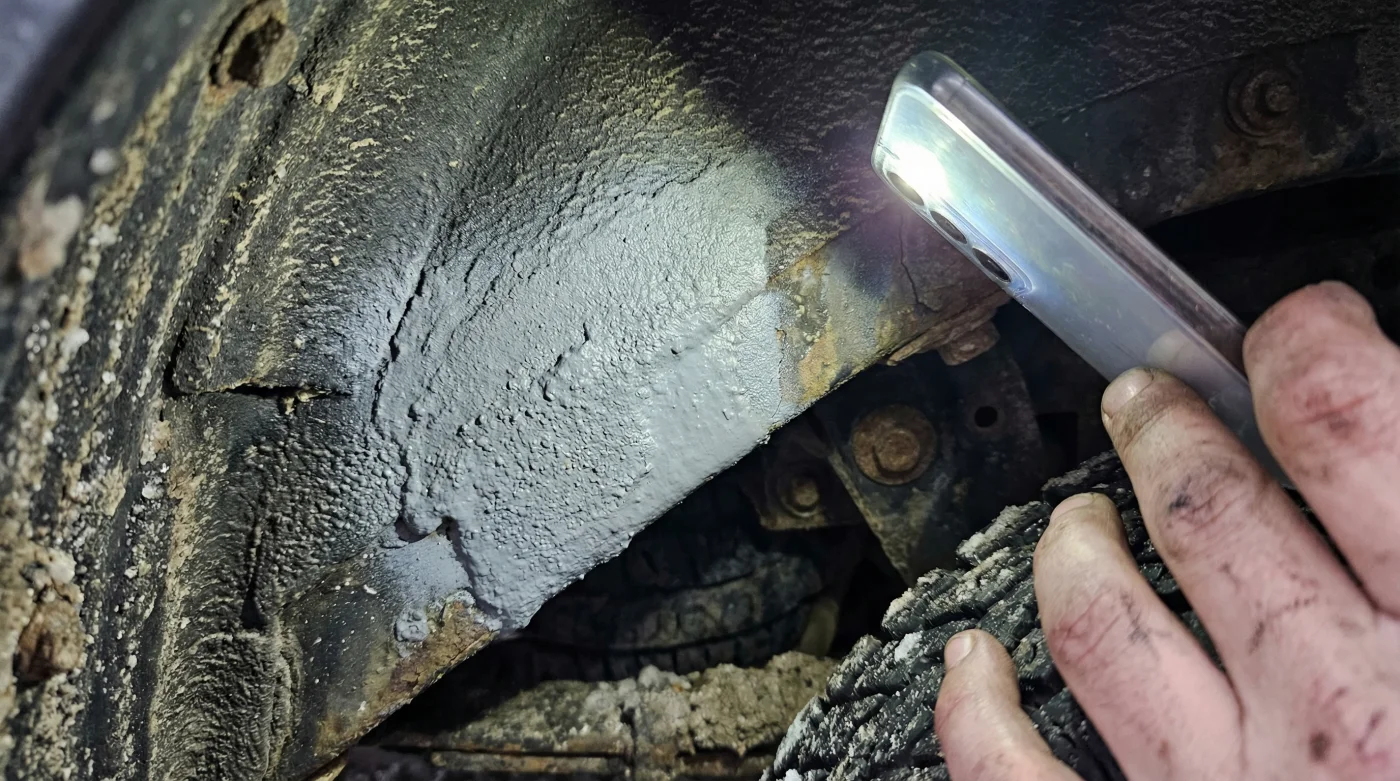
The most powerful tool for this interrogation sits right in your pocket. A standard smartphone flashlight, angled precisely, cuts through the shadows of the wheel wells and exposes the exact moment paint strayed, leaving a gritty fog of mismatched colour on the black plastic lining—a glaring symptom of hidden structural manipulation.
Consider Marcus, a 54-year-old auto body specialist working out of a dusty, fluorescent-lit shop in Etobicoke. Marcus has spent three decades pulling bent frames back into alignment and feathering clear coats to blend away the trauma of heavy collisions. He will tell you, over a lukewarm double-double, that lazy masking is the universal signature of a rushed repair. ‘They spend five hours buffing the hood,’ he says, ‘but they won’t spend five seconds taping off the inner splash guards.’ That textured black plastic inside the wheel arch acts like sandpaper, gripping microscopic droplets of stray paint. If the car is silver, and you find a faint, starlit dusting of silver specks inside the dark wheel well, the car was painted long after it left the factory.
Translating the Shadows: Adapting to Your Vehicle
Every vehicle type hides its scars slightly differently based on its ground clearance and typical usage. Understanding these subtle variations ensures you aren’t just blindly waving a light in the dark, but hunting with focused tactical precision.
For the commuter sedan, low to the ground and tightly packaged, lower frame rail damage from curb strikes and rear-end shunts is incredibly common. Get low—physically kneel on the asphalt. Shine your light parallel to the pinch welds beneath the doors. You want to see straight, uniform metal dimples.
If the metal looks clamped, chewed, or coated in fresh, thick rubberized undercoating in just one specific foot-long section, someone is covering up the marks of a frame-straightening machine. Sedans require you to inspect the lowest vulnerable points.
For the winter-driven crossover, these sit higher, meaning the wheel wells are deeply exposed to salt brine, slush, and gravel. Because the undercarriage is naturally filthy, a suddenly clean or freshly painted black component stands out like a sore thumb.
- Hyundai Palisade Owners Mandated to Park Outside Due to Canadian Engine Fire Recall
- The Hidden Resale Value Collapse of Plug-In Hybrid Daily Drivers
- Record High Quebec Gas Prices Trigger Massive Unadvertised EV Price Cuts Today
- Tesla Halts Deliveries Nationwide After Critical Steering Rack Failure Discovered
- The Hidden Infotainment Flaw Plaguing the New Chevy Equinox
The Three-Minute Illumination Drill
To catch a dealership off guard, you must move with quiet, methodical purpose. Do not announce what you are doing. Simply ask for a few moments alone with the vehicle before you even open a door or sit in the driver’s seat.
The tools required are minimal but highly effective. You simply need a fully charged smartphone with a high-lumen LED flash and your own fingers, as tactile feedback is completely crucial to confirming what your eyes suspect.
- Activate your smartphone flashlight to its brightest setting.
- Kneel at the front driver-side wheel.
- Press the phone flat against the outer painted fender.
- Point the beam directly inward into the dark plastic cavern of the wheel well.
Begin by running your beam along the very edge where the painted metal meets the black plastic liner. You are looking for a gritty, matte overspray—a subtle fog of exterior paint clinging to the black plastic.
Next, slide your hand inside the well and physically trace the edge. Factory edges are smooth and folded crisply. If the inner lip feels rough, like fine-grit sandpaper, the panel was replaced and poorly finished.
Finally, sweep the light deep onto the structural metal behind the tire. Look for the bolts holding the front quarter panels to the skeleton. Factory robots do not strip paint from bolts when assembling the vehicle.
If the paint on those bolt heads is scraped, chipped, or totally stripped, the panel was manually removed by a mechanic. This simple visual check prevents you from buying a deeply compromised vehicle.
Beyond the Metal
Learning to read a vehicle isn’t just about avoiding a lemon; it is a fundamental reclamation of your buying power. When you stand on a gravel lot relying solely on the paperwork they hand you, you are operating entirely on their terms. You are trusting a system that profits from your passive acceptance.
By taking three minutes to kneel down, cast a light into the shadows, and run your hands over the hidden seams, you shift the dynamic completely. You stop being a consumer crossing your fingers and become an active participant in your own safety.
The peace of mind that comes from knowing—truly knowing—what you are driving your family around in is worth far more than the few minutes it takes to investigate. The car will always tell you exactly what it has been through. You just needed to learn how to ask it the right questions in the dark.
The metal always remembers the trauma, even if the paperwork conveniently forgets.
| Key Point | Detail | Added Value for the Reader |
|---|---|---|
| The Overspray Check | Shining a light on the black plastic inner wheel wells to find gritty paint specks. | Bypasses clean Carfax reports to instantly reveal undocumented bodywork. |
| The Pinch Weld Test | Kneeling to inspect the dimpled metal seam under the doors for clamp marks. | Exposes major structural frame straightening that dealerships hide. |
| The Bolt Head Inspection | Looking for chipped or missing paint on the bolts holding fenders to the frame. | Proves a panel was completely removed, signaling a heavy collision. |
Frequently Asked Questions
Why doesn’t Carfax show all accidents? Body shops and private owners can easily settle repair bills in cash without involving insurance companies or police reports, keeping the damage completely off official databases.
What does overspray actually feel like? Factory plastic is smooth or uniformly textured. Overspray feels like ultra-fine-grit sandpaper grabbing at your fingertips when you trace the inner wheel arch.
Can I use a normal flashlight? Yes, but the compact, flat nature of a smartphone allows you to press the light source directly against the fender, casting long shadows that expose hidden textures better than bulky flashlights.
What if the dealership gets mad at me for checking? If a salesperson attempts to rush you or discourages a thorough visual inspection, walk away immediately. An honest seller will respect a buyer who knows what they are looking for.
Does overspray always mean the frame is damaged? Not strictly. It could mean a simple cosmetic repair, but it definitively proves the car’s history is not exactly as advertised, prompting you to inspect the structural bolts much more closely.