The Weight of the Wheel
Your breath hangs in the crisp zero-Celsius morning air as you slide into the driver’s seat. The leather is cool against your palms. You shift into gear, check your mirrors, and go to pull out of a tight parking spot. Instantly, your shoulders tense. Turning the wheel of your Mazda CX-50 feels like dragging a heavy oak door across a carpeted floor. The resistance is stubborn, physical, and exhausting. You might have convinced yourself that this is just what a utility vehicle feels like. After all, the sales brochure painted a picture of wilderness trails, thick mud, and a rugged lifestyle. But wrestling with your steering wheel on a suburban grocery run shouldn’t feel like an upper-body workout. The strain in your forearms when navigating a simple roundabout tells a different story—one of mechanical friction rather than outdoorsy character.
The Rugged Myth and the Geometry of Resistance
There is a pervasive belief among dealership service centres that the CX-50’s incredibly stiff steering is a deliberate feature. They will tell you it is the ‘rugged design refresh’—a tactile reminder that you bought the adventurous model, not the mall cruiser. But that heavy feedback is merely the tension of the tether. Imagine walking a large dog on a leash that is slightly too short; every step involves a subtle, exhausting tug-of-war. That is precisely what your front tires are doing against the pavement.
The resistance you feel has nothing to do with wilderness readiness. It is a mathematical conflict hiding in the wheel wells. When the front-end geometry fights itself, your arms pay the price. The true culprit is the factory alignment setup, specifically a limitation imposed by the stock hardware that forces the front tires to bear the vehicle’s weight at an awkward, stubborn angle. The manufacturer opted for fixed bolts that leave zero room for fine-tuning the camber, effectively trapping the suspension in a rigid, combative stance.
Who Benefits from Adjusting the Geometry?
| Driver Profile | Daily Frustration | The Restored Benefit |
|---|---|---|
| The Urban Commuter | Wrestling the wheel during low-speed parallel parking. | Effortless, one-handed manoeuvring in tight city centres. |
| The Weekend Explorer | Fatigue after fighting tramlining on rutted dirt roads for miles. | A relaxed, centred grip that naturally absorbs the trail. |
| The Highway Cruiser | Constant micro-corrections and heavy lane changes. | Smooth, predictable lane transitions requiring mere fingertips. |
A few months ago, I was standing in an independent alignment shop outside Calgary. The bay smelled faintly of hot metal, degreaser, and aged rubber. Jim, a suspension specialist with grease worked permanently into the creases of his hands, had a shiny new CX-50 hoisted six feet in the air. The colour of the factory suspension components was still pristine. He tapped a heavy wrench against the lower control arm. ‘Everyone thinks Mazda installed a faulty steering rack,’ he muttered, pointing a stained finger at the factory strut bolts. ‘They didn’t. They just bolted the camber down so tight with fixed hardware that the tires can’t lean naturally into a turn. The car is literally fighting the pavement.’ Replacing those rigid factory alignment bolts with adjustable camber bolts changes the entire dialogue between your hands and the road.
Relieving the Tension: The Mechanics of the Swap
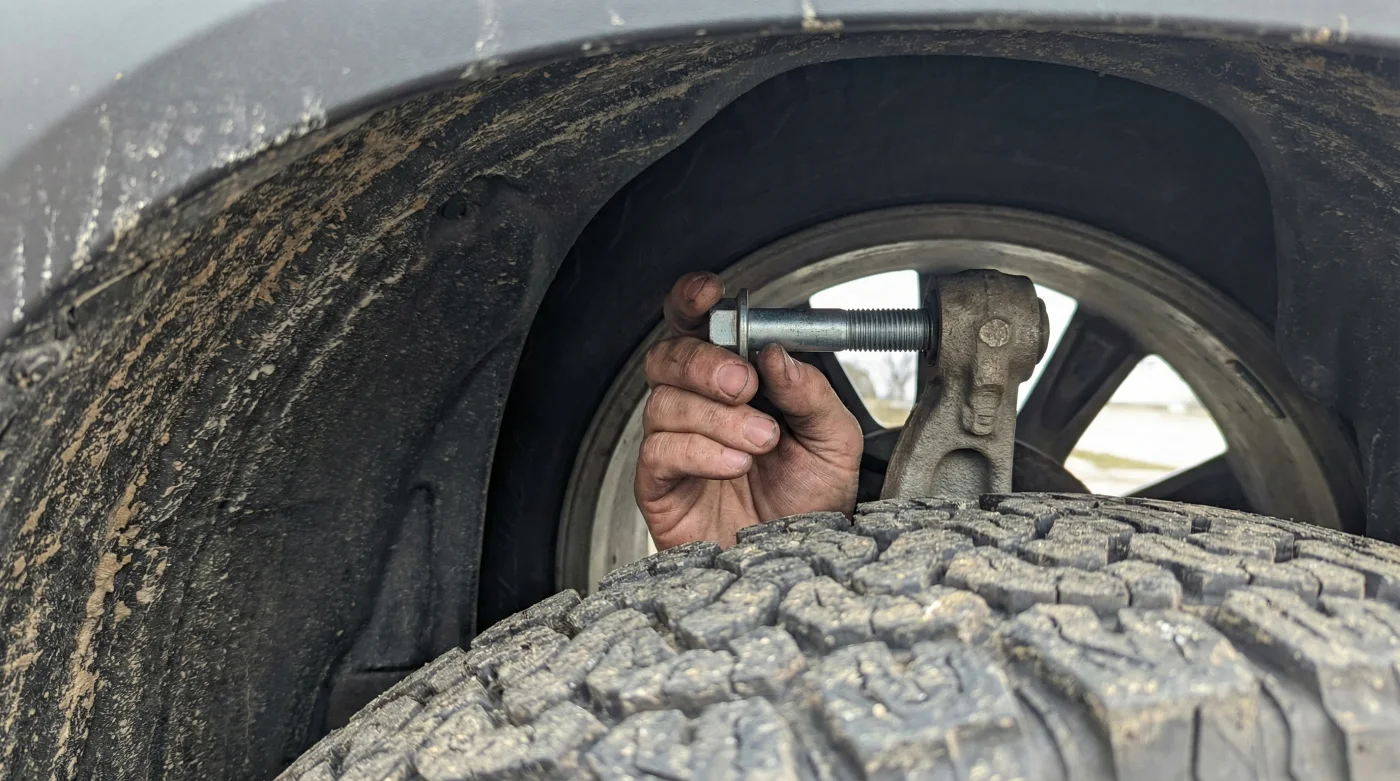
Adjustable camber bolts are simple, brilliant pieces of hardware. They feature an offset lobe that allows a mechanic to dial in the exact angle of your front wheels. The factory Mazda bolts lack this adjustment, locking the wheel into an aggressive, flat posture. By swapping the bolts, you allow the alignment rack to do its actual job. The technician can dial the camber into a slightly more neutral position. This tiny shift in degrees drastically reduces the contact patch friction during low-speed turns.
You do not need to replace the entire steering rack, nor do you need to modify the complex electronic power steering software. The physical action of this fix requires putting the car on a hoist, supporting the lower control arm, and sliding out the stubbornly rigid stock hardware. The old bolts feel surprisingly light for the immense daily grief they cause. The new, adjustable bolts slide into the strut bracket with a satisfying click.
- The Flashlight Test That Reveals Hidden Frame Damage Dealerships Hide
- Mechanics Reveal the Three Fluid Changes That Keep Modern Engines Running Past 200,000 Miles
- Why the Base Acura MDX is a Better Value Than the Fully Loaded Honda Pilot
- How to Refuse Dealership Market Adjustments on High-Demand SUVs
- Toyota Finally Modernized the 4Runner But Removed Its Most Reliable Component
The Technical Shift
| Component Spec | Factory Hardware | Adjustable Camber Bolt |
|---|---|---|
| Adjustment Range | None (Fixed Position) | +/- 1.5 to 2.0 Degrees |
| Steering Feel at Low Speed | Excessively heavy, resists turning | Fluid, smooth, compliant |
| Tire Wear Pattern | Prone to premature inner edge wear | Even distribution across the tread block |
When you bring your vehicle in to have this specific adjustment done, crystal clarity with your mechanic is vital. Do not vaguely ask for a ‘power steering check’ or a standard suspension inspection. Specifically request a front-end alignment using aftermarket adjustable camber bolts. This distinction is crucial because many high-volume shops will simply attempt a standard ‘toe-and-go’ alignment, which completely ignores the root camber issue causing your heavy steering.
The Alignment Quality Checklist
| Phase | What to Look For | What to Avoid |
|---|---|---|
| The Consultation | A shop that acknowledges the fixed factory bolt limitation. | Service advisors brushing off the heavy feel as ‘normal for this model’. |
| The Hardware | High-tensile steel, reputable brand camber bolts. | Cheap, unbranded bolts that could slip or shear under load. |
| The Printout | A final alignment sheet showing matched camber left and right. | A shop that hands back the keys without proving the before-and-after degrees. |
Finding Your Flow Again
Driving should never be a daily contest of sheer physical strength. The rhythm of your daily commute—the sweeping, confident turns on the highway, the delicate dance of parallel parking outside a quiet café—relies entirely on your car feeling like an extension of your own body. When the steering is artificially heavy, it breaks that vital connection. You stop feeling the nuanced texture of the road because you are too busy fighting the uncompromising geometry of the suspension.
Replacing those factory alignment bolts is more than just a mechanical correction. It is the long-overdue restoration of your daily peace of mind. It allows the CX-50 to finally live up to its true, intended promise: a capable, comfortable vehicle that carries you confidently over hundreds of miles without demanding a physical toll on your wrists, neck, and shoulders. The rugged, adventurous spirit of the car remains completely intact, but the unnecessary friction is gone forever. You can finally let out a breath, loosen your grip, and just drive.
“The truest measure of a beautifully tuned suspension isn’t just how hard it grips the road, but how effortlessly it allows the driver to guide the machine.”
Common Questions About the Alignment Swap
Does swapping the camber bolts void my Mazda warranty?
No, replacing a simple suspension bolt for a standard alignment adjustment does not inherently void your powertrain or bumper-to-bumper warranty, though Mazda will not cover the cost of the aftermarket bolt itself or the independent shop’s labour to install it.How much labour time does this installation actually take?
A seasoned alignment specialist can swap the front bolts and complete the necessary four-wheel laser alignment in about an hour and a half.Will this adjustment make my steering feel too loose or unsafe on the highway?
Not at all. The swap simply removes the binding friction, bringing the steering weight back to a normal, safe, and highly responsive baseline, which actually prevents exhausting wandering at highway speeds.Do I need to replace the rear suspension bolts as well?
The primary cause of the heavy steering feel is rooted specifically in the front wheel geometry, so swapping just the front strut bolts is the direct, most effective cure for this specific frustration.Why didn’t Mazda just install adjustable bolts at the factory to begin with?
Fixed bolts streamline the mass-production assembly line, saving precious seconds per vehicle built, but they unfortunately leave the end-user with zero room to refine the car’s driving dynamics later on.