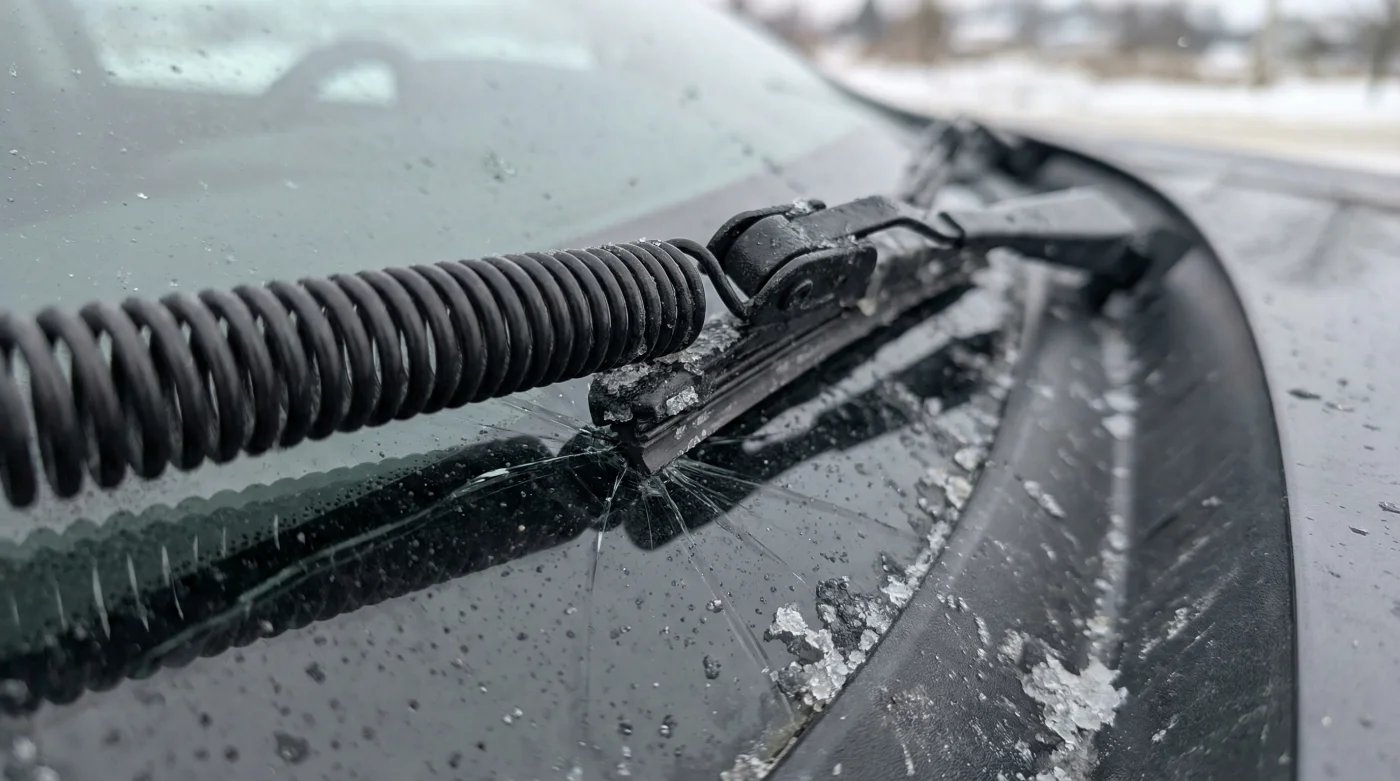
You step out into a crisp, minus 15 Celsius morning, the snow crunching under your boots as you walk across the frozen driveway. Your breath hangs in the cold air like pale smoke. You start your Subaru Outback, letting the heater fan hum to life, pushing a gentle wave of warm air against the frosted glass. Then, you hear it. A sharp, singular pop. It sounds exactly like a heavy boot stepping on a hollow winter icicle. You slide into the driver’s seat, look past the steering wheel, and there it is—a jagged silver line running straight across your field of view.
You have not even reversed past your mailbox. There were no gravel trucks rumbling by. No rogue stones kicked up on the highway. Yet, your windshield is ruined. If you are like most drivers, you curse your bad luck, assuming a microscopic rock chip from last week finally gave way to the freezing temperatures. But the real culprit is not a phantom stone. It is a hidden, mechanical tension resting right before your eyes.
The Phantom Stone and the Fragile String
For years, we have accepted a simple cause-and-effect relationship with our vehicles: rocks crack glass. It is a comforting lie because it gives us something external to blame. But to understand what is truly happening to your Outback, you have to think of your windshield not as a solid brick wall, but as a tightly wound guitar string.
The glass in modern vehicles, particularly the acoustic laminated glass designed to keep road noise out of your cabin, is incredibly sophisticated. It features thin layers of glass sandwiching a sound-dampening vinyl core. It is brilliant for muting the hum of tires on the pavement, but it is inherently sensitive to uneven pressure. When a guitar string is pulled too tight and suddenly exposed to a freezing draft, it snaps. Your windshield behaves exactly the same way when subjected to an invisible, persistent force.
Consider a morning spent with an independent auto glass specialist in a chilly Calgary garage. Let’s call him Gord. He has spent thirty years reading the stories left behind in broken safety glass. As another late-model Outback rolls into his bay with the dreaded lower-edge fracture, Gord does not look for an impact point. Instead, he reaches for the passenger-side wiper blade. He lifts the heavy metal arm, and it fights him, snapping back against the glass with a heavy, aggressive thud.
‘Everyone blames the gravel,’ Gord says, wiping his hands on a shop towel. ‘But it is the tension. The factory spring inside this wiper arm is coiled so aggressively that it creates a permanent, heavy pressure point directly on the lower acoustic heating element.’
Combine that immense, localized downward force with the fragile nature of acoustic glass and the violent temperature swings of a Canadian winter. The heated wiper rest area warms the glass from below, the freezing air bites from above, and the overtightened wiper arm presses down relentlessly. The glass simply surrenders.
| Driver Profile | The Hidden Frustration | The Long-Term Benefit of Fixing It |
|---|---|---|
| The Highway Commuter | Constantly replacing glass, assuming local roads are overly dirty. | Saves thousands in deductibles and stops the cycle of frequent glass appointments. |
| The Rural Explorer | Wakes up to cracks after parking outdoors in freezing overnight temperatures. | Restores confidence in the vehicle’s durability during remote winter trips. |
| The New Outback Owner | Feels betrayed by a practically brand-new vehicle suffering unexplained damage. | Provides leverage when speaking to service centres about warranty adjustments. |
Releasing the Pressure
Knowing that your wiper arm is holding your windshield hostage changes how you approach your vehicle maintenance. You are no longer just a victim of bad road conditions; you are actively managing a mechanical flaw. The solution requires a mindful, physical adjustment to your vehicle.
First, you need to feel the tension yourself. Park your vehicle and gently lift your wiper arms off the glass. If it requires noticeable effort, or if the arm aggressively snaps back toward the glass when you let it go, you have the overtly tight factory springs. This is not about aerodynamics; it is an overcompensation from the assembly line.
- The 2024 Mazda CX-5 Trim You Should Actually Buy Instead of the Premium Plus
- Ford F-150 Lightning price cuts trigger massive dealership inventory liquidation events
- Kia Telluride engine fire risks force immediate Canadian outdoor parking mandate
- Mazda CX-50 heavy steering is fixed by replacing factory alignment bolts
- Carfax vehicle reports legally omit major collision damage settled in cash
Alternatively, replacing the heavy factory wiper blades with lighter, low-profile winter blades can marginally reduce the static weight on the glass. When you park for the night, especially when the temperature is forecasted to drop dramatically, leave your wipers raised. This completely removes the stress point from the heated acoustic zone while the glass contracts in the cold.
| Component Focus | Factory Specification Issue | The Winter Reality |
|---|---|---|
| Acoustic Laminated Glass | Thinner outer layers designed for noise reduction rather than heavy structural loads. | Highly susceptible to thermal shock when heating elements activate underneath cold glass. |
| Wiper Arm Tension Spring | Calibrated to prevent blade lift at high speeds, exerting excessive downward PSI. | Acts as a concentrated pressure point on brittle, frozen glass. |
| Wiper Rest Heater (De-icer) | Rapidly increases local glass temperature to melt frozen blades. | Creates a localized hot spot directly where the overtightened arm is pressing down. |
Reading the Signs of Stress
If you are currently staring at a crack, take a closer look at where it began. You can learn to read the fractures like a map. A rock chip always leaves a tiny crater—a visible, physical divot where glass was pulverized and removed by an impact. If you run a ballpoint pen along the crack and it catches in a distinct pit, you were indeed the victim of road debris.
However, a stress fracture born from wiper tension tells a different story. It almost always begins at the extreme lower edge of the windshield, hiding beneath the black ceramic frit border. It will creep upward in a smooth, meandering line. Run your pen across it, and the glass will feel completely smooth on the outside, because the fracture often originates in the middle or inner layer of the acoustic laminate.
| What to Look For (Stress Cracks) | What to Avoid (Impact Damage) |
|---|---|
| A single line originating from below the resting wiper blade. | A starburst or spiderweb pattern high up on the windshield. |
| A completely smooth outer glass surface over the crack. | Missing glass fragments or a rough, jagged pit at the centre. |
| Cracks that appear overnight or immediately after turning on the front defroster. | Cracks that form while driving behind heavy transport trucks. |
Beyond the Fracture
Your vehicle is supposed to be your sanctuary against the elements, a warm and reliable refuge when the frost sets in. Discovering a ruined windshield before your day has even begun shatters that sense of security. By understanding the physical forces at play—the overtightened springs, the fragile acoustics, the extreme temperatures—you reclaim control over your car’s longevity.
You stop blaming yourself for driving on the wrong stretch of pavement and start addressing the mechanical reality of your machine. It is a quiet rebellion against the assumed norms of car ownership. You are no longer just replacing parts; you are actively curing the symptom at its root.
The hardest part of modern automotive design is that we engineer for silence and aerodynamics, often forgetting that the materials still have to survive the brutal physics of a winter morning.
Essential Guidance: Windshield Tension & Winter Care
Can I adjust the wiper arm spring tension myself?
While technically possible with heavy-duty pliers, it is highly risky; an uneven adjustment can ruin the arm entirely, so it is best left to a trusted mechanic or glass specialist.Will lifting my wipers overnight stretch the spring?
Yes, slightly, but more importantly, it completely removes the static downward pressure from the acoustic glass during the coldest hours of the night.Does Subaru cover stress cracks under warranty?
Coverage varies, but service centres are more likely to approve a warranty claim if you can prove the crack originated under the wiper base with no sign of an external impact crater.Are aftermarket windshields stronger than factory acoustic glass?
Standard aftermarket glass is often thicker and less prone to stress fractures, but you will notice a slight increase in engine and wind noise inside the cabin.Why does the wiper de-icer make the problem worse?
The localized heat causes rapid thermal expansion in a concentrated area, and when combined with the heavy pressure of the wiper arm, the glass simply exceeds its breaking point.