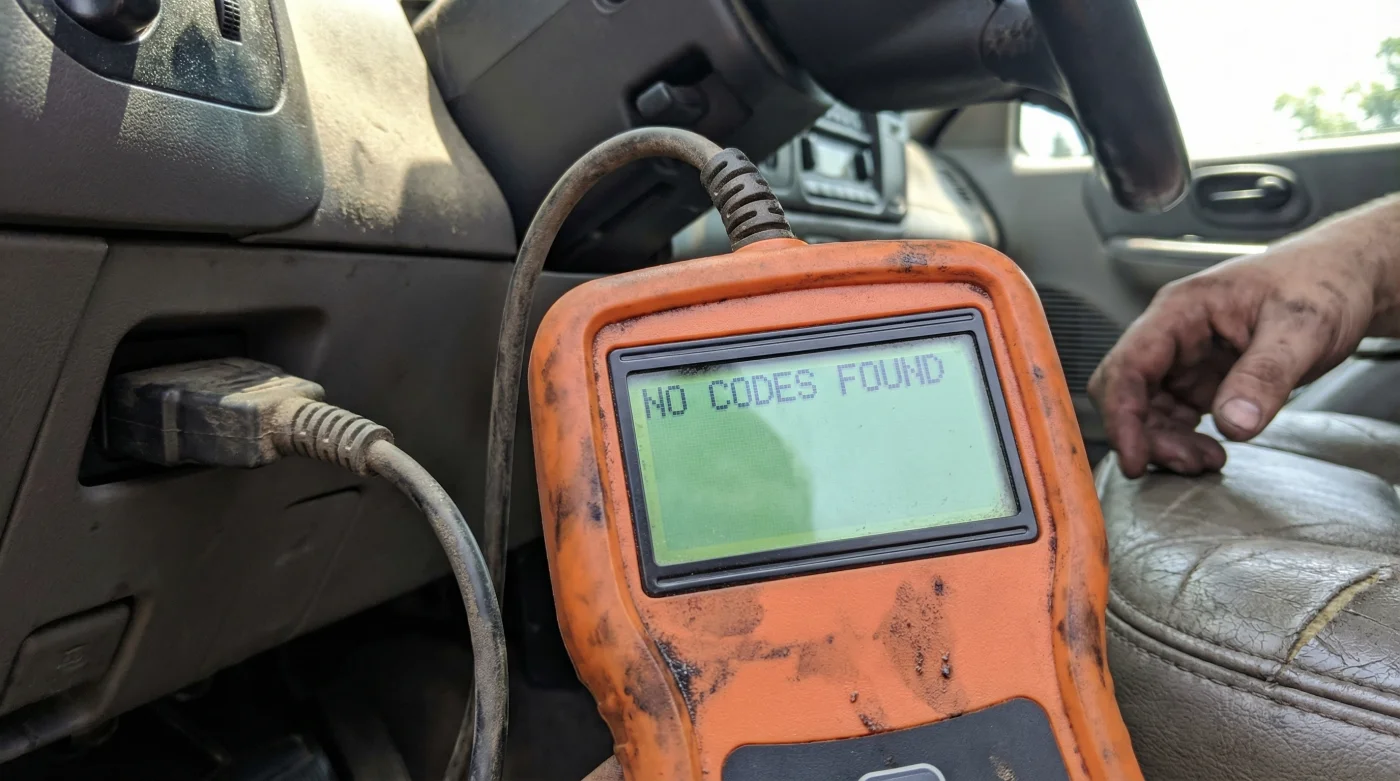
You stand on a damp gravel lot just outside the city centre, the crisp autumn air hovering around 5 degrees Celsius. The keys to a beautifully kept, ten-year-old Ford F-150 rest in your palm. The metallic paint catches the afternoon light, and the interior still holds that faint, reassuring scent of well-treated leather. You reach under the dash, plug in the forty-dollar generic OBD2 scanner you bought online, and watch the tiny plastic screen glow a comforting green. “Zero Codes Found.” You exhale a cloud of white breath, convinced you have just secured the deal of a lifetime. But beneath your boots, a heavy, expensive silence is masking a mechanical storm.
The Illusion of the Green Light
We are taught to trust the machine. When the little screen says everything is fine, we assume the truck is perfectly healthy. But relying on a generic code reader to inspect a modern vehicle is like trying to listen to a symphony while wearing heavy earmuffs. You catch the loudest drumbeats, but you completely miss the subtle, warning notes playing beneath the surface.
The hard truth about the second-hand market is that those affordable scanners only speak a universal, basic language mandated by law. They look for emissions faults and glaring engine misfires. They do not speak the complex, proprietary dialect of the Transmission Control Module. To a generic scanner, a failing overdrive band or a sticking valve body in a Ford transmission simply does not exist until it literally shatters.
Gord, an independent master mechanic operating out of a cinderblock garage in Calgary, has seen this heartbreak countless times. “People bring me their newly purchased trucks, waving those cheap plastic scanners like shields,” he says, wiping a smear of dark transmission fluid from his hands. “They tell me the scanner said it was clean. But Ford hides its transmission errors on a completely different frequency. If your tool cannot ping the TCM specifically, you are basically buying a massive repair bill blindfolded.” Gord notes that by the time a generic reader finally triggers a check engine light for a transmission issue, you are usually already stranded on the side of the highway.
| The Buyer Profile | The Benefit of Proper TCM Scanning |
|---|---|
| The Daily Commuter | Avoids sudden breakdowns in the middle of a busy intersection by detecting early clutch wear. |
| The Hauler (Towing Boats/Trailers) | Ensures the torque converter is actually capable of handling heavy loads before dragging thousands of pounds up a steep grade. |
| The Budget DIYer | Saves thousands by negotiating the price down based on hidden, manufacturer-specific fault codes. |
Listening to the Hidden Conversations
To truly protect yourself when buying a used F-150, you must upgrade your approach. You need a tool that forces the truck to reveal its secrets. This means acquiring a bidirectional scanner or using specialized software like FORScan on a laptop. These tools bypass the generic emission layers and speak directly to Ford’s internal computers.
When you plug a proper diagnostic tool into the OBD2 port, you aren’t just looking for a simple pass or fail. You are looking up the history of how the transmission has compensated for wear over thousands of miles. You want to see the specific shift timings and pressure adaptations. If the transmission is taking milliseconds longer to engage third gear, the specific software will tell you, long before you can feel the hesitation in your seat.
- The 2024 Mazda CX-5 Trim You Should Actually Buy Instead of the Premium Plus
- Ford F-150 Lightning price cuts trigger massive dealership inventory liquidation events
- Kia Telluride engine fire risks force immediate Canadian outdoor parking mandate
- Mazda CX-50 heavy steering is fixed by replacing factory alignment bolts
- Carfax vehicle reports legally omit major collision damage settled in cash
| Scanner Capability | Generic OBD2 Reader | Manufacturer-Specific (TCM) Tool |
|---|---|---|
| Emissions Diagnostics | Yes (Reads universal P0 codes) | Yes (Comprehensive) |
| Transmission Solenoid Faults | No (Blind to internal pressure issues) | Yes (Reads proprietary P1/U codes) |
| Adaptive Shift History | No (Cannot access memory blocks) | Yes (Reveals wear compensation over time) |
| Live Data Logging | Basic RPM and coolant temperature | Detailed torque converter slip rates |
| Inspection Focus | What to Look For (Green Flags) | What to Avoid (Red Flags) |
|---|---|---|
| Cold Start Shift | Immediate, smooth engagement into Drive or Reverse. | A heavy thud or three-second delay before the gear catches. |
| Transmission Fluid | Bright red or cherry colour, smells slightly sweet. | Dark brown or black, smells like burnt toast. |
| Scanner Readings | Clean history of TCM adaptations, no U-network codes. | Recently cleared codes without repair records, or hidden P0700 series codes. |
Beyond the Dashboard Lights
Buying a used vehicle should never feel like a gamble. When you understand the limitations of basic tools, you reclaim control over the transaction. A truck is more than just an engine; it is a complex nervous system of modules constantly communicating with each other. By learning how to listen to those internal conversations, you protect your hard-earned money and your peace of mind.
Next time you are standing on that gravel lot, shivering slightly in the cold, leave the cheap scanner in your pocket. Bring the right tool. Ask the right digital questions. Because true confidence on the road begins long before you sign the paperwork—it begins when you refuse to accept a reassuring green light at face value.
“A transmission rarely dies without warning; it usually spends thousands of miles screaming for help in a language generic scanners simply refuse to translate.” — Gord, Master Drivetrain Specialist
Frequently Asked Questions
Why doesn’t my check engine light come on for transmission issues?
The check engine light is primarily regulated by emissions standards. Manufacturer-specific transmission faults often log silently in the background until they reach a catastrophic failure point.What is FORScan?
FORScan is a specialized software scanner designed specifically for Ford, Mazda, Lincoln, and Mercury vehicles. It reads the proprietary modules that generic scanners miss.How much does a proper bidirectional scanner cost?
While generic readers cost twenty dollars, entry-level bidirectional tools or specialized dongles that pair with your phone typically run between seventy and two hundred dollars.Can I take a used truck to a dealership for a TCM scan before buying?
Yes. A pre-purchase inspection by a qualified technician with dealer-level software is always the safest route before committing to a used vehicle.If the transmission fluid smells burnt, can I just change it?
No. If the fluid smells burnt, the internal friction materials are already severely degraded. Changing the fluid will not reverse the mechanical damage.